
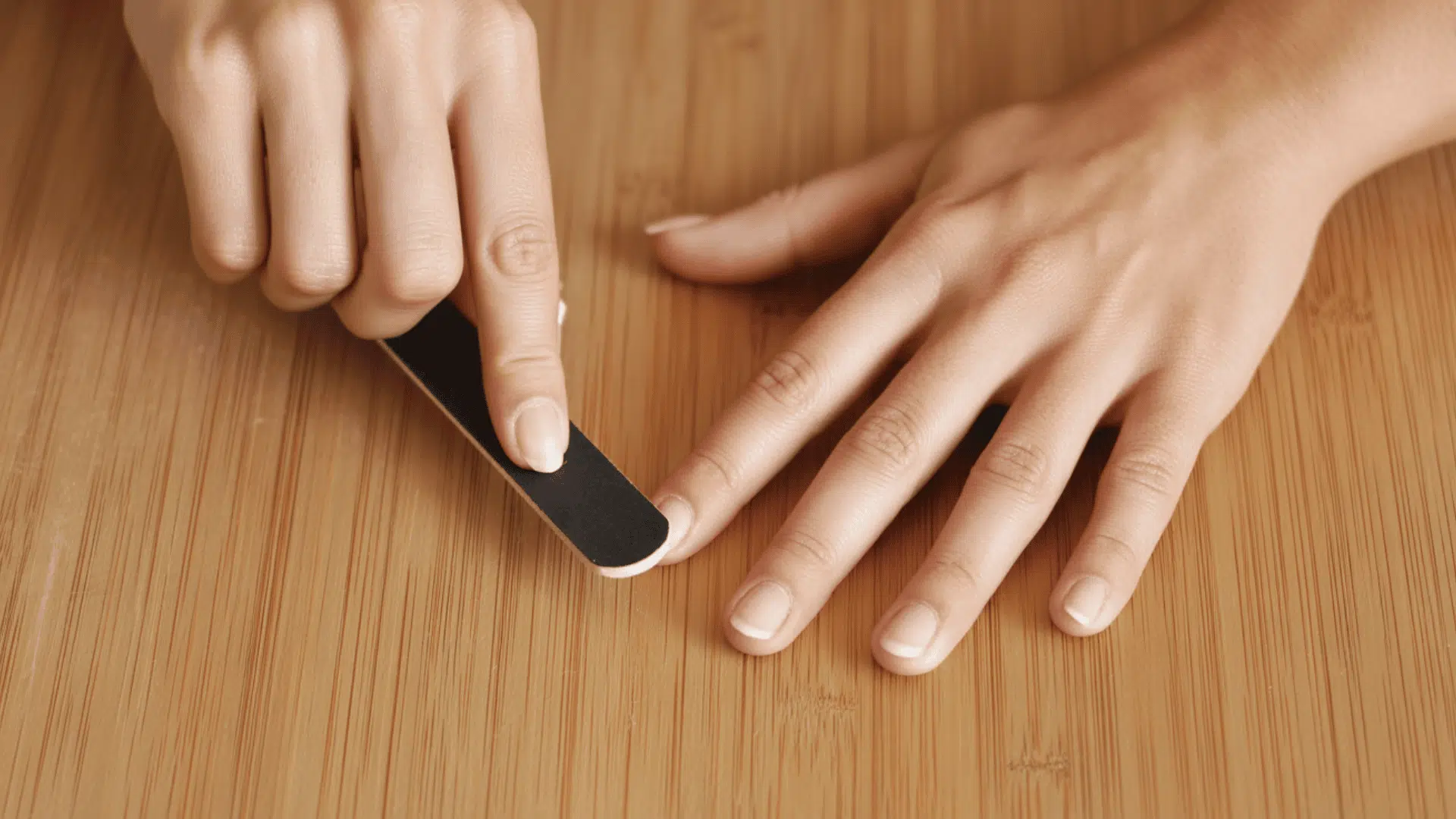
Acrylic nails look stunning, but removing them can feel like a real challenge. Many people want to remove acrylic nails without acetone because of its harsh effects on skin and nails.
The strong chemical dries out cuticles, weakens nail beds, and leaves fingers feeling raw after each use.
Acetone-free removal is possible in certain situations. These methods work best when your acrylics have begun to lift or are several weeks old.
Fresh salon-applied sets will be harder to remove without stronger solvents. Expect these gentler methods to take 45 minutes to over an hour.
This guide covers techniques that actually work and helps you decide when professional removal makes more sense.
Before exploring specific techniques, it helps to understand why so many people avoid acetone in the first place.
Why Avoid Acetone When Removing Acrylic Nails?
Acetone is the fastest way to remove acrylics, but speed comes with some real downsides. Understanding these drawbacks helps you decide if gentler methods suit your situation.
Many people skip acetone for practical reasons. Some have simply run out and need their nails done right away.
Others deal with skin conditions like eczema that flare up with chemical exposure. Pregnant women often prefer avoiding strong solvents as a precaution.
And some people just cannot stand the overpowering smell that fills the room.
Acetone strips natural oils from your skin and nails with each use. Regular exposure leads to dry, brittle nails that peel and break easily. The skin around cuticles can become cracked, red, and irritated over time.
Acetone-free methods work better if your acrylics are already lifting at the edges or have weakened over 3-4 weeks. People with thin nails, cuts near cuticles, or breathing sensitivities should also consider gentler options.
Now that you understand why acetone alternatives matter, let us explore the first and most popular method.
Methods for Removing Acrylic Nails Without Acetone
Removing acrylic nails without acetone is a more gradual process that may take longer than using traditional removers.
However, it can be a gentler option, especially for those who want to avoid the harsh effects of acetone on their nails and skin.
Below are several methods that can help you remove acrylic nails safely without acetone. Some of these require basic household items, while others focus on careful techniques to minimize damage to your natural nails.
Method 1: Warm Water, Dish Soap, and Oil
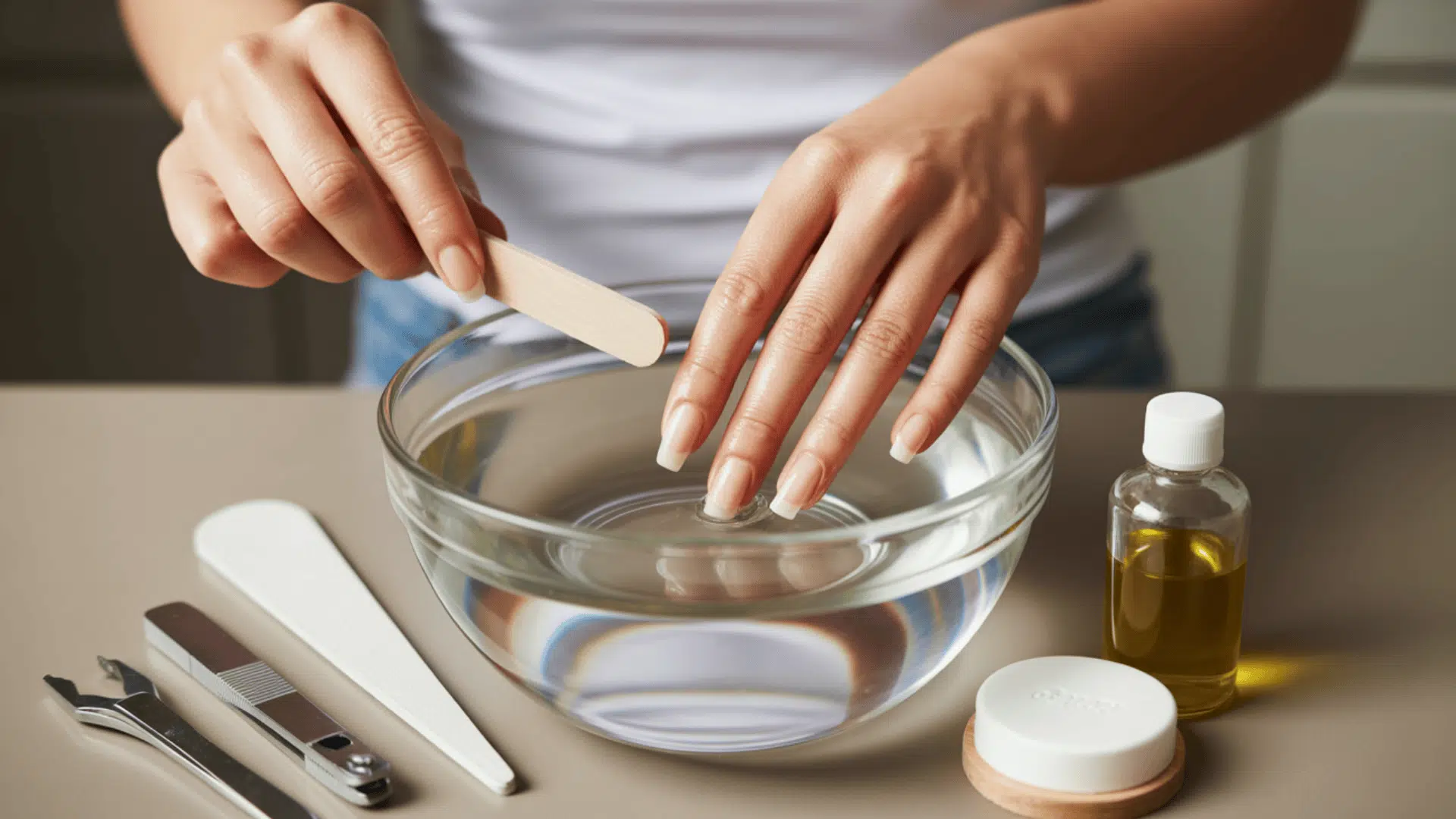
This household approach uses items you likely already own. It works by softening the adhesive bond rather than dissolving the acrylic material itself.
Does Dish Soap and Oil Remove Acrylic Nails?
Yes, but with important limits. Dish soap contains surfactants that break down adhesive compounds. Warm water opens tiny gaps at the edges of the nail where lifting has begun.
Oil lubricates the space between your natural nail and acrylic, making removal smoother. Together, these ingredients weaken the bond enough for gentle lifting.
Step-by-Step Process
- Trim your acrylics as short as possible with nail clippers
- File the shiny top coat to help liquids penetrate better
- Fill a bowl with comfortably warm water
- Add two tablespoons each of dish soap and olive oil
- Soak your nails for 20-30 minutes while moving them occasionally
- Test edges with a cuticle pusher and lift slowly if loose
- Re-soak for another 10-15 minutes if they remain firmly attached
This method works best for press-on nails, grown-out sets, or acrylics with visible lifting. Fresh acrylics may not budge at all. Expect 30-60 minutes for the full process and possibly multiple soaking sessions.
With this foundation covered, the next method focuses purely on heat and careful technique.
Method 2: Warm Water Soak and Gentle Lifting
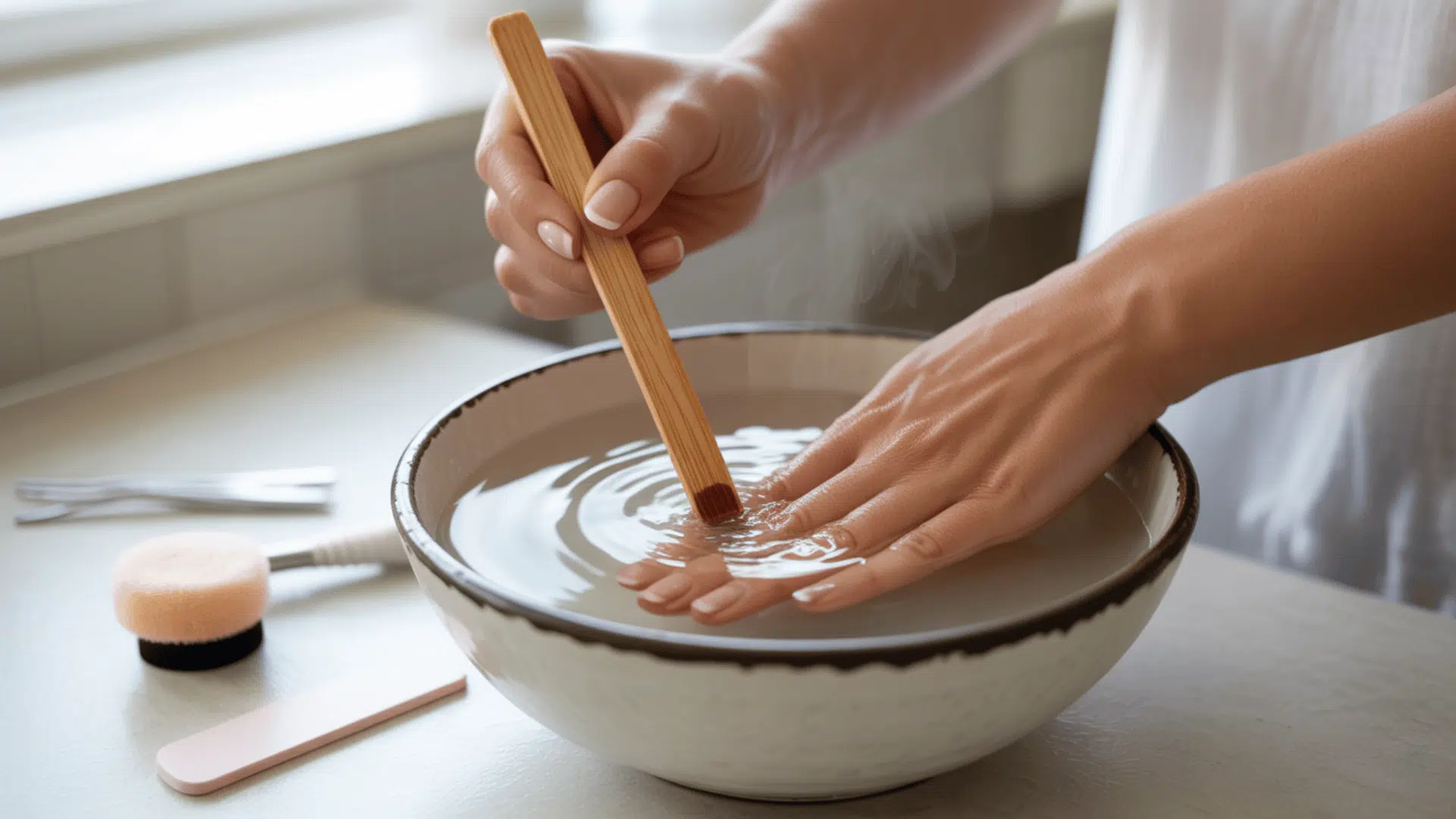
Sometimes, simple warm water combined with patience works surprisingly well. This method relies on heat to weaken bonds and controlled pressure to separate acrylic from your natural nail.
How Can You Take Off Acrylic Nails at Home Without Acetone?
Start by soaking in warm water for 20-30 minutes. The heat causes acrylic to expand slightly, creating tiny gaps where it meets your natural nail. Keep the water warm throughout because progress slows when it cools down.
Safe Lifting Techniques
Never pry or force acrylics off. Use a wooden cuticle stick to test edges gently. Start at the cuticle area where lifting usually begins first. Apply steady, light pressure in an upward motion. If you feel resistance, stop immediately and soak longer. The acrylic should slide off gradually with minimal force.
Tools to Use and Avoid
- Safe options: wooden orangewood sticks, plastic cuticle pushers, soft foam buffers
- Avoid: metal pushers with sharp edges, tweezers, kitchen knives, and your teeth.
Stop right away if you feel pain or see your natural nail bending. White patches appearing under the acrylic mean the nail plate is separating, which causes lasting damage.
For acrylics that have already loosened considerably, the next technique offers a faster option.
Method 3: Dental Floss or Cuticle Stick Sliding Method
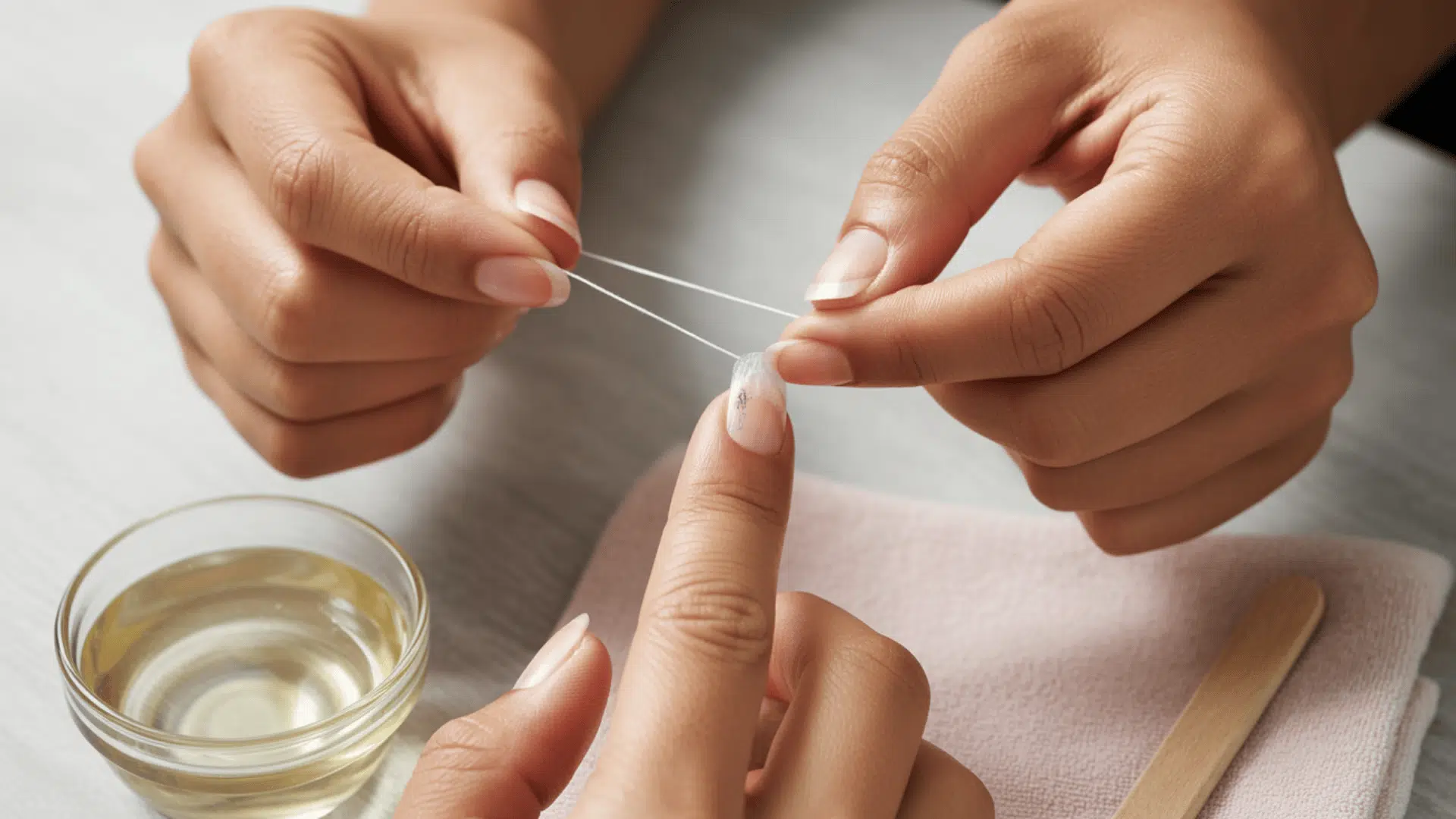
This method is strictly for acrylics that have already loosened significantly. If you see a visible gap at the cuticle line, this technique may work. It is not safe for freshly applied or tightly bonded acrylics.
When Does This Method Work Best?
Only attempt this when your acrylics are nearly ready to fall off on their own. The nail should move when you press the edge gently. If it feels solid or secure, skip this method entirely and try soaking instead.
Step-by-Step Safety Precautions
- Soak nails in warm soapy water for at least 15 minutes first
- Test each nail by pressing the edge to confirm it moves freely
- Have someone help you for better control and visibility
- Slide waxed dental floss under the loosened edge
- Move it in a slow sawing motion toward the nail tip
- Work in small sections and stop at any resistance
- Support your finger firmly to prevent bending the natural nail
Common Mistakes to Avoid
Rushing the process causes the most damage. Many people yank the floss too quickly and tear nail layers. Others skip the pre-soak step entirely or use unwaxed floss that shreds under the acrylic. Attempting this on secure nails almost always results in painful peeling.
Before trying any lifting method, filing down the acrylic thickness makes every technique easier and faster.
Method 4: Filing Down Acrylic Nails
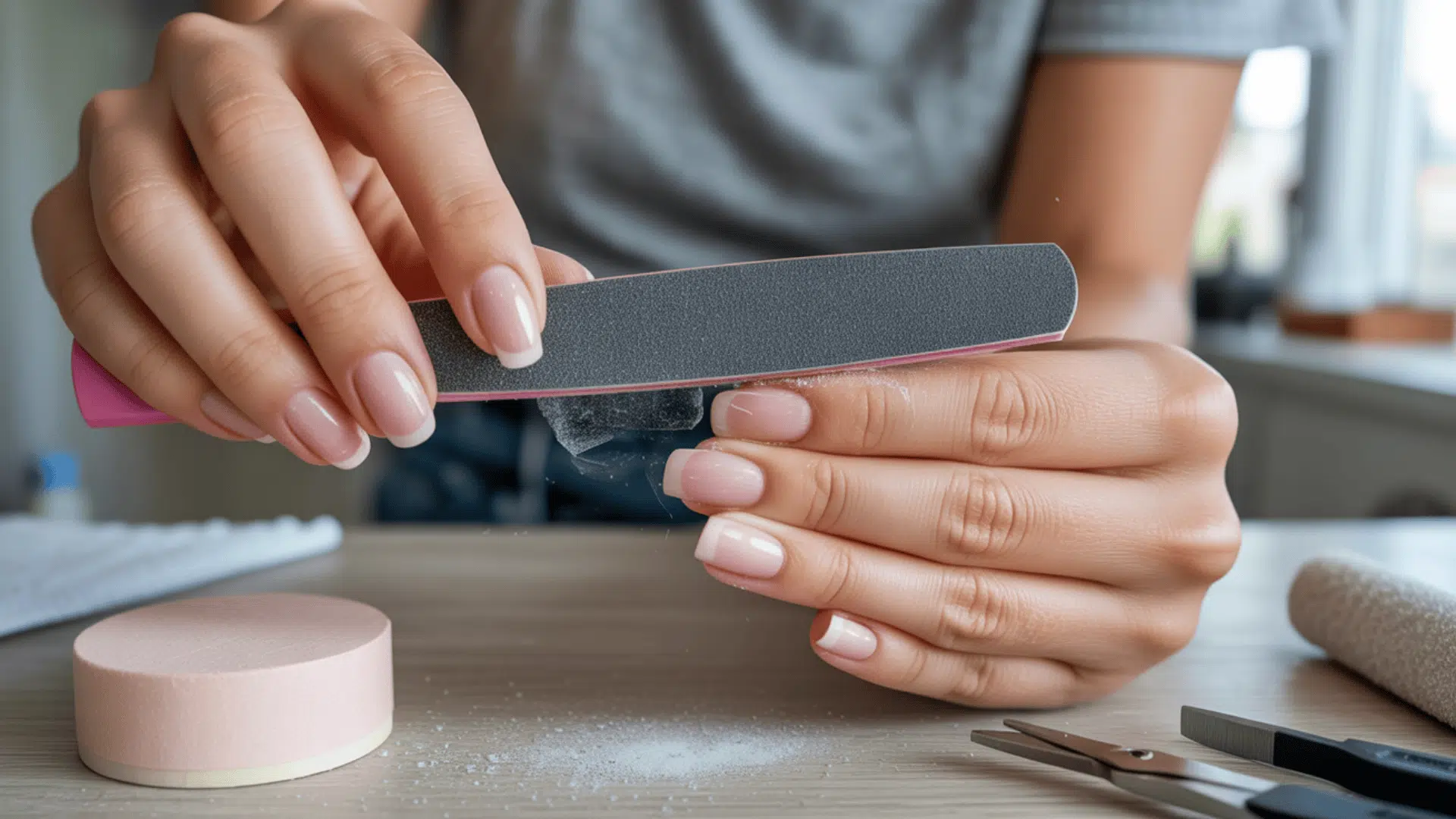
Filing is often a necessary first step rather than a complete removal method on its own. Thinner acrylic responds better to soaking and lifts off with less effort.
Why Filing Is Often Necessary First?
Thick acrylic creates a strong barrier that water and oils cannot penetrate easily. Removing the bulk significantly reduces soaking time. Filing also eliminates the hard top coat that seals the acrylic surface.
How Much Acrylic to Safely Remove?
Use a coarse nail file with 100-150 grit to reduce thickness. File in one direction only to prevent heat buildup that can hurt your nail bed. Remove the shiny top layer and about 70 percent of the acrylic bulk. Stop when you see a thin, slightly flexible layer remaining. Never file down to your natural nail.
Manual Filing vs Electric Files
- Manual files are safer for beginners and offer more control
- Electric files remove material faster but require skill
- Pressing too hard with electric files damages natural nails quickly
- Home users should stick with manual filing unless experienced
Filing alone will not remove acrylics completely, but it dramatically reduces the time other methods require.
Now, let us address a popular home remedy that generates much confusion online.
Method 5: Vinegar Soak
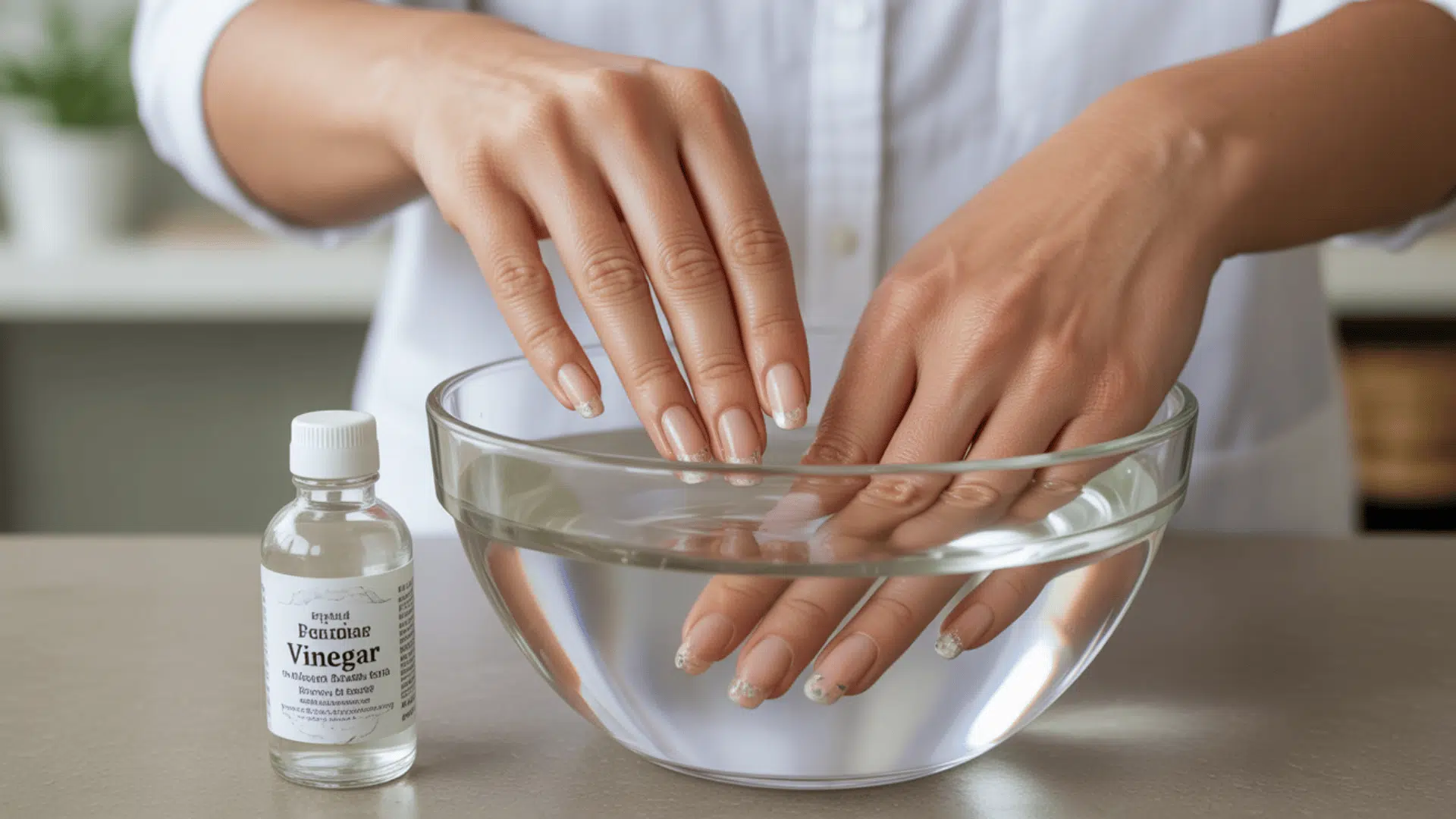
Vinegar appears in countless online tutorials, but expectations need to be adjusted. This method has limited effectiveness compared to other options covered above.
Can Vinegar Take Off Acrylic Nails?
Partially. Vinegar contains acetic acid and small amounts of ethyl acetate, the same compound found in non-acetone nail polish removers. It can soften adhesive bonds over time, but will not dissolve hard acrylic made with professional monomer and polymer.
Realistic Effectiveness
Mix equal parts white vinegar and warm water in a bowl. Soak nails for 20-30 minutes. The solution may help loosen glue-based acrylics or press-on nails. For salon-applied acrylics, expect minimal results. Vinegar works best as a supplement to other methods rather than a standalone solution.
Risks and Skin Concerns
- Prolonged exposure can irritate skin and cuticles
- The acidic solution stings cuts or hangnails
- Some people experience dryness or peeling after extended soaks
- Strong smell may bother those sensitive to odors
Use vinegar for final loosening after filing and warm water soaking, not as your primary removal method.
Speaking of what works and what does not, let us clear up some common misconceptions about dissolving acrylics.
Methods That Do Not Work for Acrylic Nail Removal
The internet is packed with removal hacks that sound clever but fail in practice. Knowing what does not work saves you time and protects your nails from unnecessary damage.
1. Alcohol-Based Solutions
Rubbing alcohol and hand sanitizer cannot dissolve acrylic or break down professional nail adhesives. They evaporate too quickly to penetrate the nail surface. Soaking in alcohol dries out your skin and cuticles without loosening your acrylics at all.
2. Household Cleaners
Some tutorials suggest using household cleaners or degreasers. These products are not designed for skin contact and can cause chemical burns, irritation, or allergic reactions. They also fail to dissolve acrylic material.
3. Viral Social Media Hacks
Many trending removal methods simply do not deliver results. These popular suggestions waste your time and may even cause harm:
- Toothpaste does nothing to acrylic nails
- Baking soda paste is ineffective and messy
- Hot glue gun methods are dangerous and do not work
- Freezing your nails causes pain without loosening acrylics
Stick to the proven methods covered earlier. If those fail, professional removal is your safest option.
Understanding how long each method takes helps you plan your removal session properly.
Removal Time for Acrylic Nails Without Acetone
Time is one of the biggest differences between acetone and acetone-free removal. Planning ahead prevents frustration and rushed decisions that damage your nails.
1. Time Estimates by Method
Each method requires a different time commitment. Here is what to expect based on average removal sessions:
| Method | Time Required | Best For |
|---|---|---|
| Warm water and dish soap | 30-60 minutes | Lifting or older acrylics |
| Warm water soak with lifting | 30-45 minutes | Grown-out sets |
| Dental floss method | 15-25 minutes | Very loose nails only |
| Filing down first | 10-15 minutes | Speeds up all other methods |
| Vinegar soak | 30-45 minutes | Glue-based press-ons |
These estimates assume your acrylics are at least 2-3 weeks old. Fresh applications take even longer.
2. Factors That Affect Removal Speed
Several things determine how quickly your acrylics come off. Thicker acrylic layers require more soaking time. Professional salon applications bond more strongly than DIY sets.
Nails with visible lifting come off faster than secure ones. Water temperature matters too since cool water slows the process significantly.
3. Signs You Should Stop and Switch Approaches
If your acrylics show no movement after 45 minutes of soaking, that method is not working. Pain or discomfort means you should stop immediately.
Seeing white spots or feeling your natural nail bend indicates potential damage. Switch to a different method or consider professional removal instead.
Once your acrylics are off, proper aftercare helps your nails bounce back faster.
Aftercare Tips Once Acrylic Nails Are Removed
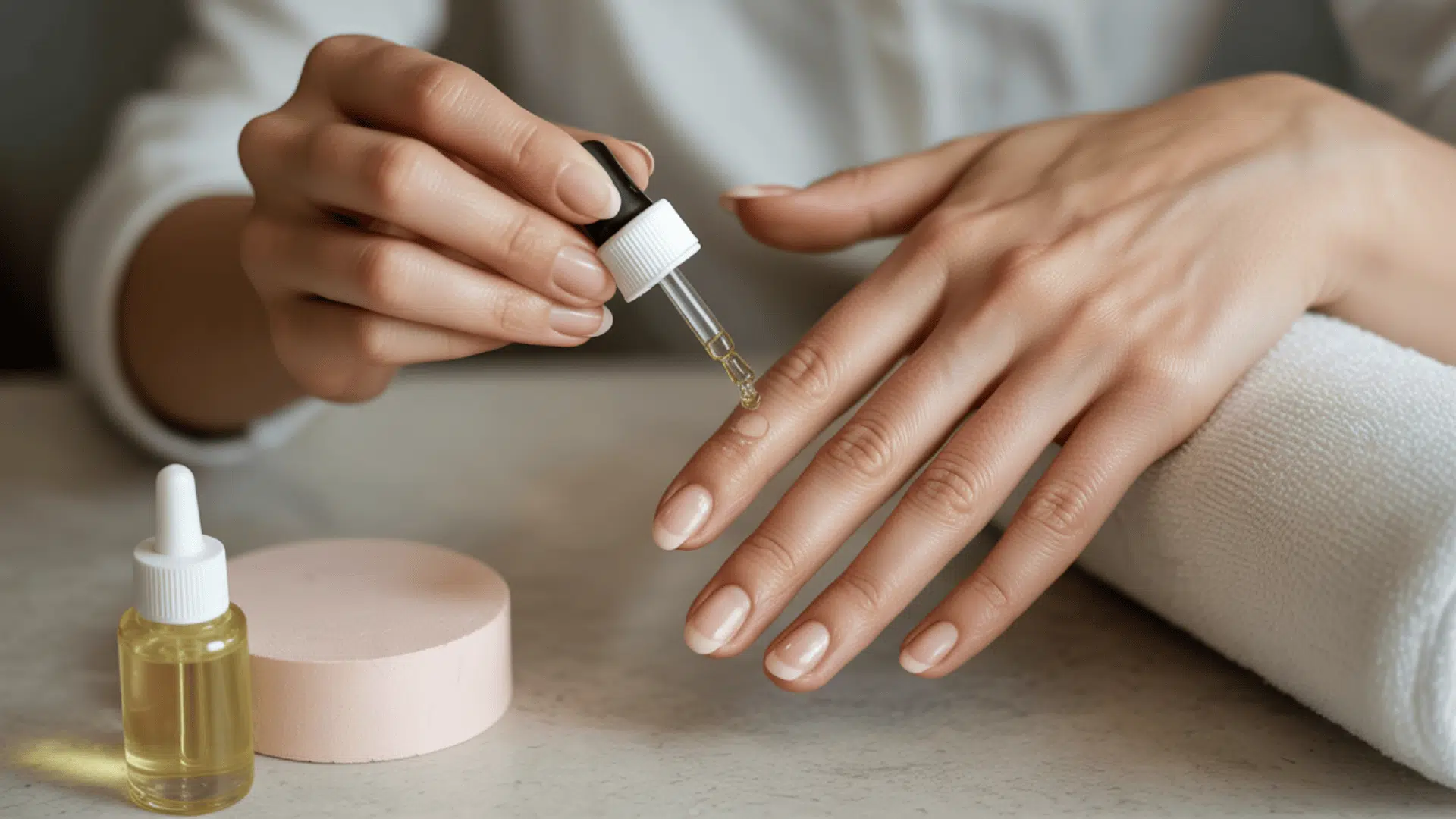
Your nails need extra care after acrylic removal. Even gentle methods leave nails slightly weakened and dehydrated. Following proper aftercare helps them recover faster and grow back stronger.
1. Immediate Nail Recovery Steps
Start by washing your hands with mild soap to remove any residue. Gently buff the nail surface with a soft foam buffer to smooth rough spots. Apply cuticle oil generously to each nail and massage it into the nail bed. Keep nails trimmed short to prevent breakage while they regain strength.
2. Moisture and Strengthening Routines
Hydration is essential for nail recovery. Apply cuticle oil at least twice daily for the first two weeks. Use a nail strengthening treatment every other day to rebuild the nail plate. Wear gloves when washing dishes or using cleaning products. Avoid nail polish for at least one week to let nails breathe.
3. How Long Nails Need to Rebound
Most nails recover within 2-4 weeks with proper care. Severely damaged nails may take 2-3 months to fully regrow. You will notice improvement when nails feel firmer and less flexible. Avoid reapplying acrylics until your natural nails feel strong again.
Sometimes, acetone-free removal simply is not the right choice. Knowing when to skip these methods saves you time and prevents unnecessary damage.
When Acetone-Free Removal Is Not Recommended?
Not every situation suits gentle removal methods. Recognizing when to use acetone or visit a professional protects your nails from serious damage.
1. Thick or Newly Applied Acrylics: Fresh acrylics applied within the past week bond extremely tightly. The adhesive has not had time to weaken naturally. Thick acrylic layers resist water penetration even after long soaking sessions. These sets require acetone or professional removal with an electric file.
2. Pain, Lifting, or Nail Bed Issues: If you notice green discoloration under your acrylics, stop and see a professional immediately. This indicates a bacterial infection that needs proper treatment.
Painful lifting or separation at the nail bed also requires expert attention. Attempting home removal with these conditions can worsen the problem significantly.
3. When Professional Removal Is Safer: Consider visiting a salon in these situations:
- Your acrylics were applied less than one week ago
- You have tried acetone-free methods for over an hour without results
- You notice signs of infection or unusual discoloration
- Your natural nails are already thin or damaged
- You feel any pain during the removal process
Professional nail technicians have stronger products and proper tools that make removal faster and safer.
With all the methods and considerations covered, here is a final summary to guide your decision.
Conclusion
Removing acrylic nails without acetone is possible when you choose the right method for your situation. Warm water with dish soap and oil works best for older or lifting acrylics. Filing down the thickness first speeds up every other technique. Vinegar and dental floss methods have limited effectiveness and suit only specific cases.
Set realistic expectations before you start. These methods take 30-60 minutes and require patience. Fresh salon acrylics may not budge without acetone or professional help. Never force or pry nails off, regardless of which method you try.
Always follow up with proper aftercare to help your natural nails recover quickly.
Which acetone-free method will you try first? Share your experience in the comments below.
Frequently Asked Questions
Is Removing Acrylic Without Acetone Faster Than Using Chemicals?
Generally, no. Without strong chemicals, the bond needs more time to soften. Expect the process to take at least forty-five minutes. Rushing often leads to peeling layers of your natural nail.
What Should I Do If My Nails Still Feel Sticky After Removal?
Wash your hands with warm water and dish soap to remove oils. Use a soft buffer to gently clear away any remaining adhesive. Apply a rich cuticle oil immediately after to restore moisture.
Can I Use This Method For Gel Polish As Well?
These techniques specifically target the thick structure of acrylics. While warm water and oil might loosen some gel, most gel polish bonds are too strong for these methods and usually require a specific soak or professional filing.