
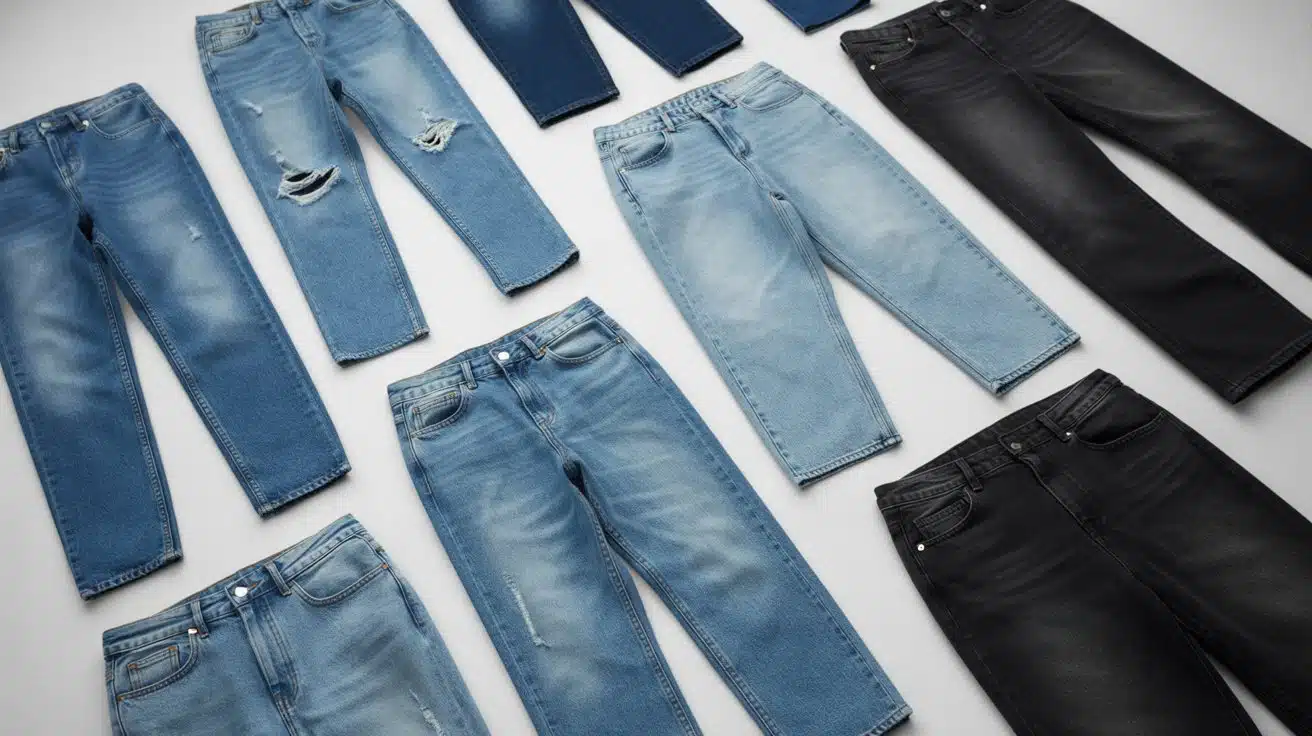
From slim fit to relaxed boyfriend styles, finding the right jeans depends on your body type, occasion, and personal preference.
This guide breaks down every major jean style for men and women, including fit details, styling tips, and how to match jeans to your body shape.
In This Guide:
- Types of Jeans for Men
- Types of Jeans for Women
- How Men’s and Women’s Jeans Differ
- Matching Jeans to Your Body Shape
- Sustainable Jeans: Eco-Friendly Options
- FAQs
Types of Jeans for Men
Jeans are a wardrobe essential for every man, but with so many styles available, choosing the right pair can feel overwhelming.
1. Slim Fit Jeans

Slim-fit jeans offer a tapered cut from hip to ankle without being as tight as skinny styles.
The leg opening typically measures 13-15 inches.
They create a fitted, modern silhouette that works well with dress shoes, boots, or sneakers.
Pair them with button-down shirts and blazers for a polished, smart-casual look.
2. Straight Leg Jeans

The most versatile option in any man’s wardrobe, straight leg jeans maintain an even width from hip to ankle, usually with a 15-17 inch leg opening.
This cut flatters most body types and transitions easily from casual weekends to smart-casual settings.
They’re the go-to choice for a clean, traditional look.
3. Bootcut Jeans

Bootcut jeans feature a slight flare from the knee down, with the leg opening measuring 1-2 inches wider than the knee.
Originally designed to fit over boots, they provide a balanced silhouette and work well for athletic builds.
The subtle flare adds visual interest while maintaining a rugged aesthetic.
4. Relaxed Fit Jeans

Relaxed fit jeans provide extra room in the seat and thighs, with a looser cut throughout the leg.
They offer maximum comfort without appearing baggy, making them ideal for all-day wear, physical work, or casual activities.
The roomier fit allows for easy movement while still looking presentable.
5. Skinny Jeans

The most form-fitting option, skinny jeans hug the legs from waist to ankle with a leg opening under 12 inches.
Usually made with stretch denim for mobility, they create an edgy, fashion-forward look popular in streetwear.
Best paired with longer tops or layered pieces to balance proportions, and work well with high-top sneakers or Chelsea boots.
Types of Jeans for Women
Women’s jeans come in countless styles, each offering a unique fit and aesthetic.
Whether you’re looking for comfort, vintage charm, or a sleek modern silhouette, understanding the different types of jeans helps you choose the perfect pair for your wardrobe.
1. Skinny Jeans

Skinny jeans fit snugly from waist to ankle with a tapered leg opening of 11-13 inches.
Made with stretch denim for comfort and mobility, they create a sleek, streamlined silhouette.
Pair them with oversized tops, tunics, or cropped jackets. They work equally well with heels, boots, or sneakers.
2. Mom Jeans

Mom jeans sit high on the waist (2-3 inches above the navel) with a relaxed fit through the hips and thighs.
The high rise elongates the legs while the roomier cut provides all-day comfort.
Style them with tucked-in tops, crop tops, or knotted shirts for a retro-casual aesthetic that’s dominated recent trends.
3. Boyfriend Jeans

Boyfriend jeans deliver a loose, relaxed fit with a slightly baggy silhouette, often worn 1-2 sizes up from true size.
They typically sit lower on the hips and feature a rolled cuff at the ankle.
Pair them with fitted tanks, blazers, or feminine blouses to balance the relaxed proportions.
4. Bootcut Jeans

Bootcut jeans fit snugly through the hip and thigh, then flare slightly from the knee down (about 1.5-2 inches wider than the knee).
Originally designed to accommodate boots, they create a balanced, flattering shape that suits most body types.
They transition easily from casual to dressy, especially when paired with heeled footwear.
5. Flared Jeans

Flared jeans feature a dramatic flare from the knee down, with leg openings of 20-23 inches.
This retro-inspired style brings 70s glamour to modern wardrobes.
The wide leg opening creates a long, lean line, particularly when paired with heels or platforms. Balance the volume with fitted or tucked-in tops.
How Men’s and Women’s Jeans Differ
While jeans are a universal wardrobe staple, men’s and women’s styles are designed with different body shapes and fashion preferences in mind.
| Aspect | Men’s Jeans | Women’s Jeans |
|---|---|---|
| Fit & Cut | Relaxed and straight cuts dominate | More tailored options with greater variety |
| Waist Rise | Typically mid-rise with uniform options | High-rise, mid-rise, and low-rise styles available |
| Hip & Thigh | Roomier and straighter through the hips | Contoured to accommodate curves |
| Style Variety | Fewer variations, classic-focused | Extensive options, including vintage and trendy fits |
| Fabric | Less stretch, more rigid denim | More stretch for comfort and flexibility |
| Current Trends | Relaxed fits, straight leg, bootcut | Wide-leg, high-rise, mom jeans |
These differences reflect the diverse ways jeans have evolved to suit various body types and style preferences.
Matching Jeans to Your Body Shape
For Men
Lean or slim builds: Slim or straight-leg jeans create a sharp, tailored appearance. These cuts provide a modern silhouette without being restrictive and work well for professional casual settings.
Athletic or larger builds: Bootcut or relaxed fits offer extra room through the thighs and seat. These styles provide ease of movement while maintaining a polished look, making them practical for active lifestyles.
For Women
Pear-shaped figures: Mom jeans with their high waist create curves and elongate the legs. The relaxed hip area balances wider hips, while the tapered leg draws attention downward.
Rectangular body types: Boyfriend jeans add dimension and create the illusion of curves. The loose fit balances proportions when paired with fitted tops.
Hourglass and athletic figures: Skinny jeans create a streamlined silhouette that highlights natural curves. They’re versatile enough for both casual and dressed-up occasions.
General tip: Try different styles to find what feels comfortable and flattering on your unique shape. Personal comfort and confidence matter more than following traditional recommendations.
Sustainable Jeans: Eco-Friendly Options
Traditional denim production requires significant water and chemical use, but sustainable alternatives now exist.
Look for jeans made from organic cotton, recycled denim, or innovative low-impact fabrics.
Brands focusing on ethical production use less water, eliminate harmful chemicals, and ensure fair labor practices.
Extend your jeans’ lifespan by washing less frequently, air drying instead of machine drying, and repairing rather than replacing worn pairs.
Conclusion
Jeans remain unmatched in their versatility, offering styles for every body type, occasion, and personal preference.
Whether you gravitate toward the sleek lines of skinny jeans, the relaxed comfort of boyfriend styles, or the retro appeal of flared cuts, there’s a perfect pair waiting to enhance your wardrobe.
Experimenting with different styles refreshes your fashion approach and helps you discover new ways to express your personal style.
Don’t be afraid to step outside your comfort zone. That pair of wide-leg jeans or high-waisted styles you’ve been eyeing might become your new favorites.
Frequently Asked Questions
What Jeans Are Gen Z Wearing?
Gen Z prefers loose, baggy, and wide-leg jeans over skinny fits. Low-rise and straight-leg styles with early 2000s aesthetics are currently trending.
What Is the Most Popular Type of Jeans?
Mom jeans rank highest with over 8.1 million monthly searches. Their high waist and relaxed fit flatter most body types effortlessly.
What Are the Big 3 Jeans Brands?
Levi’s, Lee, and Wrangler are the “Big 3” American denim brands. All originated as workwear and evolved into global fashion staples.
How Should Jeans Fit?
Jeans should feel snug at the waist without gaping. You should pinch about an inch of fabric at the thigh comfortably.