Ever wonder why some beaches ban certain sunscreens?
The ocean holds secrets that most beachgoers never consider. Every time we step into those crystal blue waves, we bring something with us that doesn’t belong there.
It washes off our skin in invisible clouds, drifting down to the coral reefs below. What seems harmless on land becomes something entirely different underwater.
Traditional sun protection has been hiding a dark truth for decades. The same bottles that promise to shield us from harmful rays contain ingredients that are devastating ecosystems we’ll never see with our own eyes.
Reef safe sunscreen represents more than just another product choice. It’s about recognizing that our daily decisions ripple far beyond the shoreline.
The damage happening right now isn’t theoretical or distant, but there’s still time to change course.
What Does “Reef Safe” Sunscreen Mean?
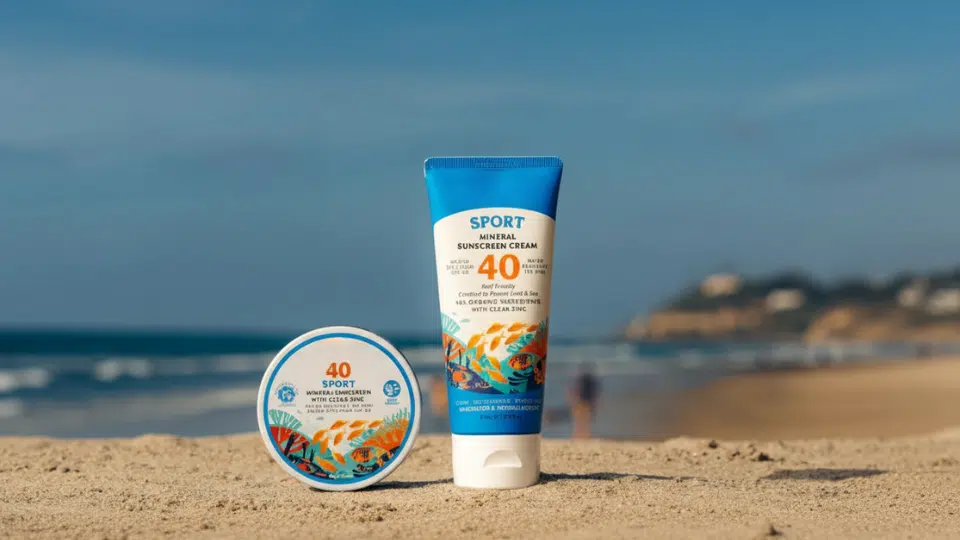
Reef safe sunscreen refers to sun protection products that don’t contain oxybenzone and octinoxate, which wash off swimmers by the ton each year. These ingredients damage coral DNA and disrupt ocean ecosystems.
The term comes from environmental conservation efforts. Scientists found that certain sunscreen chemicals cause coral bleaching and damage ocean ecosystems. But there’s good news for beachgoers who care about the planet. This led to the “reef safe” movement.
Here’s what you need to know. The FDA doesn’t officially regulate the term “reef safe.” Any brand can claim its product is ocean-friendly. That’s why it’s important to check ingredients yourself.
Why does this matter?
- Coral reefs support 25% of all marine species and protect coastlines from storms.
- They provide food and income for millions of people worldwide.
- Sunscreen pollution is killing reefs, with even one drop harming an Olympic-sized pool.
- Chemical sunscreens wash off your skin and get absorbed by corals and sea creatures.
- Not all “reef safe” claims are equal; some products still contain harmful ingredients.
Knowing what is reef-safe sunscreen means learning the science behind protecting our oceans.
Research from multiple universities confirms these effects. Even at very low concentrations, these chemicals are toxic to coral.
Here’s a shocking fact: Up to 14,000 tons of sunscreen wash into oceans each year. That’s the weight of about 2,800 elephants.
Popular beach destinations see the highest impact. In Hawaii, one study found high levels of oxybenzone in coastal waters. The concentration was enough to damage coral DNA.
This isn’t just an environmental issue. It’s also economic.
Reef Safe Sunscreen Ingredients
True reef-safe sunscreen uses mineral-based UV filters instead of chemical ones, but knowing exactly which ingredients to look for and avoid makes all the difference.
| Ingredient Type | Safe for Reefs | Harmful to Reefs |
|---|---|---|
| Active UV Filters | Non-nano zinc oxide, Non-nano titanium dioxide | Oxybenzone, Octinoxate, Octocrylene, Homosalate, Avobenzone |
| Preservatives | Tocopherol (Vitamin E), Natural extracts | Parabens (methylparaben, propylparaben), Synthetic preservatives |
| Moisturizers | Coconut oil, Jojoba oil, Shea butter, Beeswax | Silicones, Petroleum-based compounds |
| Fragrances | Essential oils (in moderation), Unscented formulas | Synthetic fragrances, Artificial perfumes |
| Particle Size | Non-nano (greater than 100 nanometers) | Nano particles (less than 100 nanometers) |
When shopping, flip the bottle over. Read the “Active Ingredients” section first. If you see non-nano zinc oxide or titanium dioxide, you’re on the right track.
How to Identify a Truly Reef Safe Sunscreen?
Many brands use “reef safe” or “ocean-friendly” labels. But not all of them tell the truth. This practice is called greenwashing. Companies market products as eco-friendly without real proof.
Here’s how to spot genuine reef-safe sunscreen:
Check the Active Ingredients First
This is your most important step. The active ingredients section tells you everything. Look for zinc oxide or titanium dioxide only. If you see oxybenzone, octinoxate, or other chemical filters, put the product back on the shelf.
Look for Third-Party Certifications
Credible certifications mean independent testing. They verify that products meet strict standards.
Trusted certifications include:
- EWG Verified: Environmental Working Group tests for safety
- EcoCert: European organic certification
- Leaping Bunny: Cruelty-free verification
- Made Safe: Screens for toxic chemicals
These seals aren’t required. But they add credibility.
Verify “Non-Nano” on the Label
The product should clearly state “non-nano” somewhere on the packaging. If it doesn’t mention particle size, assume it might contain nanoparticles.
Trusted US Reef Safe Sunscreen Brands
Several US-based brands have earned trust for their commitment to reef-safe formulations:
1. Badger

About the brand: Badger is a family-owned company committed to creating natural, organic personal care products that are safe for people and the planet.
Why this brand is different: Badger uses non-nano zinc oxide in all their sunscreens. They’re certified organic and family-friendly.
2. Thinksport

About the brand: Thinksport is dedicated to providing safe, effective sun protection specifically designed for active lifestyles and outdoor enthusiasts.
Why this brand is different: Thinksport focuses on sports and water activities. Their products are tested by dermatologists and recommended by marine biologists.
3. Blue Lizard

About the brand: Blue Lizard is an Australian-inspired brand that combines innovative sun protection technology with environmental responsibility.
Why this brand is different: Blue Lizard offers a wide SPF range. Their bottles even change color in UV light to remind you when to reapply.
4. Raw Elements

About the brand: Raw Elements is a performance-driven brand that believes in zero-waste principles and sustainable packaging solutions.
Why this brand is different: Raw Elements uses only non-nano zinc oxide. They’re plastic-free and certified reef safe by independent labs.
These brands prioritize transparency. They list all ingredients clearly. They invest in environmental testing.
Choosing products from companies that care about ocean health reinforces your commitment to both skin protection and marine conservation.
Conclusion
Choosing reef-safe sunscreen means choosing a healthier future for our oceans and your skin. The facts are clear.
Chemical filters like oxybenzone destroy coral reefs while mineral options keep marine life thriving. Reading labels takes just seconds. Look for non-nano zinc oxide or titanium dioxide.
Skip products with harmful chemicals. Support brands that put transparency first.
Every bottle you buy sends a message. Your purchase supports companies that care about environmental protection. Your choice helps preserve coral reefs for generations to come.
The ocean has given us so much. Clean beaches. Thriving marine ecosystems. Coastal communities that depend on healthy reefs.
Now it’s our turn to give back. Switch to reef-safe sunscreen today. Protect your skin and save the reefs with one simple choice.