You’ve probably stood in front of your closet wondering which jacket to grab.
Is it the navy one with buttons? Or the textured piece with patterns? Many men face this confusion when choosing between a blazer and a sports coat.
These two jackets look similar but serve different purposes. Getting them mixed up can make you overdressed or underdressed for an occasion.
Walk into a casual lunch or a business meeting, wearing the wrong jacket, and you’ll feel out of place.
However, understanding the difference is simpler than you think. Once you know what sets them apart, you’ll pick the right jacket every time.
Let’s break down what makes each jacket unique and when to wear them.
What is a Blazer?
A blazer is a standalone jacket that sits between casual and formal. It’s dressier than a sports coat but less formal than a full suit.
Think of it as your go-to jacket when you need to look polished without going full corporate.
Key Features That Define a Blazer

A few distinct elements set blazers apart from other jackets. Once you spot these details, you’ll recognize a blazer instantly.
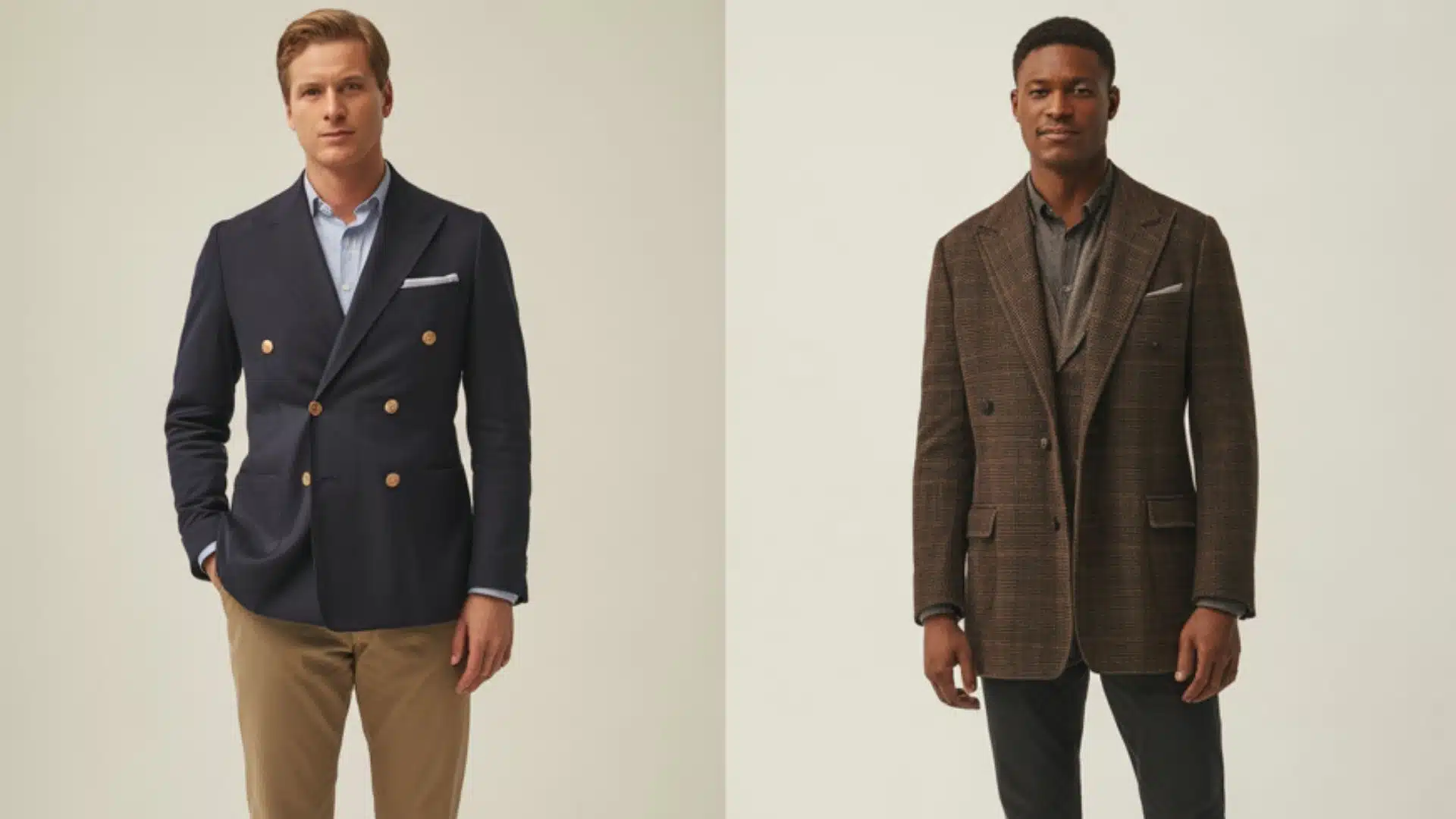
- Solid or nearly solid colors: Navy blue is the classic choice, but you’ll also find black, gray, and deep green versions. The color remains consistent throughout the fabric, even without busy patterns.
- Decorative metal buttons: Most blazers have brass or gold-toned buttons. This detail comes from the naval blazer tradition. Some modern versions use horn or coated buttons, but the metal button remains iconic.
- Clean lines with moderate structure: The shoulders are defined but not overly padded. The chest has a shape that doesn’t feel stiff. This structure helps the blazer maintain its form while still being comfortable.
Different Types of Blazers
Blazers come in several styles to match different needs and body types. Here are the main variations you’ll encounter:
| Blazer Type | Characteristics | Best For |
|---|---|---|
| Single-Breasted | Two or three buttons down the front; most common style | Almost any body type and occasion |
| Double-Breasted | Overlapping front panels with two rows of buttons; more formal look | Taller or broader frames; formal settings |
| Unstructured/Soft | No heavy padding or lining; lighter and moves naturally | Warmer weather; relaxed, casual vibes |
The fabric changes with the season, too. Winter blazers use heavier wool. Spring and summer versions feature lightweight wool, cotton, or linen blends. This keeps you comfortable year-round.
What is a Sports Coat?
A sports coat is the most versatile odd jacket you can own. It’s built for casual and smart-casual settings. The name comes from its origins in hunting and outdoor sports in the countryside.
What Makes a Sports Coat Different?

Sports coats have specific characteristics that make them stand out. Here’s what to look for:
- Patterns and textures rule: You’ll find checks, herringbone, plaids, and tweeds. The fabric often has a visible texture that catches the eye. This variety lets you express your personality through your clothing.
- Relaxed construction: The build feels more casual than a blazer. Shoulders are softer. The chest has less padding. The whole jacket moves with you rather than holding a rigid shape.
- Functional details: Patch pockets sit on the outside. Ticket pockets add extra storage. Elbow patches reinforce high-wear areas. These features nod to the jacket’s practical outdoor heritage.
Popular Sports Coat Varieties
Sports coats come in many fabrics and patterns. Each type brings its own character and purpose:
| Sports Coat Type | Characteristics | Best for |
|---|---|---|
| Tweed | Thick, textured wool; earthy colors with flecked patterns | Fall and winter; outdoor events |
| Checked & Plaid | Bold patterns like windowpane checks or Glen plaids, multiple tones | Year-round; casual to business-casual |
| Hopsack | Basket-weave texture; visible grid pattern | Spring and fall; textured casual looks |
| Flannel | Soft, brushed feel; smooth appearance | Fall and winter; softer, refined casual |
| Corduroy | Vertical ridges; distinct tactile texture | Fall and winter; vintage or preppy styles |
Seasonal versions adapt to the weather. Heavier fabrics work for winter. Lighter cotton or linen blends suit spring and summer. This flexibility keeps sports coats wearable all year.
Comparing Suit Jacket vs Blazer vs Sports Coat

Knowing how these three jackets differ helps you choose correctly every time. Let’s break down the key differences side by side.
| Feature | Suit Jacket | Blazer | Sports Coat |
|---|---|---|---|
| Formality Level | Highest – formal business, weddings, formal events | Mid-level – dressy but flexible | Casual – expressive and relaxed |
| Fabric & Pattern | Smooth plain-weave (worsteds, gabardine); subtle patterns only | Solid colors or nearly solid; smooth texture | Diverse textures and bold patterns (checks, tweeds, plaids) |
| Construction | Full structure with canvas layers; built-up shoulders | Moderate structure; half-canvas or fused | Soft approach; lighter canvassing or unconstructed |
| Button Style | Subtle buttons that blend with material | Decorative metal buttons (brass or gold-toned) | Leather, horn, or coated buttons matching fabric |
| Pocket Type | Welted pockets flush with fabric | Welted pockets flush with fabric | Patch pockets, ticket pockets, bellowed pockets |
| When to Wear | Always with matching trousers as a set | With chinos, dress trousers, or dark jeans | With jeans, corduroy, or casual trousers |
The differences go beyond just looks. Each jacket serves a specific purpose in your wardrobe.
A suit jacket demands formality and coordination.
A blazer offers flexibility for semi-formal occasions.
A sports coat lets you express personal style in casual settings.
Knowing these distinctions means you’ll always pick the right jacket for the right moment.
Occasion & Styling Guide for Blazer and Sports Coat
Knowing when to wear each jacket prevents awkward style missteps. Let’s look at real situations and how to dress for them.
Blazer: The Versatile Middle Ground
Best occasions: Business-casual workdays, dinner dates, cocktail parties, church services, nice restaurants
Styling approach:
- For work: Pair with gray or khaki chinos and leather dress shoes
- For evening: Try navy trousers with brown loafers and a pocket square
- For creative settings: Dark jeans work if they’re clean and well-fitted
Layer over button-down shirts or fine-knit sweaters. A blazer gives you room to experiment with shirt colors.
Sports Coat: The Expressive Choice
Best occasions: Weekend brunches, gallery openings, casual Fridays, coffee meetings, neighborhood gatherings
Styling freedom:
- Go casual: Regular blue jeans with boots or clean sneakers
- Add texture: Corduroy or flannel trousers create visual interest
- Try layers: T-shirts, Henleys, or chambray shirts all work
The pattern in your sports coat allows simpler pairings underneath. Scarves, colorful socks, and statement watches fit the vibe.
Outfit Combinations for Blazer vs Sports Coat
Ready to see these jackets in action? Here are two proven outfit formulas you can use right away.
1. The Blazer Look: Office to Dinner

Start with a navy blazer with brass buttons. Add a white dress shirt and medium gray wool trousers. Finish with brown leather oxfords and a matching belt. For extra polish, throw in a burgundy pocket square.
Why this works: Navy and gray is a timeless pairing. The brown shoes add warmth without dropping the formality level. You can wear this to a business meeting, then head straight to dinner without changing.
2. The Sports Coat Look: Weekend Ready

Grab a brown herringbone tweed coat. Layer it over a cream cable-knit sweater or flannel shirt. Pair with dark wash straight-leg jeans and brown leather boots. Add a wool scarf in rust or olive when it’s cold.
Why this works: Tweed and denim are meant for each other. The earthy browns create a natural, grounded palette. This outfit takes you from coffee runs to casual dinners with friends.
Quick Styling Tip Match formality across your entire outfit. Dress shoes need dress trousers. Sneakers need casual pants. Keep everything at the same level and you’ll always look put-together. |
Final Takeaway
Now you know exactly what separates a blazer from a sports coat. The blazer brings polish with its solid colors and metal buttons. The sports coat offers versatility with patterns and a relaxed structure.
Each serves a distinct purpose in your wardrobe. Stop second-guessing your jacket choice. Consider the occasion first.
Match your jacket to the setting and formality level. Build your outfits around these pieces with confidence.
Which jacket will you wear next time you need to look sharp? Think about your upcoming plans and choose accordingly.
Start with one quality piece in each category, and you’ll cover most situations life throws at you.
What’s your catch on styling a blazer or sports coat? Let us know in the comment section below.