Small bumps on your forehead can be frustrating. They make your skin look uneven and affect how you feel about your appearance.
The good news? Most forehead bumps clear up with simple treatments you can do at home. You don’t need expensive products or complicated routines.
The fastest way to get rid of forehead bumps is proper cleansing with salicylic acid, overnight treatments like tea tree oil, and consistent skincare.
Most bumps improve within 1-2 weeks with the right approach.
This guide covers everything you need to know. You’ll learn what causes these bumps, the different types you might have, and how to treat them naturally at home. We’ll also cover when to see a doctor for help.
What Causes Forehead Bumps?
Forehead bumps happen for several reasons. Knowing the cause helps you pick the right treatment.
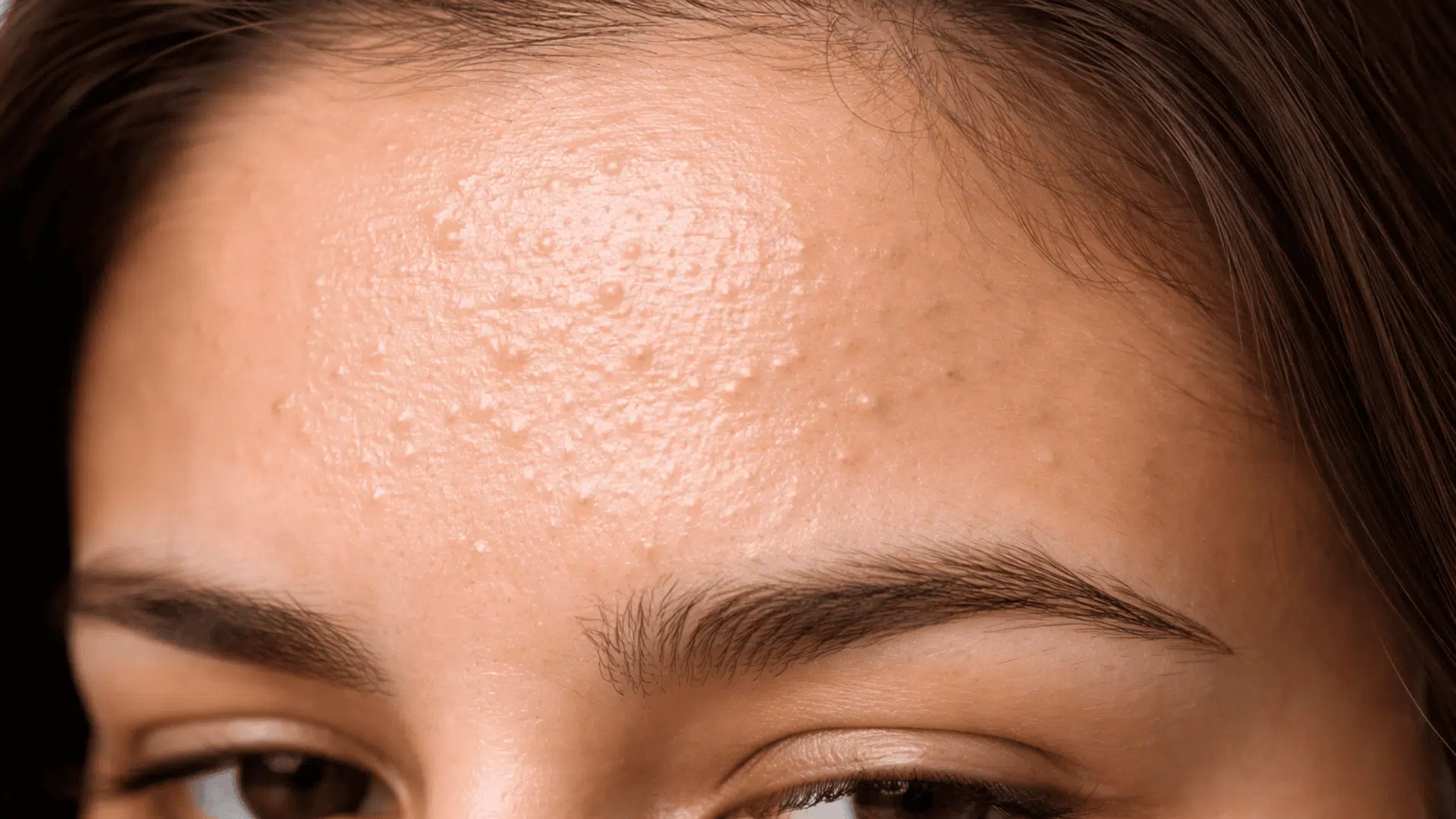
Clogged pores are the most common culprit. Your forehead has lots of oil glands. When dead skin cells mix with oil, they block pores and create small, raised bumps.
These look tiny, flesh-colored or white, and usually don’t hurt. Common triggers include not washing your face properly, heavy makeup or hair products, and touching your forehead often.
Acne bumps form when bacteria infect blocked pores. Hormonal changes, stress, and oily skin contribute to breakouts. These bumps appear red and inflamed, often with white or yellow centers.
Keratosis pilaris causes small, rough bumps that feel like sandpaper. This happens when keratin protein builds up in hair follicles. The condition runs in families and gets worse in dry weather.
Scalp-related bumps appear along the hairline. Dandruff or fungal infections spread from your scalp to your forehead. These bumps are small, red or white, and often itchy or flaky.
Types of Forehead Bumps

Different bumps need different treatments. Here’s how to identify what you have.
Pimples are inflamed, raised bumps that turn red because of infection and swelling. They include:
- Papules: Small red bumps without pus
- Pustules: Red bumps with white or yellow centers
- Nodules: Large, hard bumps deep under the skin
- Cysts: Painful, pus-filled lumps that need professional care
Whiteheads and blackheads are both types of clogged pores. The difference is whether the pore stays closed or opens.
- Whiteheads: Small, flesh-colored bumps where oil and skin cells get trapped inside a closed pore
- Blackheads: Dark spots where the pore opens to air and the top oxidizes, turning black
Keratosis pilaris bumps feel rough and look like permanent goosebumps. Key features include:
- Many small bumps are grouped together
- Dry, scaly texture
- May be red or skin-colored
- Don’t come to a head like pimples
- Usually don’t hurt or itch
Scalp-related bumps appear along the hairline and sometimes spread down the forehead. Common types include:
- Fungal folliculitis (yeast infection)
- Seborrheic dermatitis bumps
- Dandruff-related irritation
- Contact dermatitis from hair products
- Often itchy with flaking
Now that you know what type of bumps you have, let’s look at the best home remedies to treat them.
How to Get Rid of Forehead Bumps at Home
These natural treatments work well for most forehead bumps. Try them consistently for 2-4 weeks to see results. Home remedies are gentler than prescription treatments and cost less.
They use ingredients you likely have in your kitchen or bathroom already. The key is patience and consistency. Apply treatments at the same time each day. Track your progress weekly by taking photos.
Don’t expect overnight miracles, but you should notice improvement within the first week. If one remedy doesn’t work after three weeks, try a different approach. Many people combine multiple remedies for better results.
Always patch test new ingredients on your wrist first to check for allergic reactions.
1. Overnight Treatments

Apply these before bed for faster results. Your skin repairs itself while you sleep. This makes nighttime the best time for treatments to work. The ingredients have hours to penetrate deeply without interference from makeup, sweat, or sun exposure.
Tea Tree Oil
Fights bacteria and reduces inflammation naturally.
- Mix 1-2 drops with a carrier oil like coconut or jojoba
- Dab on affected areas before bed
- Leave overnight and rinse in the morning
- Never apply pure tea tree oil directly, as it’s too strong
Honey and Turmeric Mask
Both ingredients reduce swelling and fight bacteria.
- Mix 1 tablespoon raw honey with ½ teaspoon turmeric powder
- Apply to clean forehead for 15-20 minutes
- Rinse with warm water and pat dry
- Note: Turmeric may temporarily stain skin yellow, butit fades within hours
2. Exfoliation

Remove dead skin cells to prevent and clear bumps. Dead skin cells pile up on your surface every day. When they don’t shed naturally, they mix with oil and clog your pores.
Regular exfoliation clears this buildup before it becomes a problem. Stick to 2-3 times per week maximum to avoid irritation.
Salicylic Acid
Gets inside pores and clears them out effectively.
- Choose a 2% salicylic acid cleanser or toner
- Apply once or twice daily, depending on skin sensitivity
- Start with once daily if you have sensitive skin
- This ingredient dissolves the buildup that holds dead skin cells together
Gentle Scrubs
Physical exfoliation removes surface buildup.
- Use a soft washcloth with cleanser, sugar and honey scrub, or oatmeal-based scrubs
- Exfoliate 2-3 times per week maximum
- Don’t scrub hard or use harsh products, as this irritatesthe skin
3. Aloe Vera

Pure aloe soothes irritated skin and speeds healing.
- Use gel directly from the plant for best results
- Or buy 99% pure aloe gel from stores
- Apply a thin layer to bumps and leave for 20 minutes or overnight
- Rinse if needed in the morning
- Works for all bump types, especially inflamed pimples
4. Cold Compress

Reduces swelling and redness quickly.
- Wrap the ice pack in a clean cloth
- Hold on bumps for 10 minutes
- Remove for 10 minutes, then repeat 2-3 times
- Best used when bumps are red, swollen, or painful
- Cold constricts blood vessels and reduces inflammation
5. Anti-Dandruff Shampoo

Treats scalp issues that cause forehead bumps along the hairline.
Best ingredients to look for:
- Ketoconazole: Fights fungus effectively
- Zinc pyrithione: Controls yeast overgrowth
- Selenium sulfide: Reduces flaking and irritation
How to use:
- Wash hair as normal with the shampoo
- Let it sit for 3-5 minutes before rinsing
- Rinse thoroughly to avoid residue on the forehead
- Use 2-3 times per week for best results
- Some people apply directly to the forehead bumps as a 5-minute mask
Once you’ve started treatment, you’ll want to know when professional help is needed.
When to See a Dermatologist?
Some situations need professional care. See a doctor if you notice these signs.
- Persistent bumps: You’ve tried home treatments for 8-12 weeks with no improvement. A dermatologist can prescribe stronger medications that work faster. They may recommend tretinoin, antibiotic creams or pills, or prescription-strength salicylic acid.
- Painful bumps: Large, deep bumps that hurt need medical attention. These are often cystic acne or nodules. Home treatments don’t reach deep cysts. You risk scarring if you try to pop them. Prescription medication prevents future cysts. Doctors may need to drain large cysts safely.
- Signs of infection: Watch for bumps that ooze pus or fluid, increasing redness spreading outward, warmth around the bump, fever or feeling sick, and bumps that won’t heal. These indicate a bacterial infection that needs antibiotics.
- Unusual or changing bumps: See a dermatologist if bumps change color or shape rapidly, bleed without cause, look different from normal acne, or don’t respond to any treatment.
- Severe emotional impact: If forehead bumps affect your mental health, seek help. Dermatologists understand this concern and have effective solutions.
Knowing when to get professional help is important, but preventing bumps in the first place is even better.
Prevention Tips
Stop new bumps before they form. These habits make a real difference in keeping your forehead clear.
Clean skin is less likely to develop bumps. Wash your face twice daily with a gentle cleanser and lukewarm water. Don’t overwash as this irritates skin and causes more breakouts.
Avoid touching your forehead throughout the day since your hands carry bacteria and oil. Break this habit by keeping your hands busy and notice when you unconsciously touch your face.
Choose non-comedogenic products that won’t clog pores. Read labels on moisturizers, sunscreens, makeup, and hair products. Avoid ingredients like coconut oil, cocoa butter, and heavy silicones on your forehead.
If scalp issues cause your bumps, continue using anti-dandruff shampoo 1-2 times weekly even after the bumps clear.
Keep hair products off your forehead by pulling your hair back when sleeping. Wash pillowcases weekly, wipe your phone screen daily, and clean items that touch your face regularly.
Quick tip: Change your pillowcase every 2-3 days if you’re prone to forehead bumps. Oil, bacteria, and product residue build up fast on fabric that touches your face nightly.
Now let’s wrap up everything you’ve learned about treating forehead bumps.
Conclusion
Getting rid of forehead bumps is possible with the right approach. Most bumps respond well to home treatments like salicylic acid, tea tree oil, and proper cleansing.
Identify what type of bumps you have first, then choose treatments that target that specific cause.
Be consistent and patient. Give remedies at least 2-4 weeks to work before trying something new. Many people see improvement within the first week.
If bumps persist after 8-12 weeks or cause pain, see a dermatologist. Professional treatments can clear stubborn cases faster.
Prevention is key once your skin clears. Maintain a good skincare routine, avoid touching your face, and use non-comedogenic products.
Clear skin is within reach. Start with one treatment from this guide today and track your progress weekly.
What home remedy will you try first? Share your experience in the comments below.
Frequently Asked Questions
How Long Do Small Bumps on the Forehead Last?
Timeline varies by bump type. Simple clogged pores clear in 1-2 weeks with treatment. Inflammatory acne takes 4-6 weeks to heal completely. Keratosis pilaris improves in 8-12 weeks with consistent exfoliation and moisturizing.
How to Get Rid of a Textured Forehead?
Exfoliate regularly with a daily salicylic acid cleanser and 2-3 times weekly chemical exfoliant. Use retinol at night and moisturize with a lightweight, non-comedogenic lotion. Results in 6-12 weeks.