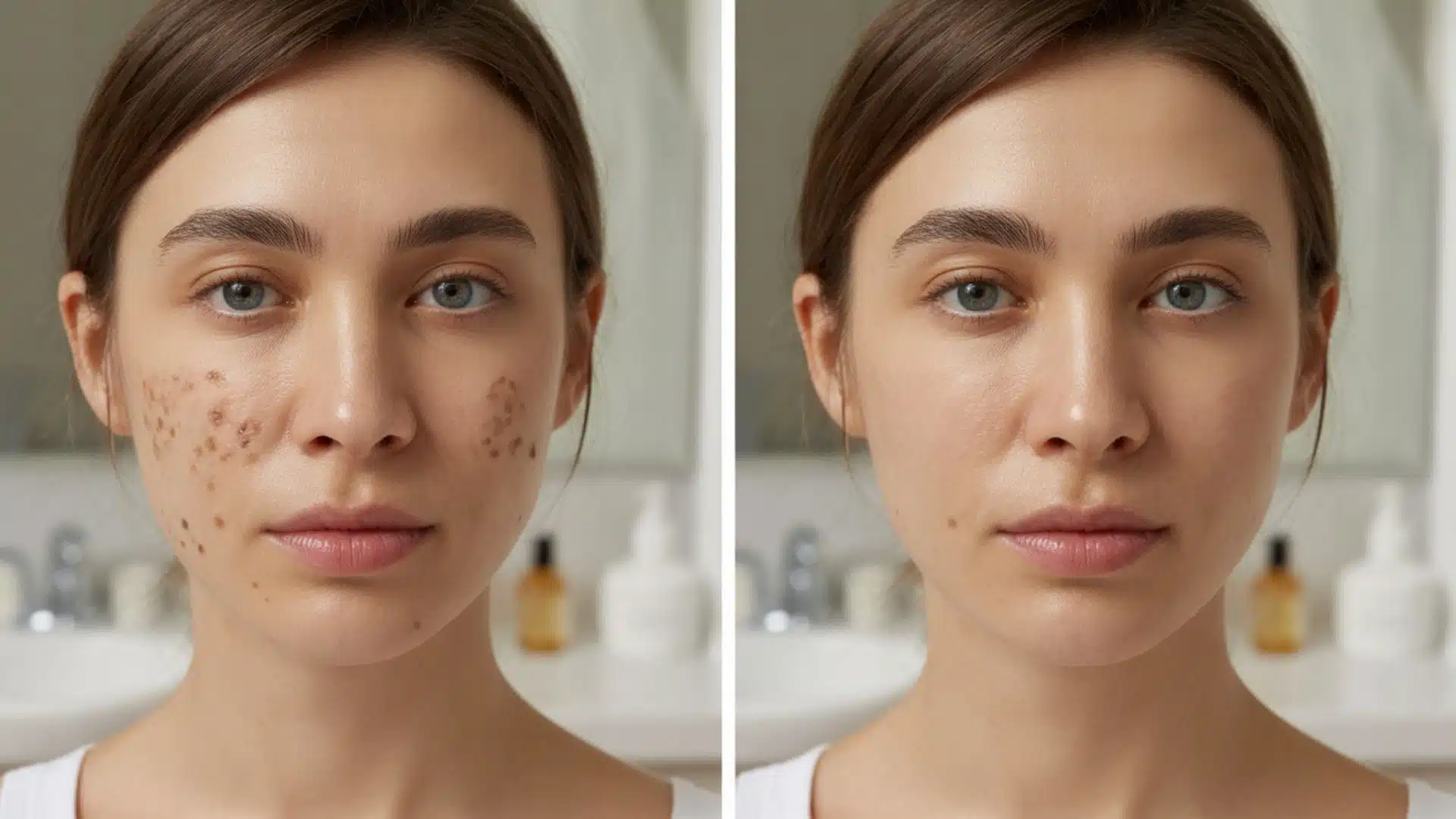
Have you noticed stubborn dark spots that just won’t fade, no matter what you try?
These patches can feel impossible to treat with regular skincare products. But here’s some good news for you.
Retinol has become one of the most talked about solutions for fading dark spots and evening out skin tone. This vitamin A derivative works at the cellular level to accelerate skin renewal and reduce pigmentation.
In this blog, I’ll show you what causes dark spots to form, how retinol works to fade them, the right way to use it, realistic timelines for results, safe ingredient combinations, and how to manage side effects.
Let’s get started on your path to clearer, more even skin.
What Are Dark Spots and Why Do They Form?
Dark spots occur when your skin produces too much melanin. This creates patches darker than the surrounding skin. They appear mostly in sun-exposed areas.
These spots have different names, like age spots or hyperpigmentation. They all result from melanin clustering in specific areas instead of spreading evenly.
Common causes of dark spots:
- Sun exposure: UV rays trigger excess melanin production as your skin tries to protect itself from damage.
- Hormonal changes: Pregnancy and birth control can cause melasma, a type of dark patch on the face.
- Acne scars: Post-inflammatory hyperpigmentation appears after pimples heal and leave marks behind.
- Aging: Years of sun damage accumulate and show up as spots later in life.
- Skin injuries: Cuts, burns, or other trauma can leave darker areas after healing.
Your skin type affects how dark spots form. Darker skin tones naturally produce more melanin. They’re more prone to hyperpigmentation after irritation.
How Retinol Works to Fade Pigmentation?

Retinol for hyperpigmentationaccelerates your skin’s cell turnover. Your skin normally sheds dead cells every 28 days. Retinol shortens this cycle significantly.
When you apply retinol, it penetrates deep into the skin layers. It converts to retinoic acid, triggering faster cell production. New cells push out pigmented ones.
Retinol also works in other ways to clear dark spots
| Mechanism | How It Helps |
|---|---|
| Reduces melanin production | Slows down the creation of new pigment in melanocytes |
| Exfoliates the skin surface | Removes dead, pigmented cells sitting on top of the skin |
| Boosts collagen | Improves overall skin texture and makes spots less noticeable |
| Even skin tone | Distributes melanin more uniformly across the skin surface |
The science backs this up. Studies show retinol can reduce hyperpigmentation by up to 40% after several months of consistent use. It works on various types of dark spots, including sun damage and acne marks.
How to Use Retinol Effectively for Dark Spots?

Starting retinol correctly makes all the difference between great results and irritated skin. Begin with a 0.25% to 0.5% concentration if you’re new to retinol.
Follow this step-by-step routine:
- Cleanse your face thoroughly and pat dry completely.
- Wait 20 to 30 minutes for the skin to be fully dry.
- Apply a pea-sized amount of retinol to the face and neck.
- Wait another 20 minutes before applying moisturizer.
- Use a rich moisturizer to lock in hydration and reduce dryness.
Start using retinol twice weekly. After two weeks, increase to three times if skin tolerates well. Gradually work up to nightly use over months.
Always wear SPF 30 or higher daily. Retinol makes skin sun-sensitive. Skipping sunscreen creates more dark spots instead of fading existing ones.
How Long Does It Take Retinol to Work?
Patience is key when using retinol for dark spots. You won’t see results overnight. How long retinol takes to workdepends on several factors.
Most people notice initial improvements around 8 to 12 weeks of consistent use. Your skin texture improves first. Dark spots start fading gradually after.
Timeline for visible results
|
Consistency matters more than anything else. Skipping applications prevents progress completely. Stick with your routine even when results seem slow at first.
Safe Pairings and Ingredients to Avoid
Knowing what to combine with retinol maximizes results while keeping skin safe. Some ingredients work beautifully together. Others cause serious irritation or problems.
Safe ingredients to use with retinol
- Hyaluronic acid: Provides hydration and reduces dryness from retinol without causing irritation.
- Niacinamide: Calms skin and boosts retinol’s brightening effects when used in the morning.
- Ceramides: Strengthen skin barrier and prevent moisture loss during retinol treatment.
- Peptides: Work with retinol to boost collagen production and improve skin firmness.
Ingredients to avoid mixing with retinol
| Ingredient | Why to Avoid |
|---|---|
| Vitamin C | Both are acidic and can destabilize each other, causing irritation |
| AHA/BHA acids | Too much exfoliation leads to redness, peeling, and a damaged skin barrier |
| Benzoyl peroxide | Can oxidize and deactivate retinol, making it completely ineffective |
| Physical exfoliants | Scrubs and brushes create micro tears on already sensitive retinol-treated skin |
If you want extra brightening, apply vitamin C in the morning. Save retinol for nighttime. This spacing prevents negative interactions between ingredients.
Keep your routine simple when starting retinol. Use just cleanser, retinol, moisturizer, and sunscreen. Too many products make troubleshooting irritation difficult.
Common Side Effects and How to Manage Them
Retinol comes with a few side effects, especially when starting the treatment. Your skin needs time to build tolerance. These effects are temporary for most people.
- Dryness and flaking: As your skin renews faster, apply a deeply nourishing moisturizer or hydrating serum to restore comfort and prevent peeling.
- Redness and irritation: Face may look pink or feel sensitive. Reduce frequency to once or twice weekly until irritation calms down.
- Purging: Hidden acne surfaces more quickly, leading to temporary breakouts. This is normal. Continue use, and it will pass within weeks.
- Sun sensitivity: Because retinol heightens sun sensitivity, apply a broad-spectrum SPF 30+ each morning and reapply regularly when outside.
Stop using retinol if you develop severe burning, swelling, or blistering. Pregnant or breastfeeding women should avoid retinol completely for baby safety.
When to See a Dermatologist?
Sometimes dark spots need professional attention beyond over-the-counter retinol. See a dermatologist if spots haven’t improved after 6 months of consistent use.
Other reasons to consult a dermatologist
- Dark spots that change shape, size, or color may indicate skin cancer.
- Severe melasma covering large areas needs specialized treatment.
- Your skin can’t tolerate retinol without severe irritation.
- Underlying conditions, such as eczema, complicate retinol use.
Dermatologists offer stronger treatments, such as prescription retinoids, chemical peels, or laser therapy, tailored to your skin type. Early intervention often leads to better outcomes.
Wrapping It Up
Yes, retinol helps with dark spots. Retinol speeds up cell turnover and effectively reduces melanin production.
Begin with a milder formula and slowly progress to stronger strengths as your skin adapts. Make sunscreen a non-negotiable part of your morning routine to preserve results and prevent new pigmentation
Expect visible improvements within 3 to 6 months of consistent use. Avoid mixing it with harsh acids or vitamin C at night.
If spots persist after 6 months or change appearance, consult a dermatologist for stronger treatments. Patience and consistency are essential for success.
Have you tried retinol for your dark spots? Share your experience in the comments below!