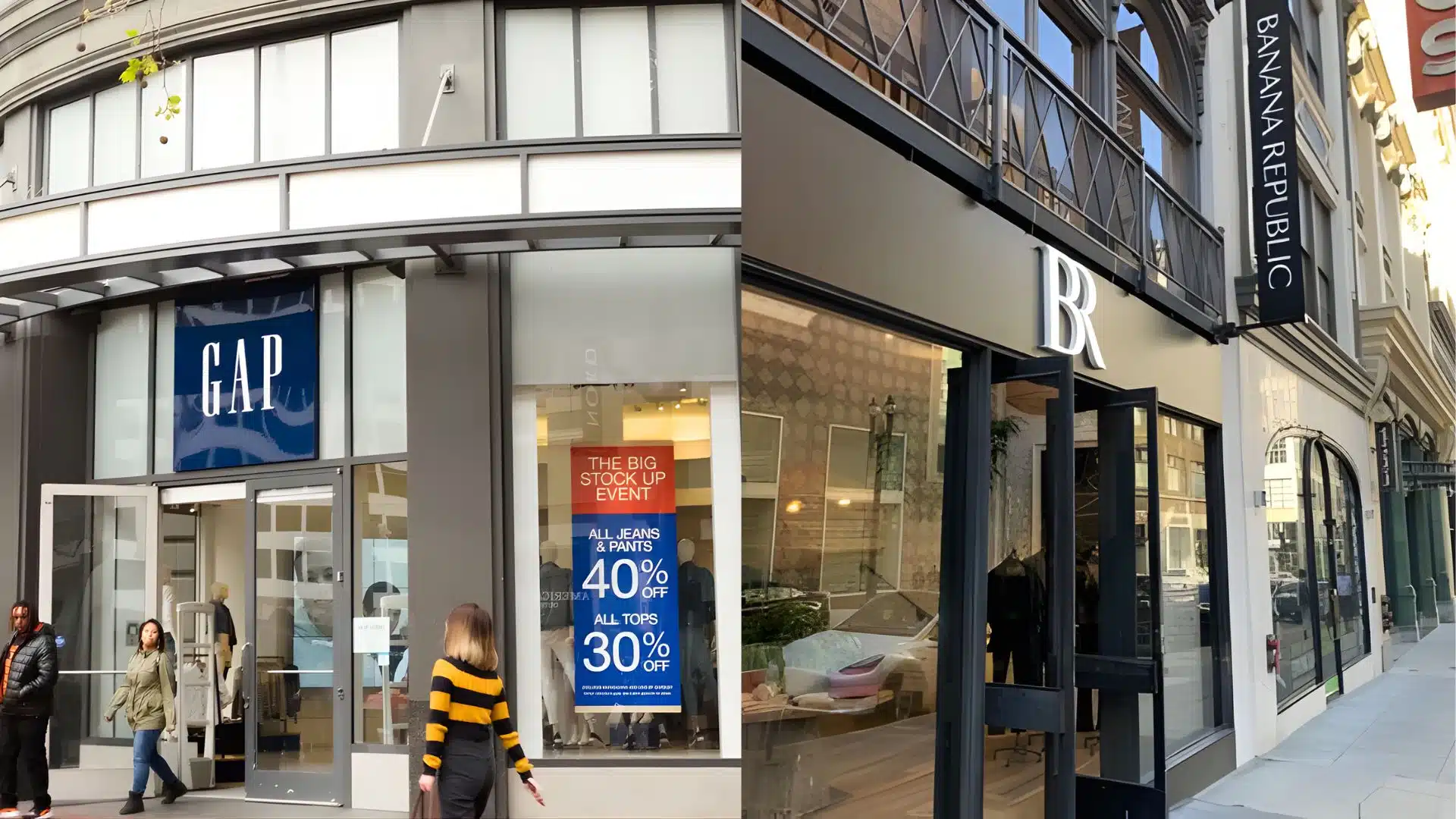
Gap Inc. owns Banana Republic. It has since 1983, when it purchased the brand for what was then a two-store safari-themed retail business in California.
That single fact explains a lot about how Banana Republic operates today; its pricing model, its supply chain decisions, its sustainability record, and even the quality gaps shoppers notice between seasons.
To comprehend the brand, you have to comprehend who controls it and what that company prioritizes.
Where Did Banana Republic Come From?
Banana Republic was founded in 1978 by Mel and Patricia Ziegler in Mill Valley, California. Mel was a journalist, and Patricia was an illustrator.
They started the brand with a simple idea: sell military surplus and safari-inspired clothing through a store that felt more like an experience than a shop.
The original name was Banana Republic Travel and Safari Clothing Company.
The stores were known for their themed interiors, hand-drawn catalogs, and a quirky personality that set them apart from the rest of the market at the time.
By late 1983, the brand had five stores across California and annual sales of $10 million.
That growth caught the attention of Gap Inc. The acquisition happened in 1983 under Gap president Millard Drexler and chairman Donald Fisher.
It gave Gap a strong brand identity and a loyal customer base in a segment it had not previously occupied.
What Happened After Gap Bought Banana Republic?

The early years under Gap ownership kept much of what made Banana Republic distinctive. But by 1988, the founders, Mel and Patricia Ziegler, had lost creative control of the brand.
The hand-drawn catalogs disappeared. The safari themes were phased out. The brand shifted toward a more conventional mid-range retail identity.
According to Wikipedia, the rebrand positioned Banana Republic as a masstige label, sitting between accessible everyday fashion and true luxury.
Higher-quality materials were gradually replaced with lower-cost fabric standards as the brand scaled up to match Gap Inc.’s broader retail model.
Long-time customers who bought Banana Republic in the 1990s and early 2000s describe a noticeable difference in construction and fabric weight compared to current stock.
That change tracks directly with the move toward higher volume production under corporate ownership.
Who Actually Controls Gap Inc.?
Gap Inc. is a publicly traded company listed on the New York Stock Exchange under the ticker GPS. But a public listing does not mean ownership is evenly distributed.
The Fisher family holds the largest stake in Gap Inc. Donald Fisher co-founded Gap in 1969 alongside his wife, Doris F. Fisher. The family has remained deeply involved in the company ever since.
As of the most recent filings, Donald Fisher’s three sons hold significant positions:
| Family Member | Ownership Stake in Gap Inc. |
|---|---|
| John Fisher | 17.23% |
| William Fisher | 15.94% |
| Robert Fisher | 15.47% |
Beyond the Fisher family, institutional investors also hold major positions. Dodge and Cox hold approximately 10.4 percent, and BlackRock holds around 6.4 percent.
Donald Fisher served as chairman of the board until 2004 and remained on the board until his death in 2009. His sons have continued to shape the company’s direction since then.
What Other Brands Does Gap Inc. Own?
Banana Republic is one of four primary brands under the Gap Inc. umbrella. Each targets a different price point and customer profile.
| Brand | Target Market | Price Point |
|---|---|---|
| Old Navy | Budget-conscious families | Low |
| Gap | Everyday basics, casual wear | Mid |
| Banana Republic | Professionals, mid-range fashion | Mid to high |
| Athleta | Women’s activewear | Mid to high |
Banana Republic sits at the top of this group in terms of price and perceived quality. It targets working professionals who want polished, office-appropriate clothing without paying luxury prices.
In 2022, Gap Inc. generated over $15 billion in revenue across all four brands. Apprehending this structure matters when you read about Banana Republic’s materials or labor practices.
Decisions about fabric sourcing, factory standards, and sustainability targets are made at the Gap Inc. level, not by Banana Republic as a standalone brand.
That is why so many of the concerns raised about Banana Republic’s ethical track record trace back to parent company policies rather than anything the brand controls on its own.
How Does Gap Inc. Ownership Affect Banana Republic Today?
Ownership structure shapes everything from pricing strategy to production volume. Because Banana Republic operates within a conglomerate alongside Old Navy and Gap,
That creates efficiencies at scale, but it also means Banana Republic cannot move independently on issues like factory wages or material sourcing.
Gap Inc. has set a group-wide target to reduce greenhouse gas emissions by 50 percent by 2030. It aims for 100 percent sustainable cotton across its brands.
These goals apply to Banana Republic, but the reporting and verification sit at the parent company level. The same is true for quality decisions.
When production volume increases across Gap Inc. brands, cost pressures filter down into material choices and construction standards across all labels.
Shoppers who have tracked Banana Republic’s quality over time point to this as one reason construction feels less consistent than it did in earlier decades.
Has There Been Any Talk of Selling Banana Republic?
There have been periods when Gap Inc. considered separating Old Navy into a standalone company, leaving Banana Republic and Gap as a combined entity.
That plan was announced in 2018 and then abandoned in 2020. Banana Republic itself has not been publicly targeted for sale.
It remains a core part of Gap Inc.’s portfolio and one of the group’s higher-margin brands due to its mid-to-premium price positioning.
The brand has faced declining store traffic and sales pressure in recent years, which is a pattern across much of mid-range fashion retail.
Gap Inc. has responded by reducing the number of Banana Republic store locations and pushing harder on the online channel.
Why Does Ownership Matter to Shoppers?

It matters because ownership determines priorities. A brand owned by a large conglomerate answers to shareholders, quarterly earnings, and group-level cost targets before it answers to individual customers.
That is not unique to Gap Inc. It is how most large retail groups operate. For Banana Republic, it means the brand will continue to balance its mid-range positioning against the volume demands of a publicly traded parent.
Progress on sustainability, worker welfare, and material quality will move at the pace Gap Inc. sets, not at the pace shoppers might want.
The parent company’s production model is part of why Banana Republic is widely classified as a fast fashion brand, even as the brand markets itself as something more considered and lasting.
Conclusion
Gap Inc. has owned Banana Republic since 1983. The Fisher family controls the largest share of Gap Inc., with institutional investors like Dodge and Cox and BlackRock holding significant positions alongside them.
That ownership structure shapes everything about how Banana Republic operates: its production model, its sustainability targets, its pricing, and the quality trade-offs shoppers notice.
Learning who owns the brand puts every other conversation about it in a clearer frame. What matters most to you when you choose where to spend your money? Drop your thoughts in the comments.
Frequently Asked Questions
Is Banana Republic Considered a Luxury Brand?
No, it is classified as “masstige” or premium mid-range. It offers a more upscale aesthetic than Gap but remains more affordable than true high-end luxury fashion houses.
Does Banana Republic Offer a Clothing Rental Service?
Yes, the brand launched a subscription service called Style Passport. It allows customers to rent clothing sets for a monthly fee, with free shipping and unlimited exchanges.
What Is the Difference Between Banana Republic and Factory Stores?
Factory stores sell clothing specifically manufactured for the outlet market. These items typically use different fabrics and simpler designs to maintain a lower price point than retail stores.
Does the Brand Offer Petite and Tall Sizing?
Banana Republic is well-known for its inclusive sizing, offering dedicated collections for petite and tall proportions to ensure a better fit for a range of body types and heights.
Can I Return Banana Republic Items to A Gap Store?
Generally, items must be returned to the specific brand store where they were purchased. However, online orders can occasionally be returned across brands depending on the current corporate policy