
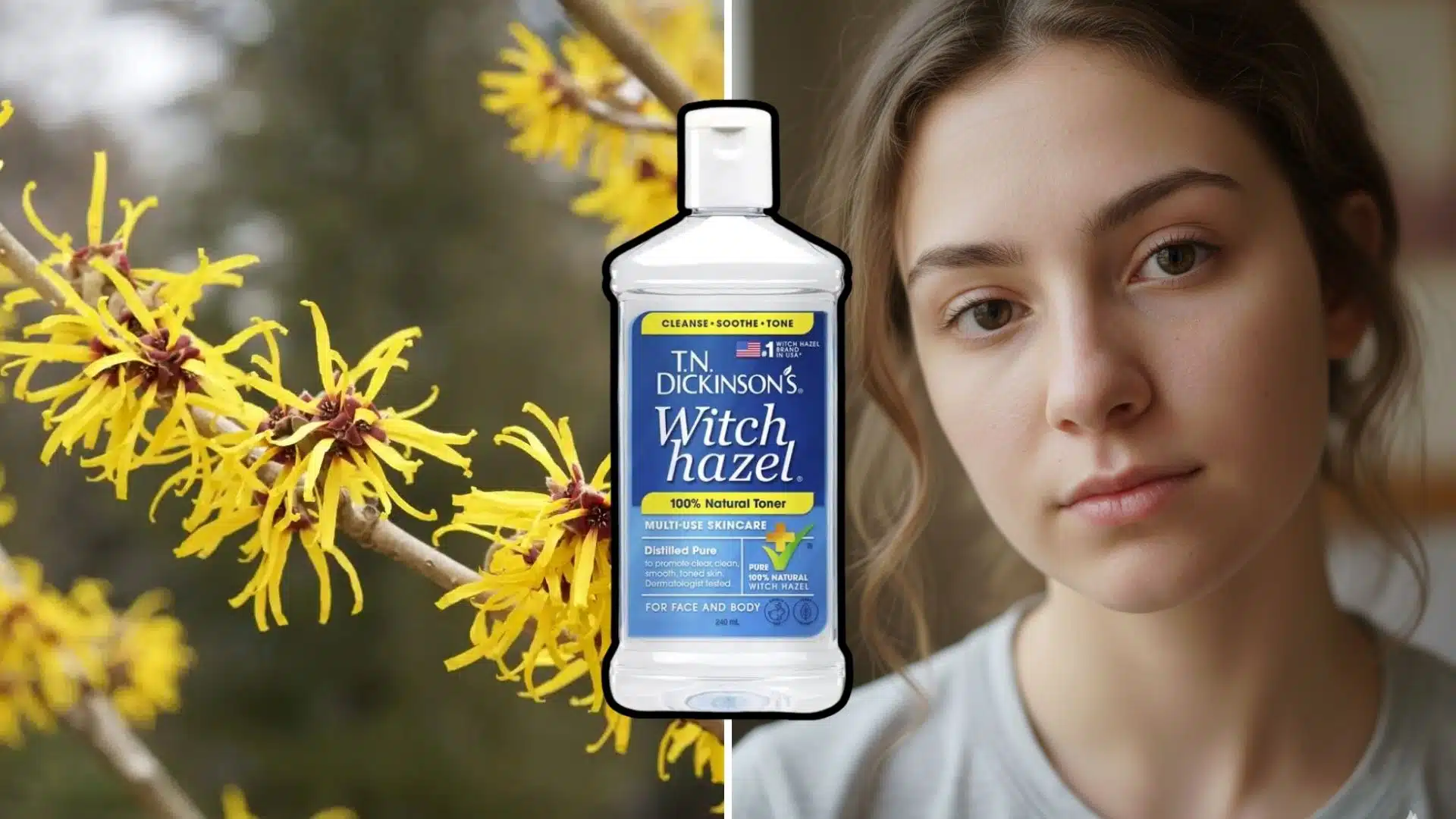
Ever wondered why your skin feels oily by midday despite washing it every morning?
Many people struggle with ongoing skin issues that seem impossible to fix. You try different products but see minimal results. The frustration grows as your complexion remains unbalanced.
A simple natural solution has been used for generations to address various facial concerns. It works without harsh chemicals or complicated routines that drain your time and money.
This remedy targets common problems that affect your daily confidence and comfort. Knowing how it functions can help you make better skincare choices for your specific needs.
In this blog, I’ll share the full details of this natural solution and how it may fit your needs.
What Is Witch Hazel?
Witch hazel comes from a shrub called Hamamelis virginiana. This plant grows naturally in North America. Native Americans used it for centuries to heal wounds and treat skin problems.
The extract comes from the plant’s leaves, bark, and twigs. These parts contain tannins and flavonoids. Tannins give witch hazel its tightening effect. Flavonoids provide antioxidant protection for your skin.
Main Active Ingredients
- Tannins → natural compounds that tighten skin tissue
- Gallic acid → reduces swelling and fights inflammation
- Flavonoids → protect cells from damage
- Catechins → offer antimicrobial benefits
Most store-bought witch hazel is distilled with water or alcohol. The liquid looks clear and has a mild scent. Some brands add aloe or rose water for extra soothing effects.
How Does It Work on Your Skin?
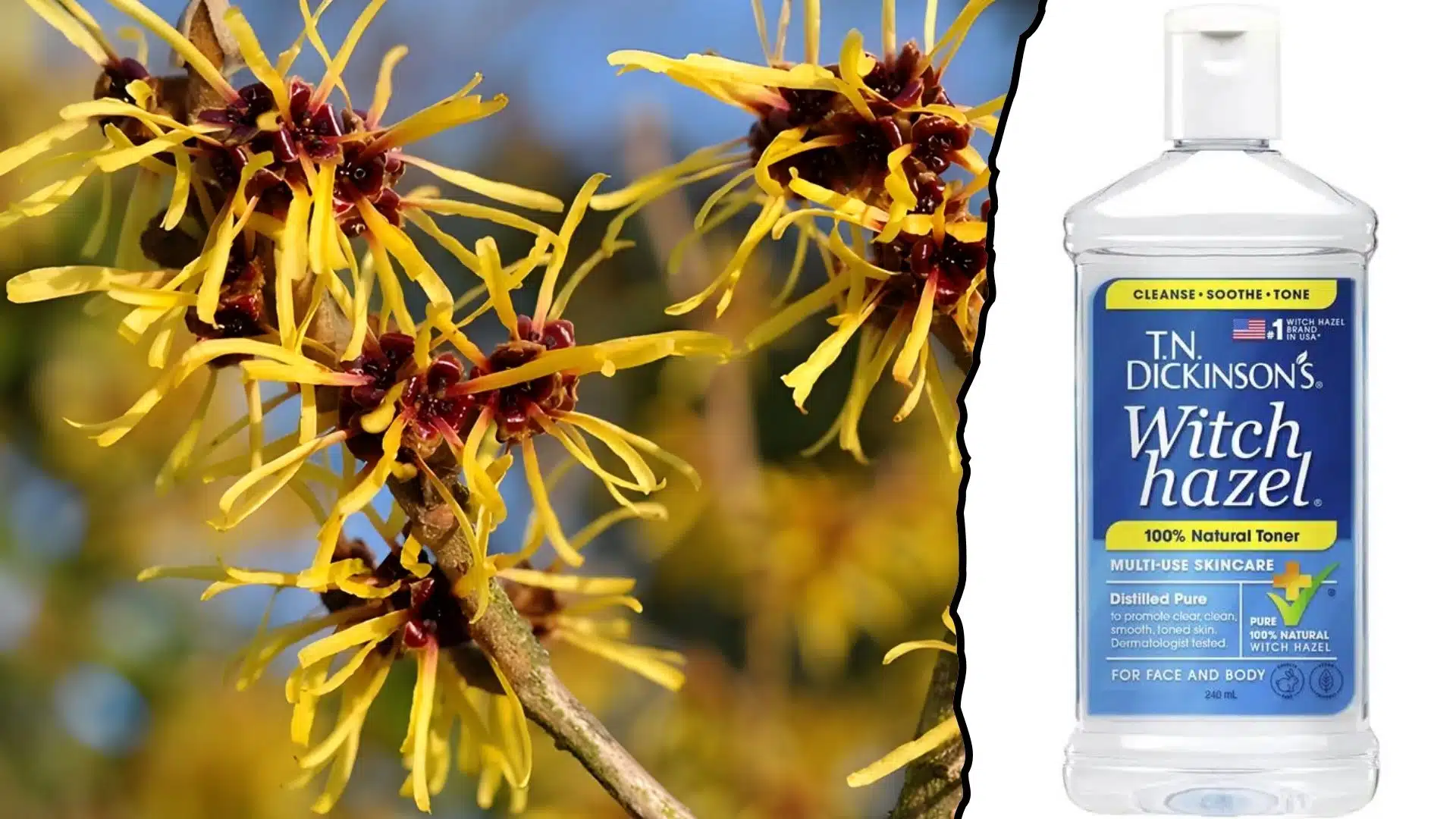
Witch hazel affects your skin through multiple biological processes. The extract’s natural compounds interact with skin cells, blood vessels, bacteria, and tissue proteins when applied topically.
As an astringent: The tannins temporarily contract your skin cells. This tightens the tissue and makes pores look smaller. Oil production decreases when pores constrict.
Anti-inflammatory action: The gallic acid and tannins reduce swelling in skin tissue. Blood vessels constrict, which lessens redness. This helps calm irritated areas quickly.
Antimicrobial properties: Studies show that witch hazel can reduce bacteria on skin surfaces. It creates an environment less friendly to acne-causing germs. This helps prevent new breakouts from forming.
Antioxidant effects: The flavonoids neutralize free radicals that damage skin cells. This protects your skin from environmental stress. Over time, this may help maintain healthier-looking skin.
7 Key Benefits Witch Hazel Offers Your Face
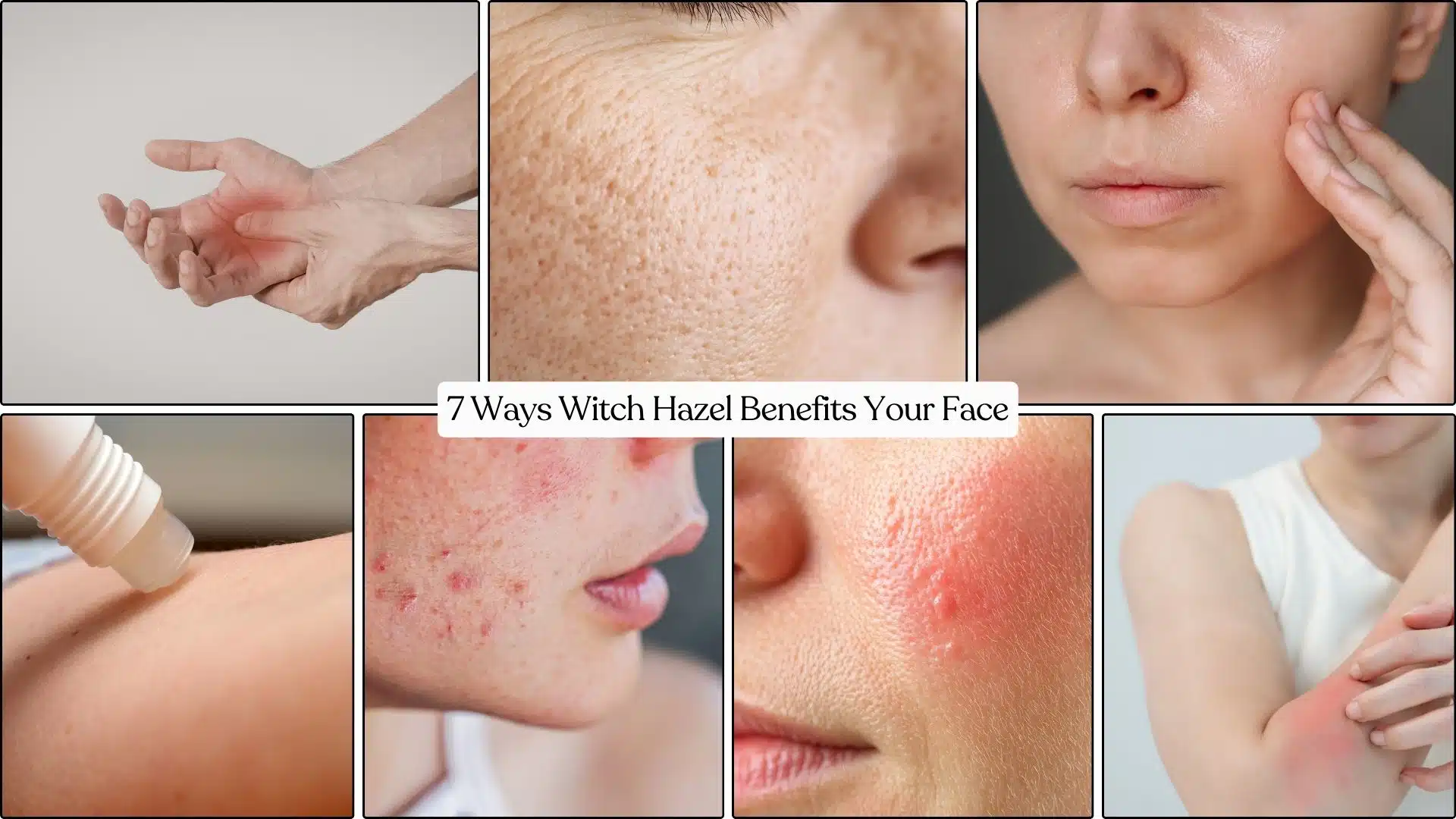
Now that you know how witch hazel works on your skin, let’s check out the specific advantages it offers. These seven benefits show what this natural extract can do.
1. Reduces Inflammation
Witch hazel has strong, soothing properties that quickly ease discomfort and help calm irritated skin. Research shows it can reduce redness by up to 27 percent.
How it helps:
✓ Helps settle flushed areas by relaxing stressed skin tissue.
✓ Soothes irritated skin from breakouts.
✓ Calms reactions from insect bites or minor burns.
Products with just 10 percent witch hazel can reduce skin inflammation. The extract also works for eczema and psoriasis. Apply to affected areas after cleansing for results.
2. Tightens Pores
Large pores are a common concern, especially in the T zone. Witch hazel temporarily shrinks the appearance of pores. The tannins cause proteins in skin cells to bind together.
What you’ll notice: → Softer-feeling skin → Reduced pore visibility → A more polished, even finish
Remember that pores cannot permanently close. The tightening effect lasts several hours. Regular use helps maintain this improved appearance. Apply after washing but before moisturizing for maximum impact.
3. Controls Excess Oil
Oily skin happens when sebaceous glands produce too much sebum. This excess oil mixes with dead cells and clogs pores. Witch hazel lifts away buildup gently while keeping your skin balanced.
Oil control benefits:
| Problem | How Witch Hazel Helps |
|---|---|
| Shiny T zone | Mattifies the skin surface |
| Clogged pores | Absorbs excess sebum |
| Midday shine | Prevents oil buildup |
People with oily or combination skin see the best results. Use it once or twice daily. Always follow with a moisturizer to prevent your skin from overcompensating by producing more oil.
4. Soothes Irritation
Sensitive skin reacts to many triggers. Witch hazel offers gentle relief from discomfort. Its cooling effect calms burning sensations and itchiness.
Soothing applications:
- After shaving to prevent razor burn.
- On sunburned skin for cooling relief.
- Over rashes from poison ivy or oak.
- Around insect bites to reduce itching.
The anti-inflammatory properties work within minutes. Soak a cotton pad and hold it on irritated areas. Do not rub or scrub. Let the extract absorb naturally into your skin.
5. Helps Calm Acne
Acne develops when pores clog with oil, dead cells, and bacteria. Witch hazel addresses all three factors. It removes excess oil, has antimicrobial effects, and reduces inflammation.
Three ways it fights acne:
Oil Reduction → Helps clear away buildup that triggers clogged pores
Bacteria Control → Supports a cleaner surface that discourages breakouts
Swelling Relief → Calms red, inflamed pimples
Research on witch hazel bark extract shows it reduces substances that cause acne inflammation. Apply it as a toner after cleansing. Focus on areas prone to breakouts like the forehead and chin.
Do not expect overnight results. Consistent use over several weeks shows the best improvement. Combine it with other acne treatments for improved effects.
6. Reduces Redness
Red, blotchy skin makes many people self-conscious. Witch hazel helps reduce facial flushing by calming the skin’s surface and easing visible color changes.
Research shows that witch hazel can noticeably lessen visible blotching linked with sensitive skin reactions. Gently apply it to red areas twice daily. Results typically appear within 1 to 2 weeks of regular use.
7. Acts as a Natural Astringent
Astringents refresh the skin and sweep away residue, and witch hazel performs this role gently without causing dryness. Many alcohol free formulas exist specifically for sensitive skin.
Astringent benefits:
→ Removes residue: Clears leftover makeup and cleanser
→ Balances pH: Restores skin’s natural acid mantle
→ Prepares skin: Helps your face absorb follow-up products more effectively
→ Refreshes: Provides a cooling, clean feeling
Use it as the second step in your routine. After cleansing, apply witch hazel with a cotton pad. This removes any remaining impurities before you apply serums or moisturizers.
Is Witch Hazel Safe for Your Face?
Witch hazel is considered safe for most people when applied to facial skin. The FDA has approved it for topical over-the-counter use.
Potential side effects:
Some users may experience mild reactions when using witch hazel. These effects are uncommon but worth monitoring.
- Slight redness
- Itching
- Dryness
- Tightness after application
Severe allergic responses happen very rarely. Signs include swelling, hives, or trouble breathing. Get immediate medical attention if you experience these symptoms.
How Often Can You Use Witch Hazel on Your Face?
The correct frequency depends on your specific skin type and individual needs. There is no universal rule that works for everyone. Listen carefully to your skin’s response.
|
Frequency Guidelines by Skin Type Oily or Acne Prone Skin:
Normal or Combination Skin:
Dry or Sensitive Skin:
|
Start with less frequent use and slowly increase as your skin adjusts. Pay attention to warning signs like tightness or flaking. Adjust based on seasons and other products.
Wrapping It Up
To summarize, this natural extract offers a practical approach to managing common facial concerns.
The information shared here provides the foundation to decide whether it suits your needs.
Your skin type plays a significant role in determining how often and how much to use. Start slowly and observe the response before increasing application frequency.
Safety considerations matter, especially for those with dry or sensitive complexions. Always test new products on a small area first before applying to your entire face.
The choice is yours to make based on what you’ve learned today. Have you tried this remedy before? What was your experience like? Share your thoughts in the comments below!