

Which sneaker fits your lifestyle better when both look almost the same?
You want something that fits well, lasts long, and matches your style. But small differences in shape, materials, and comfort can change everything about how they feel on your feet.
These two classics have been around for decades. Each has built its own following over the years.
They might seem similar from far away, but up close, the differences become clear and matter more than you think.
In this blog, I’ll show you exactly how these two sneakers compare across fit, comfort, materials, and style.
By the end, you’ll know which one belongs in your closet.
What Sets Gazelle and Samba Apart?
Both shoes come from Adidas, but they were born at different times. The Samba arrived first in 1950 as a soccer training shoe. It was made for icy outdoor pitches.
The Gazelle came later in 1966. Adidas created it for general athletic training. Over time, it became more of a lifestyle sneaker than a sports tool.
Birth of Two Icons:
Samba has deep roots in football culture. Players wore them to practice on frozen ground. That connection to the sport still defines its identity among fans and collectors today.
Gazelle found its place in fashion and streetwear circles. Musicians and artists adopted it in the 1980s and 1990s. It became a symbol of casual style rather than athletic performance.
Built for Different Purposes:
The purpose behind each shoe is clear:
- Samba was built for grip and control on slippery surfaces.
- Gazelle focused on versatility across different types of physical activity and daily wear.
Design and Shape: What Each Sneaker Offers?
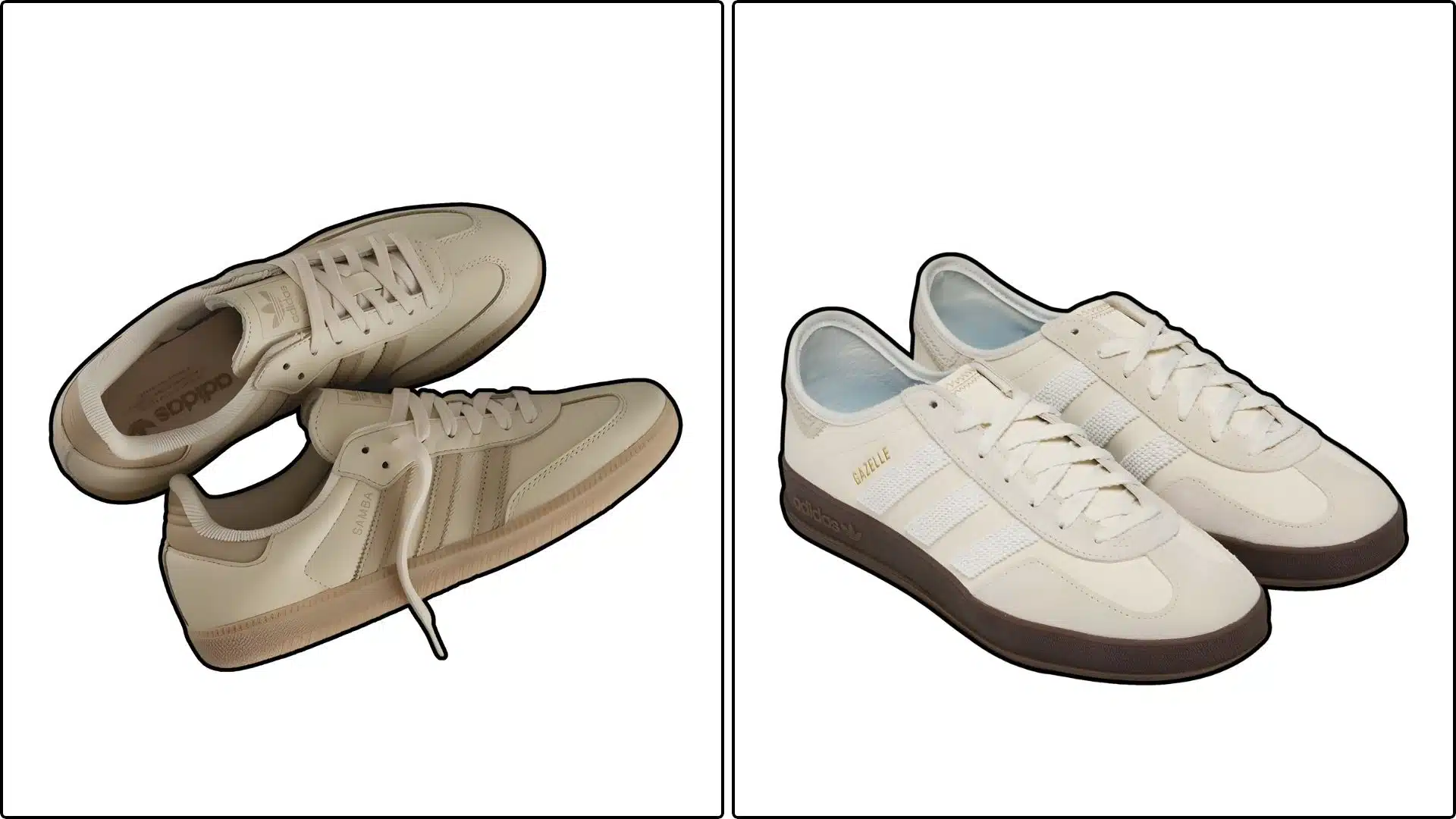
The visual differences between these two sneakers are easy to spot when placed side by side. Each model has its own distinct look that sets it apart from the other.
| Feature | Samba | Gazelle |
|---|---|---|
| Silhouette | Lower profile, compact | Taller, boxier shape |
| Toe Box | Narrow and pointed | Rounder and wider |
| Sole | Thin gum rubber | Slightly thicker midsole |
| Overall Look | Sleek and streamlined | Chunkier appearance |
Both shoes carry their own visual character. Samba looks minimal and close to the ground. Gazelle appears more substantial with added height and volume at the base.
Fit and Sizing: Which One Feels Better on the Foot?
How each sneaker sits on your foot makes a big difference. The way they hug your feet varies significantly between the two models.
Both shoes fit differently depending on your foot type. Knowing these differences helps you choose the right size and avoid returns or discomfort later.
Width and Tightness:
Samba has a noticeably tighter shape around both the midfoot and toe area. It feels snug around the sides of your foot, especially if you have wider feet.
Gazelle offers more room across the toe box. The fit is looser and more relaxed compared to Samba’s tight hold on your foot.
Sizing Recommendations:
Most people go true to size with Samba. The close hold feels better for people with slimmer feet or those who prefer a compact fit without needing adjustments.
Some people size down half a size with Gazelle. The added space often leads people to consider a slightly smaller size for a steadier, more comfortable fit.
Main highlight: The fit depends on what feels right for your foot shape. Samba suits those who like a snug hold, while Gazelle works for roomier comfort preferences.
Comfort and Support for Daily Use
Each sneaker performs differently during daily movement. Both offer different levels of cushioning and support based on their original design purpose.
Samba:
Samba creates a close-to-floor sensation because the cushioning stays light underfoot. The thin sole keeps your foot low and stable, but shock absorption stays limited during long walks.
✓ Firm ground contact with little padding.
✓ Flat arch support throughout the footbed.
✓ Best for short periods of wear.
Gazelle:
Gazelle offers better cushioning from its thicker midsole. The extra padding helps during extended wear and provides moderate arch comfort for most foot types throughout the day.
✓ Thicker sole with more cushioning.
✓ Better shock absorption for long walks.
✓ Moderate arch support for all-day comfort.
Materials and Durability Over Long-Term Wear
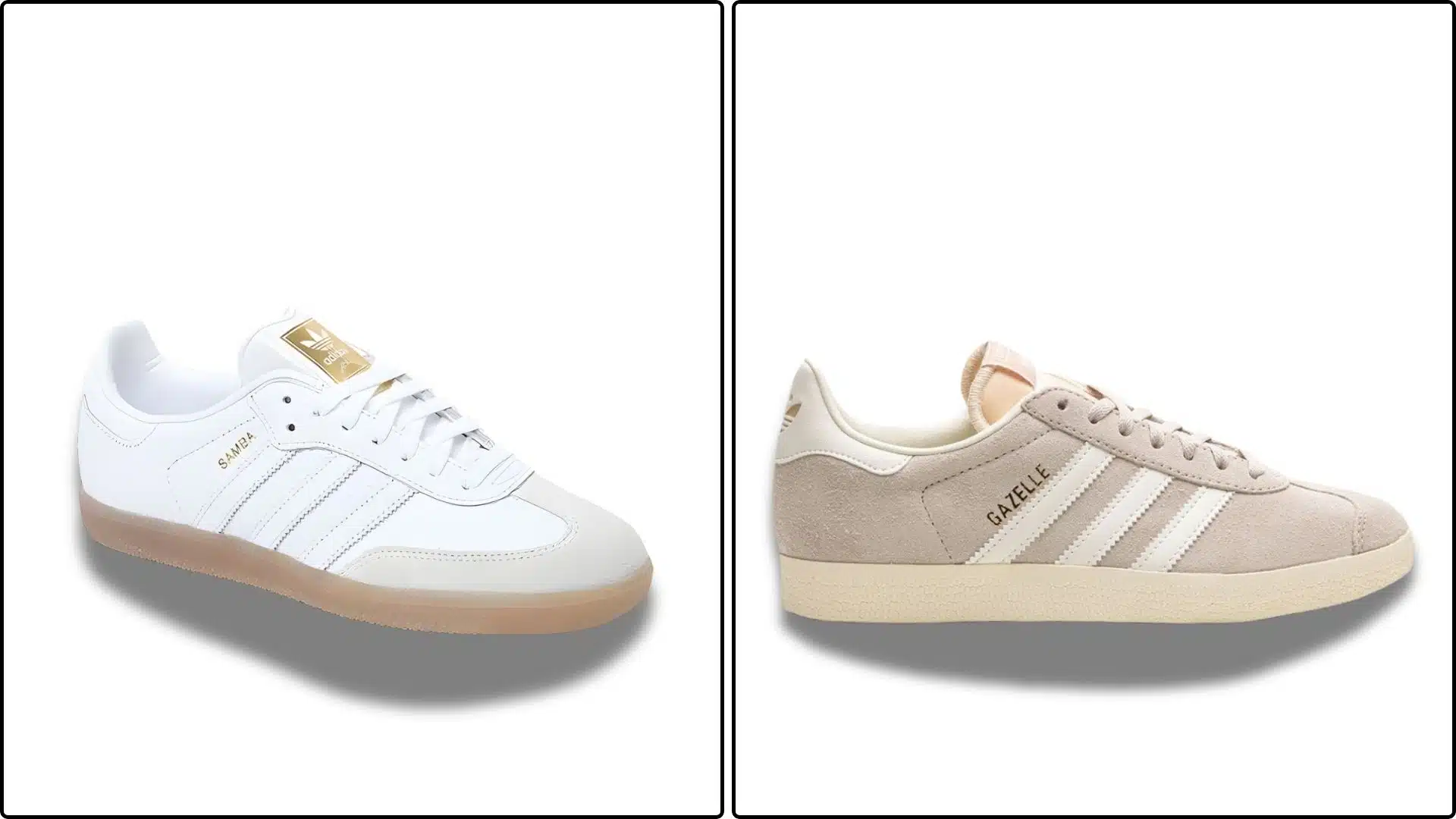
The construction materials and build quality determine how long each sneaker lasts. Both use different materials that affect their lifespan with regular use.
Samba:
Samba features a leather upper with suede accents on the toe and heel. The gum rubber sole resists wear well and maintains grip even after months of use.
The stitching holds strong over time without coming loose. Leather develops a natural patina with age. Most pairs last one to two years with daily wear and proper care.
Gazelle:
Gazelle features a full-suede upper throughout the entire shoe. The rubber sole is softer than Samba’s gum version. It wears down faster on rough surfaces over extended periods.
Suede requires more maintenance to keep clean and fresh-looking. The material can stain easily from water or dirt. With regular care, Gazelle typically lasts around one year of daily use.
Style and Outfit Fit for Each Sneaker
Both sneakers bring different fashion vibes to your wardrobe. The right pairing depends on the look you want to create for different occasions and settings.
| What to Pair with Samba | What to Pair with Gazelle |
|
|
Styling Tips:
Keep Samba outfits simple and sport-inspired. Samba works better with athletic or minimalist styles, while Gazelle blends well with laid-back streetwear and looks great with softer color palettes.
Gazelle vs Samba: Which One Should You Choose?
Your choice between these two depends on your daily needs and personal taste. Think about how you plan to wear them most often.
Choose Samba If:
✓ You want a snug fit with sports heritage roots.
✓ You prefer firmer ground feel and minimal cushioning.
✓ You have slimmer or average-width feet.
✓ You need a shoe that lasts longer with daily wear.
Choose Gazelle If:
✓ You have wider feet that need extra space.
✓ You want better shock support during long walks.
✓ You prefer retro fashion and vintage vibes.
✓ You like pairing shoes with relaxed outfits.
Consider your foot width, comfort needs, and style preference. Both are solid choices but serve different purposes in your rotation.
Wrapping It Up
To summarize, both sneakers bring their own strengths to the table.
Your decision comes down to what matters most in your daily routine. Think about the activities you do, the clothes you wear, and how your feet feel after hours of movement.
Neither option is wrong. One simply works better depending on your specific needs.
Pay attention to width requirements, the type of cushioning you prefer, and the fashion direction that best matches your wardrobe.
The right pair should feel natural from day one. Take your time comparing them in person if possible.
Which sneaker caught your attention today? Drop your thoughts below or share any questions you have about these two icons.