
“Low fade or high fade?” That simple question trips up countless guys at the barbershop.
You sit in the chair, and suddenly, you’re not sure what to ask for. Should the blend start near your ears or higher up by your temples? Will one look too bold? Will the other look too plain?
Here’s the good news. Once you understand how each fade works, picking the right one becomes easy.
This guide breaks down the low fade vs high fade debate in plain terms. You’ll learn where each cut starts, how they look different, and which one suits your face shape and lifestyle.
By the end, you’ll walk into your next appointment knowing exactly what to ask for.
What Is a Low Fade?

A low fade starts just above the ear and blends gradually into longer hair. The transition is soft and subtle, leaving more hair coverage on the sides and back. This gives the cut a polished, understated appearance.
Because the fade begins so low, the contrast between the top and sides stays minimal. The look feels natural rather than sharp or dramatic.
Key Features of a Low Fade:
- Starting point: About half an inch above the ears
- Transition: Gradual and gentle
- Contrast level: Low to moderate
- Vibe: Professional, classic, refined
Low fades work well for office settings and formal environments. They pair nicely with side parts, comb-overs, short crops, and man buns.
This cut suits men who want a modern edge without drawing too much attention. It’s also forgiving as it grows out, so you can go longer between barber visits.
Now, let’s look at the opposite end of the spectrum – the high fade.
What Is a High Fade?
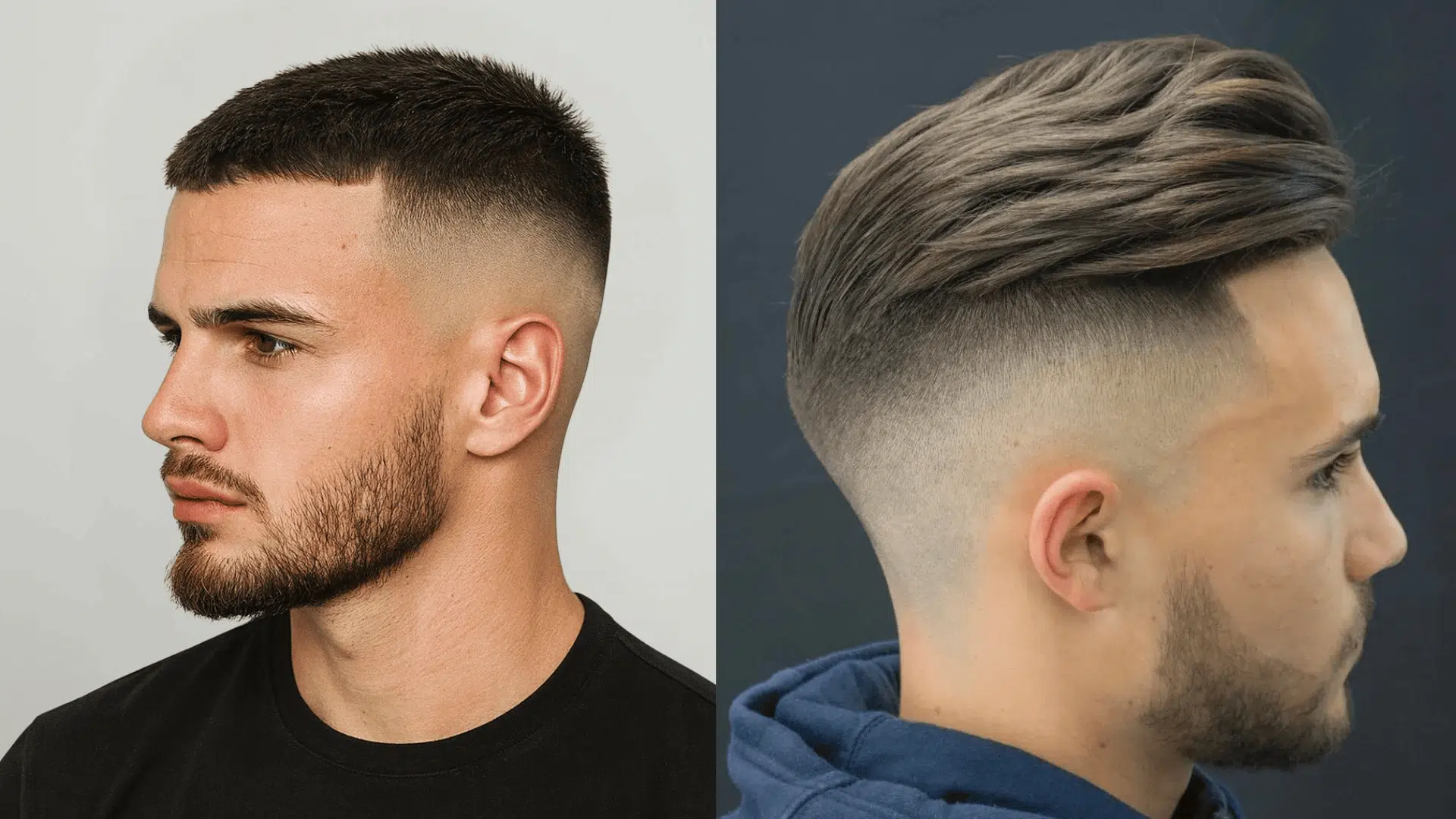
A high fade starts near the temples or above the forehead line. The blend moves quickly from skin to longer hair, creating a sharp, dramatic contrast. This exposes more scalp on the sides and puts full focus on the hair on top.
Because the fade sits so high, the cut looks bold and modern. It commands attention and works best for men who want a statement style.
Key Features of a High Fade:
- Starting point: At or above the temples
- Transition: Fast and aggressive
- Contrast level: High
- Vibe: Edgy, trendy, striking
High fades pair well with pompadours, quiffs, slick backs, mohawks, and textured crew cuts. They suit athletic builds, fashion-forward wardrobes, and casual settings.
This cut requires more upkeep since the short sides show growth quickly. Plan for barber visits every two to three weeks to keep it sharp.
So how do these two fades stack up against each other? Let’s compare them side by side.
Low Fade vs High Fade: A Complete Comparison
Both fades look clean and modern, but they create very different impressions. A low fade offers subtle contrast with a gradual blend that appears natural and polished. A high fade delivers dramatic contrast with a sharp transition that commands attention.
Your choice depends on your personal style, workplace dress code, and how often you can visit the barber. Consider each factor carefully before sitting in the chair.
| Feature | Low Fade | High Fade |
|---|---|---|
| Starting Point | Above the ears | At the temples |
| Contrast | Subtle | Dramatic |
| Maintenance | Every 4–6 weeks | Every 2–3 weeks |
| Best Setting | Professional | Casual/Trendy |
| Vibe | Classic, refined | Bold, modern |
Low fades grow out gracefully and maintain their shape longer between cuts. They suit office environments, formal events, and conservative dress codes.
High fades show regrowth quickly since the shaved areas become visible within days. They lean toward casual settings, creative workplaces, and streetwear looks.
Low fades pair well with longer top styles like comb-overs and man-buns. High fades look best with shorter, textured tops that balance the dramatic sides. Think about your daily routine and grooming commitment before you decide.
Now that you know the key differences, let’s figure out which fade matches your style and routine.
Which Fade Matches Your Style and Routine?
There’s no universal winner here. The best fade depends on your face shape, lifestyle, and personal taste. What looks great on one person may not suit another.
1. Face Shape
High fades work well for oval or diamond faces. The dramatic contrast highlights cheekbones and adds definition to softer features. If you have a longer face, the high fade draws attention upward and creates a balanced look.
Low fades flatter most face shapes and offer more flexibility. They soften angular features on square faces by keeping more hair on the sides. For round faces, low fades add length and help create a slimmer appearance.
2. Daily Environment
High fades suit creative fields, casual workplaces, and streetwear styles. They let you express more personality and stand out in social settings. If you work in tech, design, fitness, or entertainment, a high fade fits right in.
Low fades blend into corporate offices, formal settings, and client-facing roles. They look polished without drawing unwanted attention. Lawyers, bankers, consultants, and executives often prefer low fades for their clean, professional appearance.
3. Grooming Commitment
High fades need touch-ups every two to three weeks. The shaved areas show regrowth quickly. Low fades stay neat for four to six weeks. They’re forgiving if you skip an appointment.
Ultimately, the better fade is the one that fits your routine and makes you feel confident. Try both over time to see which one suits your features and lifestyle.
But what do most people find attractive? Let’s explore that next.
What Fade Is Most Attractive?
Attractiveness is subjective, but certain trends stand out. Bold fades tend to draw more attention to facial features. Subtle fades are often considered timeless and versatile.
1. Bold Fades (High Fade): High fades create a striking look that catches the eye. The sharp contrast between the shaved sides and longer top adds edge and confidence. This style appeals to those who want a modern, fashion-forward appearance.
2. Subtle Fades (Low Fade): Low fades offer a classic appeal that never goes out of style. The gentle blend looks clean without being flashy. This works well for men who prefer a refined, understated look that suits any occasion.
The Honest Answer
No single fade is universally attractive. What matters most is how well the cut complements your head shape, hair texture, and personal style. A fade that fits your features will always look better than one that follows trends blindly.
Ask your barber for advice based on your specific head shape and hair type. They can recommend the fade height that flatters you most.
Ready to keep your fade looking fresh? Here are some styling tips.
Styling Tips for Fades
A great haircut only stays great with proper care. These tips will help you maintain your fade or buzz cut between barber visits.
1. Start with a Gentle Shampoo and Conditioner
Kick off your routine with a lightweight shampoo that removes oil and product buildup. The L’Oréal Paris Elvive Hyaluron + Plump Hydrating Shampoo works for all hair types.
Follow up with the matching conditioner to lock in hydration for up to 72 hours. It keeps hair soft without weighing it down.
If your hair gets oily fast, try the L’Oréal Paris Elvive Hyaluron + Pure Purifying Shampoo instead. The salicylic acid formula removes excess oil and residue.
2. Choose the Right Styling Product
For fine or straight hair, work a hair putty through your strands and let it air dry. The L’Oréal Paris Studio Line Overworked Hair Putty gives texture with a matte finish.
For a sleeker look, comb the L’Oréal Paris Elnett Anti-Frizz Slick Back Cream through damp hair. This works great for retro styles and slick backs.
If your hair is curly or wavy, define your texture with mousse. The L’Oréal Paris Advanced Hairstyle BOOST IT Volume Inject Mousse adds body and hold for up to 24 hours.
3. Watch for Product Buildup
Daily styling products can cause buildup over time. This makes hair look limp or greasy.
Use the L’Oréal Paris Elvive Hyaluron + Pure Oil-Erasing Serum once a week. It removes up to 100% of scalp residue and refreshes your hair.
Here’s a quick reference table with all the recommended products for your fade:
| Hair Type | Recommended Product | Benefit |
|---|---|---|
| All types | Elvive Hyaluron + Plump Hydrating Shampoo | Removes oil and buildup |
| All types | Elvive Hyaluron + Plump Hydrating Conditioner | 72-hour hydration |
| Oily hair | Elvive Hyaluron + Pure Purifying Shampoo | Controls excess oil |
| Fine/Straight | Studio Line Overworked Hair Putty | Matte texture, medium hold |
| Sleek styles | Elnett Anti-Frizz Slick Back Cream | Smooth, polished finish |
| Curly/Wavy | Advanced Hairstyle BOOST IT Mousse | Volume and 24-hour hold |
| Product buildup | Elvive Hyaluron + Pure Oil-Erasing Serum | Removes 100% scalp residue |
These products keep your fade looking fresh between barber visits. Choose based on your hair type and styling goals.
A consistent routine prevents common issues like dryness, oiliness, and dull-looking hair. Invest in quality products that match your needs.
4. Match Your Beard
A well-groomed beard complements a fresh fade and ties your whole look together. Keep your beard neckline clean and defined for a sharp finish. Regular trimming prevents your beard from overpowering your haircut.
A high fade pairs well with a shorter, tighter beard or stubble for a clean, modern contrast. A low fade works nicely with fuller, longer beards, balancing the gradual blend with extra facial volume.
5. Pro Tip
Show your barber a reference photo at every visit to ensure consistency and help them understand exactly what you want. Save a few photos on your phone that show the fade height, top length, and overall style you prefer. Clear communication leads to better results and builds trust with your barber over time.
Now let’s wrap up everything you’ve learned about fades.
Conclusion
Choosing between a low fade and a high fade comes down to your style, face shape, and lifestyle. Low fades offer a subtle, professional look that suits most settings and grows out gracefully. High fades deliver bold contrast and modern edge but need more frequent upkeep.
Neither option is better than the other. The right fade is the one that makes you feel confident and fits your daily routine.
Talk to your barber about your preferences and ask for their input based on your features. Don’t be afraid to experiment. Try one style now and switch it up next time.
So, which fade are you going for? Drop your choice in the comments below.