Choosing what to wear can feel straightforward until you stand in front of your closet, wondering which option fits the moment.
The shirt vs t-shirt decision happens more often than most people realize, whether getting ready for work, heading out with friends, or simply picking an outfit for the day.
While both items appear similar at first glance, they don’t work the same way in practice. Knowing what separates them helps you pick the right one without second-guessing.
This guide walks through the practical differences that matter, from how they’re built to where they fit best, so you can choose with confidence every time.
What is a Shirt?
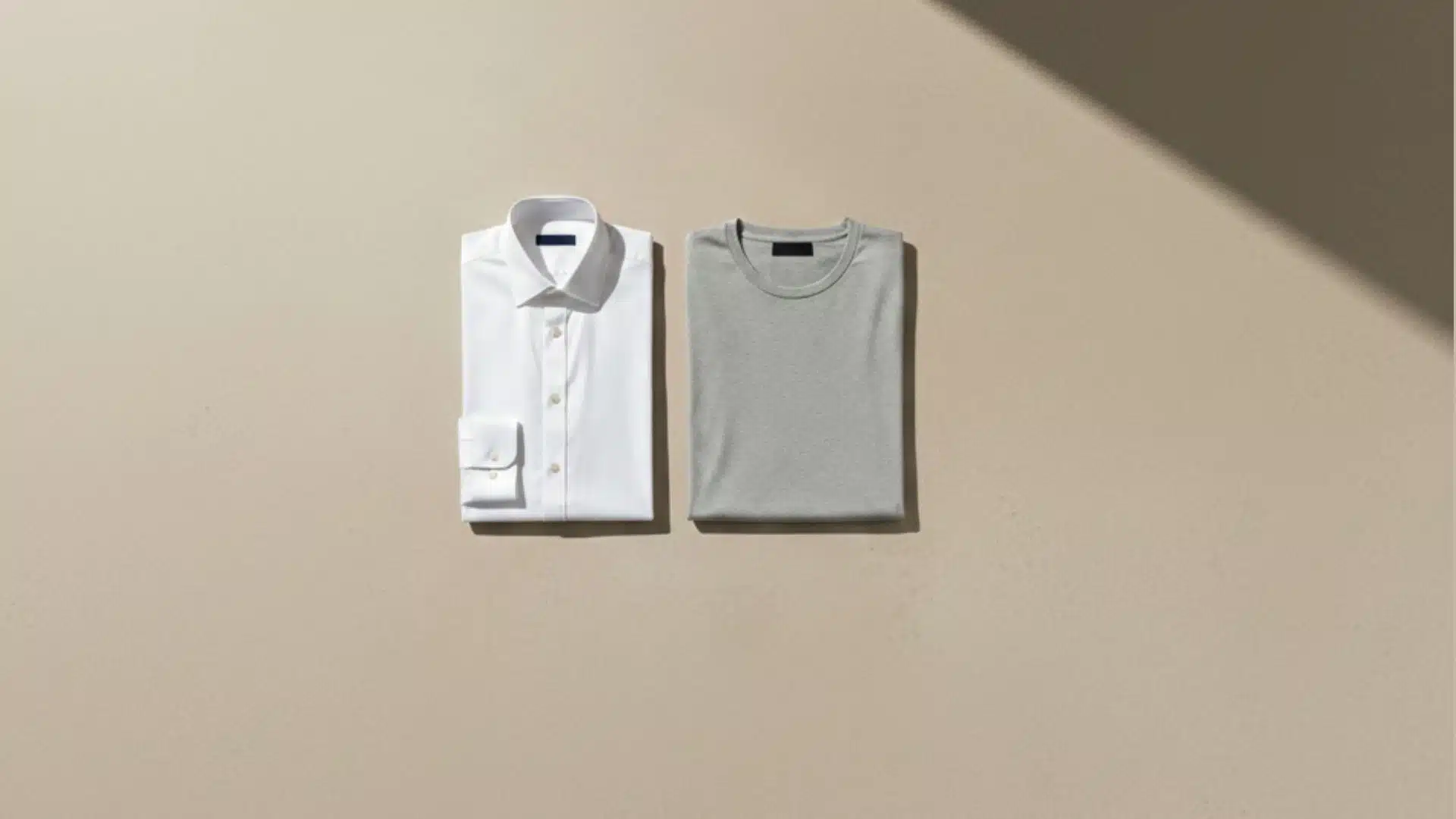
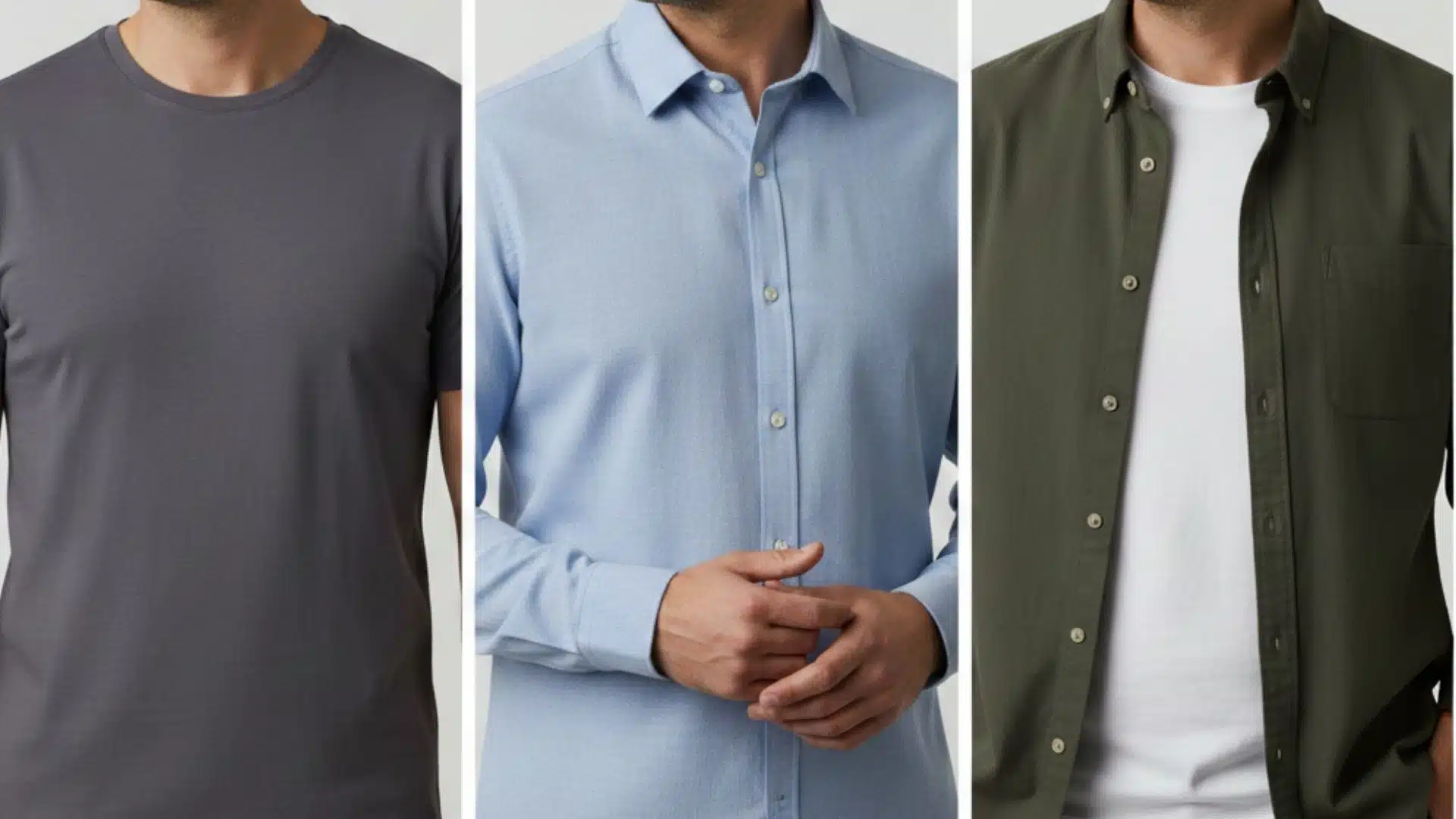
A shirt is a tailored garment that features a structured collar framing the neck area and a full button placket running down the front, making it easy to put on and take off.
It’s constructed from woven fabric, which gives it that crisp feel and helps it hold its shape throughout the day.
The sleeves are carefully tailored with finished cuffs that often include button closures at the wrist, adding to the polished appearance.
Even when you’re not wearing it, a shirt maintains its three-dimensional structure, looking neat and ready to wear, whether it’s hanging in your closet or laid out on a bed.
What is a T-shirt?
A t-shirt is a casual pullover garment designed with a collarless neckline, usually in a crew neck (round) or V-neck style.
Unlike shirts, it has no front opening or closures—you simply pull it over your head to wear it.
T-shirts are made from knit fabric, which makes them soft, stretchy, and incredibly comfortable for everyday wear.
The sleeves, whether short or long, are kept simple with basic rolled or hemmed edges rather than formal cuffs.
When you take off a t-shirt and lay it down, it lies relatively flat and relaxed, conforming easily to whatever surface it rests on rather than holding a rigid shape.
Shirt vs T-Shirt
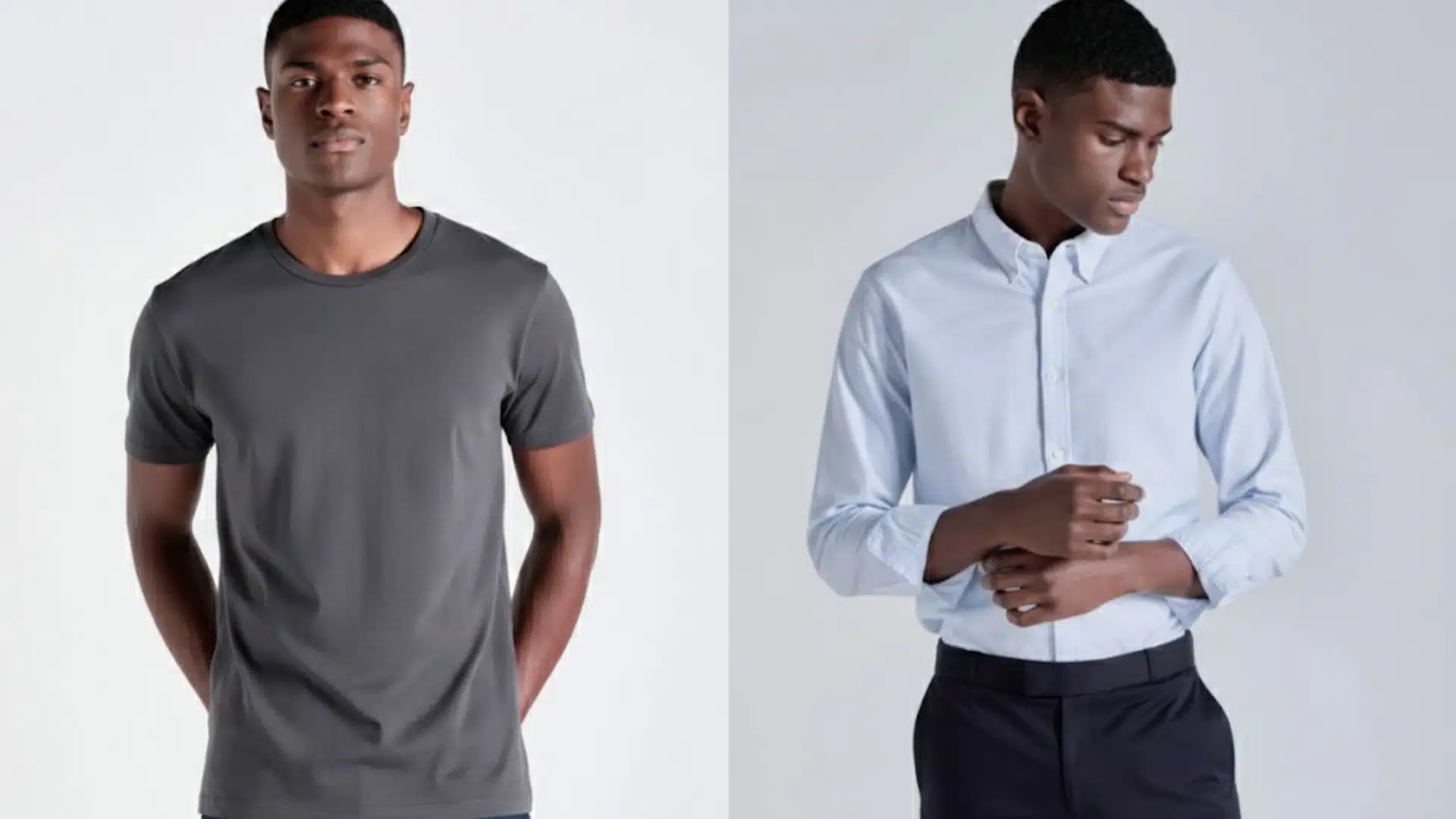
Rather than revisiting each detail individually, the table below summarizes the key distinctions in one place for easier comparison.
| Feature | Shirt | T Shirt |
|---|---|---|
| Collar | Includes a structured collar that frames the neck area | Features an open neckline without any collar structure |
| Buttons | The front button line allows the garment to open and close | No buttons or closures, pulled over the head to wear |
| Fabric type | Constructed using woven fabric with interlaced threads | Constructed using knit fabric with connected loops |
| Structure | Maintains a defined three-dimensional form when unworn | Rests flat and conforms to surfaces when laid down |
| General appearance | Structured and polished with formal aesthetic qualities | Simple and casual with minimal design elements |
| How worn | Opened with buttons, worn by sliding arms through sleeves | Pulled overhead and positioned by drawing down over the torso |
| Formality level | Suited for professional settings and polished presentation needs | Appropriate for casual environments and everyday activities |
When to Wear Each?
Selecting between these two garments depends on the context you’re dressing for and what’s appropriate or expected in that setting.
When a Shirt Makes Sense?
Shirts are the standard choice for professional work environments, particularly office settings where business attire is expected
- They fit the requirements for client meetings, presentations, and formal business interactions
- Beyond strictly professional contexts, shirts also work well for occasions that call for a neater, more put-together appearance without requiring full formal attire
- Dinner reservations at upscale restaurants, attending ceremonies, or visiting places with dress codes all represent situations where a shirt meets expectations
- The key factor is environments where visual presentation carries weight and a certain level of formality is appreciated or required
When a T Shirt Makes Sense?
T-shirts are well-suited to everyday activities that don’t carry formal expectations
- Running errands like grocery shopping, picking up items from stores, or handling routine tasks around town all fit the casual nature of a T-shirt
- Home activities, whether relaxing or doing household work, are natural settings for this garment type
- Social gatherings with friends in informal settings, like backyard barbecues or casual hangouts, also align with T-shirt appropriateness
- The common thread is environments where formality isn’t part of the equation, and a relaxed approach to dressing is acceptable
Layering Considerations
Shirts can be worn open over T-shirts in less formal contexts, while T-shirts often serve as base layers beneath shirts
- This layering approach affects perceived formality but does not change what each garment fundamentally is
- The combination relies on the distinct properties of both types working together
Shirt vs T-Shirt: Care and Maintenance
Shirts
Shirts and t-shirts differ not only in how they’re worn, but also in how they’re maintained over time.
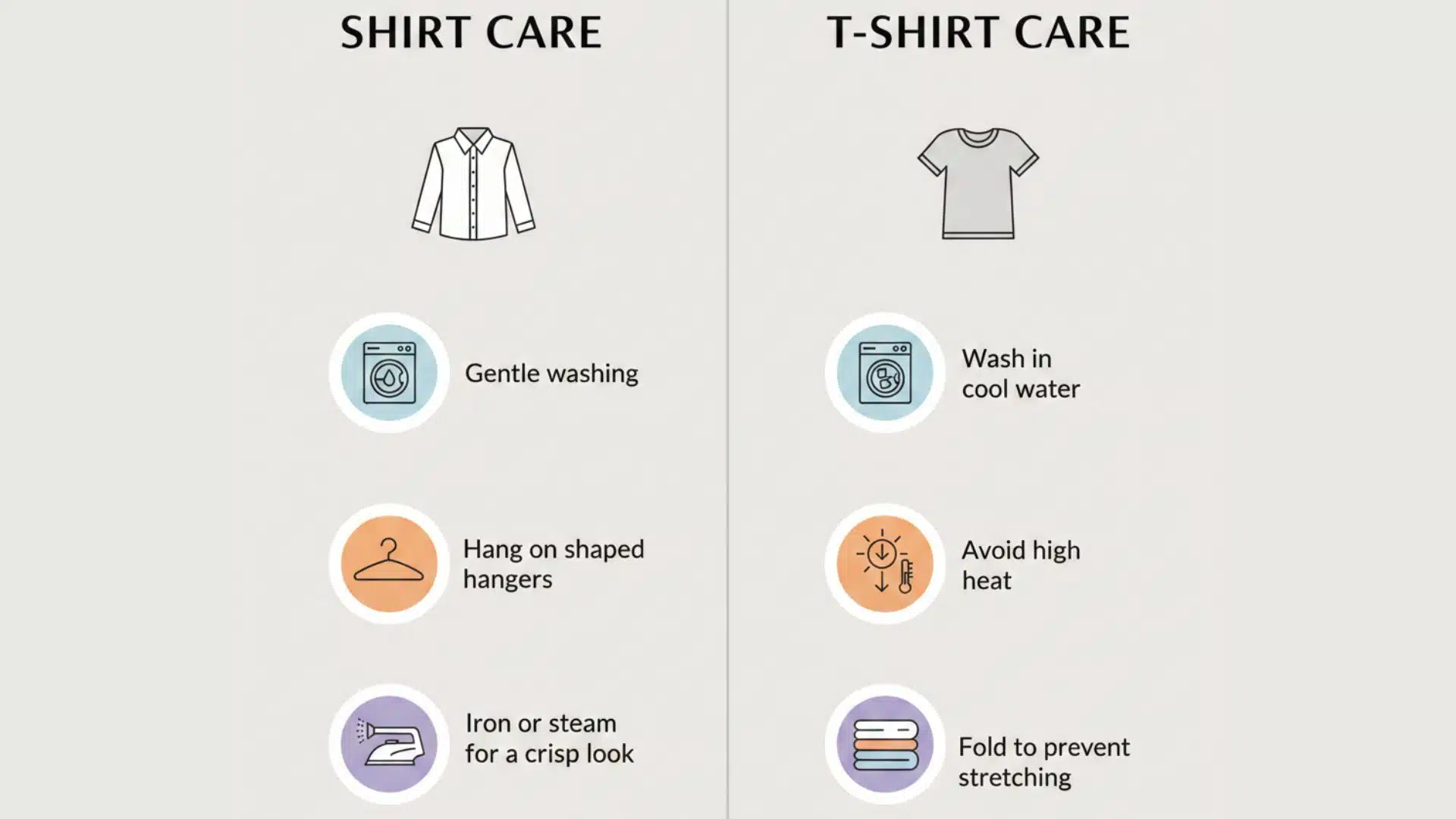
Shirts often require more careful handling to preserve their structure and professional appearance.
Washing them on gentler cycles prevents excessive wear on the fabric and buttons, while proper hanging on shaped hangers helps maintain their form.
Most shirts benefit from occasional ironing or steaming to keep that crisp, polished look around the collar and cuffs, where wrinkles tend to show most.
T-shirts
T-shirts are generally easier to care for and can handle regular washing without fuss, but they’re more vulnerable to stretching or shrinking if exposed to harsh conditions.
Washing in cooler water protects the knit fabric’s elasticity, and avoiding high heat during drying prevents that dreaded shrinkage that can turn a perfect fit into something uncomfortably tight.
Folding them rather than hanging can also help prevent shoulder bumps and stretched-out necklines.
Paying attention to these care routines extends the life of both garments and keeps them looking appropriate for their intended use, whether that’s staying sharp for the office or staying comfortable for weekend wear.
Conclusion
The shirt vs t-shirt choice isn’t about one being better than the other. Each serves its purpose based on where you’re going and what the situation calls for.
Shirts handle environments that need polish and presentation, while t-shirts fit naturally into relaxed, everyday moments.
The construction differences behind these garments translate directly into how they look, feel, and function in real situations.
Having both options available means you’re prepared for whatever comes up, whether that’s a work meeting or a weekend at home.
When you know what sets them apart, picking between them becomes second nature rather than a guessing game each morning.
Your wardrobe works better when you match the garment to the moment.
Frequently Asked Questions
Can I Call a T-shirt a Shirt?
While related as upper garments, they belong to separate categories with different identifying features and aren’t interchangeable in proper usage.
What Qualifies as a T-Shirt?
A garment pulled overhead featuring an exposed neckline without collar attachments, no front fastenings, and loop-constructed fabric throughout its build.
Why Is a T-shirt Called a Shirt?
It covers the upper body like traditional shirts, with “T” describing its geometric outline when laid horizontally on a surface.
Which Is Better, a T-shirt or a Shirt?
Value depends on use case rather than inherent superiority; both serve distinct roles based on activity type and presentation needs.