Ever wondered what that logo-covered backdrop behind celebrities is called?
Or why every red carpet event seems to have one? That’s a step and repeat. And there’s a reason you see them everywhere.
These banners do more than look good in photos. They turn every snapshot into free advertising.
One picture shared online can put a brand in front of thousands. That’s why businesses, event planners, and even party hosts love them.
But what exactly is a step and repeat? How did it start? And how do you create one that works?
This guide covers the history, types, design tips, and common uses.
Let’s get into it.
What Is a Step and Repeat?
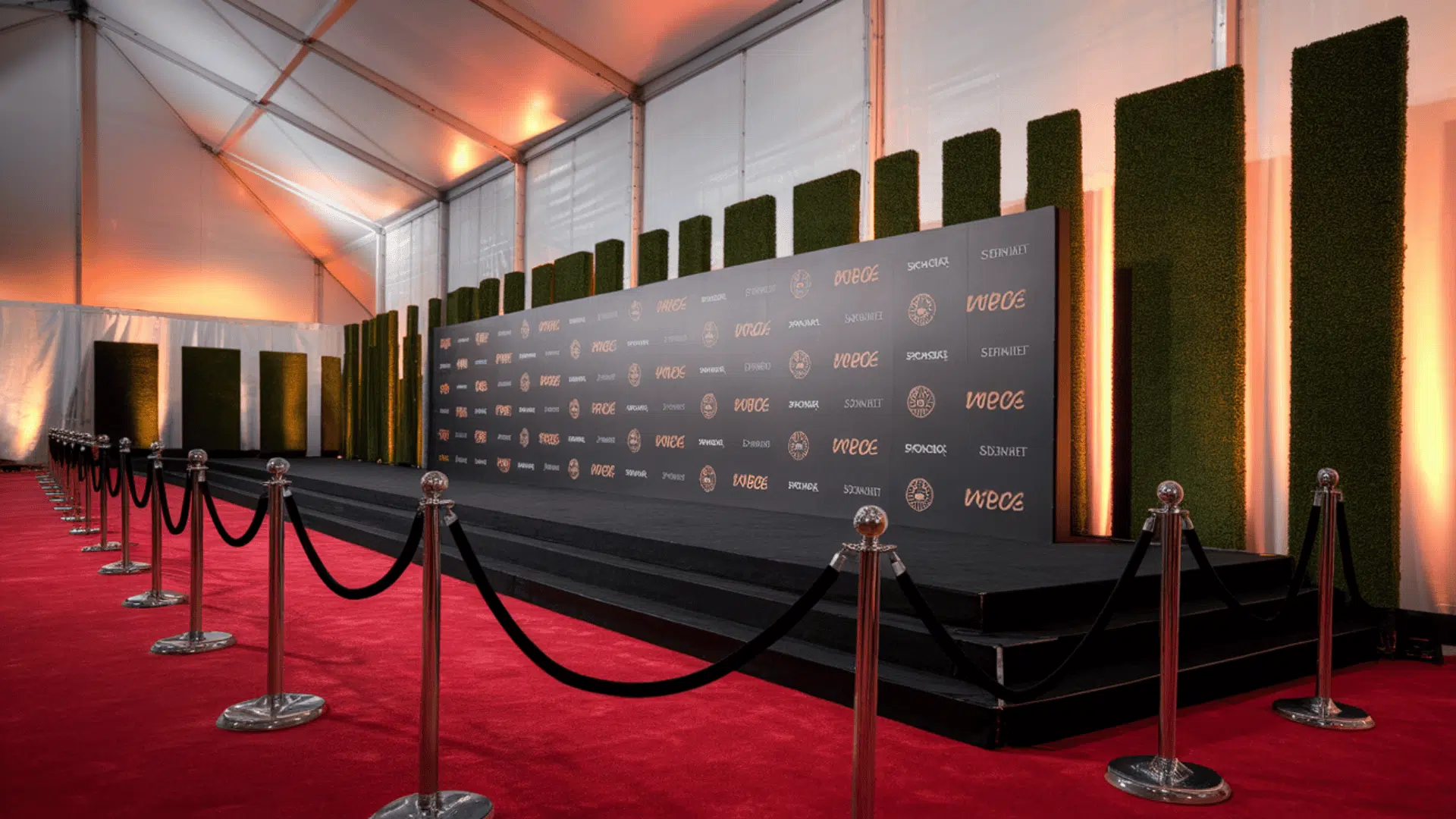
A step and repeat is a large backdrop printed with a repeating pattern of logos or graphics. It’s designed for event photography, where guests stand in front of it to take pictures.
The repeated pattern makes sure at least one logo appears in every photo, no matter where the person stands.
Key features of a step and repeat include logos arranged in a diagonal or grid pattern, a large size usually 8 feet tall or more, a matte finish to reduce camera glare, and a portable frame for easy setup.
The main purpose is brand visibility. When people take photos and share them online, those logos travel with the image. This creates exposure without extra effort.
Businesses use them to promote sponsors, reinforce branding, or highlight event themes.
Step and repeats work because they’re simple and effective. One backdrop can appear in hundreds of photos from a single event. That’s powerful marketing for minimal cost.
So where did this idea come from? Let’s look at the history behind it.
Where Did Step and Repeat Come From?
Step and repeats started in Hollywood. They first appeared at the Academy Awards and high fashion events in the early 1900s. The idea was simple.
Create a backdrop where celebrities could pose while promoting sponsors at the same time.
Film stars would step onto the red carpet, take photos, and move aside. The next celebrity would repeat the process. That’s how the name “step and repeat” was born.
Over time, businesses saw the value. Corporate events, product launches, and press conferences began using them. The backdrops offered a professional look while keeping brand logos visible in every photo.
Soon, even private events like weddings and birthday parties adopted the trend.
Today, step and repeats are more popular than ever. Social media changed the game. Every photo shared online becomes free advertising. That’s why brands, influencers, and event planners continue to rely on them.
But not all step and repeats are the same. Let’s look at the different types available.
Types of Step and Repeat Backdrops
Step and repeats come in different materials and styles. The right choice depends on your event, budget, and how you plan to use it. Here’s a quick look at the most common types.
1. Fabric Step and Repeats

Fabric backdrops use dye-sublimation printing. The ink soaks into the material, creating vibrant colors that won’t peel or fade.
They have a natural matte finish, which means no glare in photos. Fabric is lightweight and easy to fold, making it perfect for people who travel between events often.
It works best for indoor settings like corporate galas, award ceremonies, and upscale gatherings. The only downside is wrinkling.
If you don’t store fabric properly, creases can show up in your photos. A quick steam usually fixes this problem.
2. Vinyl Step and Repeats

Vinyl is the most popular option for a reason. It’s durable, affordable, and works well both indoors and outdoors.
The material is thicker than fabric, so it holds up against rain, wind, and sun. This makes vinyl ideal for outdoor festivals, trade shows, and events where the weather is a concern.
One thing to watch out for is glare. Vinyl can reflect light, especially with flash photography. Choosing a matte finish helps reduce this issue. Also, never fold vinyl banners. Always roll them to avoid creases that won’t come out.
3. Retractable Banner Style

Retractable step and repeats are compact and travel-friendly. The banner rolls into a base and pops up in seconds. You don’t need extra tools or help to set it up.
These work great for small events, pop-up shops, or situations where quick setup matters.
The trade-off is size. Retractable banners are usually narrower than traditional step and repeats, so they fit fewer people in a single photo.
4. Digital and LED Options

Some events skip printed banners entirely and go digital. LED walls and screens allow for animated logos, videos, and easy content changes. They look sleek and modern, which fits well at tech events or product launches.
The biggest drawback is cost. Digital setups are much more expensive than printed options. They also need power and technical support to run smoothly.
Now that you know the types, how is a step and repeat different from a regular backdrop?
Step and Repeat vs Backdrop: What’s the Difference?
People often use these terms interchangeably, but they’re not the same thing. A step and repeat is actually a specific type of backdrop. The main difference comes down to design and purpose. Let’s compare them side by side.
| Feature | Step and Repeat | Backdrop |
|---|---|---|
| Design | Repeating pattern of logos | Custom image, scene, or solid color |
| Purpose | Brand visibility and sponsor promotion | Decorative or thematic setting |
| Common Use | Press events, corporate functions, red carpets | Weddings, photo shoots, parties |
| Logo Placement | Multiple logos are visible in every shot | May or may not include logos |
| Visual Style | Uniform and consistent | Flexible and creative |
Step and repeats focus on branding. Every photo taken in front of one shows at least one logo clearly. That’s the whole point.
Backdrops, on the other hand, are more about setting a mood or matching a theme. A wedding might use a floral backdrop. A birthday party might have a custom design with the guest of honor’s name.
So which one should you choose? It depends on your goal. If brand exposure matters most, go with a step and repeat. If you want something decorative, a backdrop works better.
Speaking of step and repeats, how do you design one that actually looks good? Let’s get into that next.
How to Design a Step and Repeat That Looks Great?
A good step and repeat is more than just logos on a banner. The design affects how your brand looks in photos. Get it right, and every picture becomes a polished marketing asset. Get it wrong, and your logos disappear or look cluttered. Here’s what to keep in mind.
1. Logo Size and Spacing
The standard logo size falls between 9 and 11 inches wide. Box-shaped logos look better slightly smaller, around 5 to 7 inches. Spacing matters just as much.
Leave about one logo’s width of space between each repetition. This keeps the pattern clean and makes sure logos don’t blend into each other. Aim for two to four visible logos around each person in photos.
2. Color Contrast and Visibility
Your logos need to stand out against the background. High contrast works best. Dark logos pop on light backgrounds and vice versa. Avoid bright or neon colors that can look harsh in flash photography.
If you’re using a white background, consider adding a slight gray tint to reduce glare. Stick to colors that match your brand for a polished look.
3. Orientation and Photo Framing
Think about how people will be photographed. Standard height for step and repeats is around 8 feet. This works for most individuals and small groups.
For larger groups, go wider with an 8×10 or 8×12 size. The banner should extend beyond the people in the photo so the edges don’t show up in shots.
4. Common Design Mistakes to Avoid
Too many logos make a banner look messy. Stick to two to four logos maximum. Low-resolution images create blurry prints, so always use high-quality files.
Glossy finishes cause glare, so choose matte materials. Placing logos too close to the edges means they might get cropped in photos.
Now that you know how to design one, let’s talk about step-and-repeat photo booths and how they work together.
What Is a Step and Repeat Photo Booth?

A step-and-repeat photo booth combines a branded backdrop with a photo station. Guests walk up, pose in front of the banner, and get their pictures taken.
Some setups include a professional photographer, while others use automated camera systems. Either way, the result is the same. Every photo features your logos in the background.
These booths come in two main styles. Open-air setups give guests more room and work well for groups. Enclosed booths offer privacy and a fun, classic feel.
Both options can include instant printing, digital sharing, and custom photo frames with your branding.
The biggest benefit is engagement. People love taking photos, and they love sharing them even more. Each shared image puts your brand in front of a new audience.
So, where exactly can you use a step and repeat? Let’s look at some common settings.
Common Uses for Step and Repeats
Step and repeats work for almost any event where photos matter. Their versatility is one reason they’ve become so popular. Here are some common places you’ll find them.
1. Corporate events: Companies use step and repeats at conferences, meetings, and company parties. They reinforce brand identity and give employees a fun photo opportunity.
2. Red carpet and press events: Celebrities pose in front of sponsor logos, creating instant media coverage for brands. Every photo taken by journalists or fans spreads those logos across news outlets and social media platforms.
3. Trade shows and conferences: Step and repeats at booth entrances attract visitors and make your space look professional. They also help attendees remember your brand long after the event ends.
4. Weddings and private parties: Couples use custom backdrops with their names, wedding dates, or monograms for guest photos. Birthday parties and anniversaries also use themed designs to create memorable photo spots.
5. Influencer and product launches: When attendees share photos online, the brand reaches thousands of new eyes. This makes step and repeats a favorite tool for social media marketing campaigns.
6. Charity galas and fundraisers: These backdrops highlight sponsors and thank donors while giving them visibility. Nonprofits use them to show appreciation and build stronger sponsor relationships.
7. School events: Proms and graduations create memorable photo spots with themed or branded backdrops. Students love having a dedicated space to capture the moment with friends.
No matter the occasion, step and repeats add a professional touch while boosting brand visibility. They turn ordinary events into photo-worthy experiences that people want to share.
Conclusion
A step and repeat is more than just a banner with logos.
It’s a simple tool that turns every photo into a branding opportunity. From Hollywood red carpets to local business events, these backdrops have proven their value over and over again.
Now you know what a step and repeat is, where it came from, and how to design one that works. You’ve also seen the different types and where they’re commonly used.
Planning an event soon? Consider adding a step and repeat to your setup. It’s an affordable way to boost brand visibility and give your guests a memorable photo experience.
Have questions or tips of your own? Drop them in the comments below.