
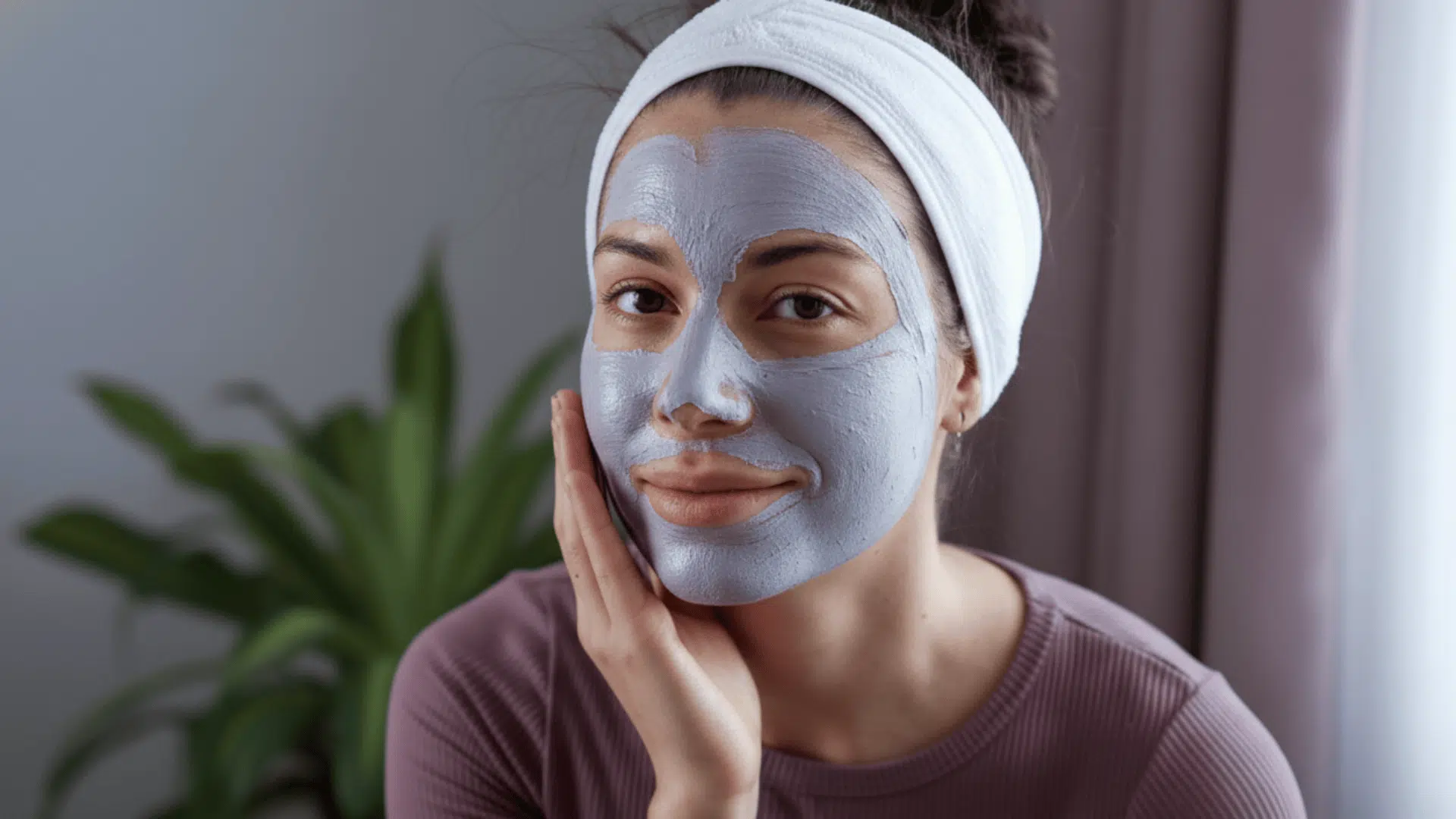
You know that satisfying feeling when you peel off a mask, and your skin looks like it just had the best nap of its life? That is the magic we are chasing here.
But real talk. What do clay masks actually do besides making you look like Shrek for 15 minutes? Are they worth the hype, or just another skincare trend that will fade away?
Spoiler alert. They are totally worth it. Especially if your skin gets oily, breaks out, or feels congested.
In this post, we are covering the benefits, the best clay types for your skin, how they compare to mud masks, and how to use them without drying out your face.
What Is Really Going on Under that Mask?
Think of clay masks as magnets for all the gunk sitting in your pores. Dirt, oil, dead skin cells. All of it gets pulled to the surface and washed away.
Clay comes straight from the earth and is packed with minerals like silica, magnesium, and calcium. Here is the cool part. Clay carries a negative charge while impurities carry a positive one.
When the mask goes on, they attract each other. The clay grabs onto the bad stuff and holds it until you rinse everything off.
Dr. Howard Sobel, a New York-based dermatologist, explains that the minerals in clay actually travel into your pores to unclog them. Pretty neat, right?
6 Benefits of Clay Masks

Clay masks do a lot more than sit on your face and dry up. They work on multiple levels to give you cleaner, clearer, and healthier-looking skin.
Here are the top benefits you can expect when you add a clay mask to your routine.
1. Helps Control Acne and Breakouts
Acne loves oil. The more sebum your skin produces, the more fuel your pimples have to party on your face. Clay masks soak up that extra oil before it mixes with dead skin cells and bacteria.
This helps stop breakouts before they even start. French green clay also has calming properties that can reduce redness around active blemishes.
2. Absorbs Excess Oil Without Over-Drying
Clay masks act like tiny sponges that pull sebum away from the surface. Your skin feels fresh and balanced, not tight or stripped. No more midday shine taking over your face.
Dr. Mona Gohara, associate clinical professor at Yale School of Medicine, calls clay a lifesaver for oily skin. It removes excess oil without taking away the moisture your skin actually needs to stay healthy.
3. Unclogs Pores and Reduces Their Appearance
Dead skin cells, oil, and dirt get trapped inside pores and stretch them out. This makes them look bigger and more noticeable. Nobody wants that.
Clay pulls all that gunk out and creates a gentle suction as it dries. Your pores end up looking tighter and less visible with regular use.
4. Gently Exfoliates for Smoother Skin
While clay absorbs oil, it also lifts away dead skin cells sitting on the surface. This reveals softer, smoother skin underneath without any harsh scrubbing.
Unlike rough scrubs, clay exfoliates without scratching or irritating your face. This makes it a great option for sensitive skin types who need something gentler.
5. Delivers Minerals and Nutrients
Clay is packed with skin-loving minerals like silica, calcium, magnesium, and potassium. Silica especially helps support collagen production for firmer, plumper-looking skin.
So while clay is busy pulling out the bad stuff, it is also feeding your skin the good stuff. Talk about a double win for your face.
6. Supports Your Skin Barrier
Harsh cleansers and strong acids can mess with your skin barrier. This leads to irritation, redness, and sensitivity that nobody wants to deal with.
Clay cleanses and purifies without disrupting your skin’s natural balance. You get a deep clean without the damage or dryness that comes with aggressive treatments.
Now that you know what clay masks can do for your skin, let us talk about how to use them the right way.
How to Apply a Clay Mask Correctly?
Getting the most out of your clay mask comes down to technique. Follow these simple steps for the best results every time.
Step 1: Start with a clean face. Wash off all makeup, sunscreen, and grime from the day. Your skin needs to be a blank canvas before you apply anything.
Step 2: Apply a thin, even layer. Use your fingers or a brush to spread the mask evenly. Stay away from your eyes and lips since that skin is too sensitive for clay.
Step 3: Wait 10 to 15 minutes. Here is where most people mess up. Do not let the mask dry completely. Once it starts flaking, it pulls moisture from your skin instead of just oil. Remove it when it feels tight but is still slightly damp.
Step 4: Rinse with lukewarm water. Use gentle circular motions as you rinse. This gives you a little bonus exfoliation while removing the mask.
Step 5: Follow up with moisturizer. Pat your face dry and immediately apply moisturizer. Yes, even if you have oily skin. Your barrier needs that hydration.
Step 6: Repeat weekly. Oily skin can handle two to three times a week. Dry or sensitive skin should stick to once a week or less.
Here is a quick look at the process:
Cleanse ↓ Apply ↓ Wait 10-15 min ↓ Rinse ↓ Moisturize ↓ Repeat weekly |
Do Clay Masks Pull Out Blackheads?
This is one of the most common questions skincare lovers ask. And the answer might surprise you.
Clay masks do not physically yank out blackheads as pore strips do. They work differently. Instead of pulling, clay loosens up the oil, dirt, and dead skin cells that cause blackheads in the first place.
When the mask dries, it creates a gentle suction that draws impurities to the surface. You might even notice dark spots forming on the mask as it hardens. That is the clay doing its job.
With regular use, blackheads become less noticeable over time. Think of it as prevention rather than extraction. Keep your pores clean and clear, and blackheads have less reason to show up and ruin your day.
If you have ever wondered whether mud masks and clay masks are the same thing, you are not alone. A lot of people mix them up. Here is what sets them apart.
Mud Mask vs Clay Mask

People mix these up all the time, but they are not the same thing. Here is what makes them different.
Clay masks are all about oil control and pore cleansing. They are made from mineral crystals and work best for oily, acne-prone, or combination skin.
Mud masks come from specific places like the Dead Sea. They are packed with minerals too, but they tend to be more hydrating and nourishing. Less about sucking up oil, more about feeding your skin good stuff.
| Feature | Clay Mask | Mud Mask |
|---|---|---|
| Main Purpose | Oil control and pore cleansing | Hydration and nourishment |
| Best For | Oily, acne-prone, combination skin | Dry, mature, sensitive skin |
| Texture | Thick and drying | Creamy and moisturizing |
| Key Benefit | Absorbs excess sebum | Delivers minerals to the skin |
| Drying Effect | It can be drying if left too long | Gentler and less drying |
So which one should you pick? If your main concern is shine and breakouts, go with clay. If your skin is dry or mature and you want mineral benefits without the drying effect, mud is your match.
Here is a fun hack for combination skin. Try multi-masking. Put clay on your oily T-zone and mud on your drier cheeks. Best of both worlds.
If blackheads are your biggest skin concern, you are probably wondering if clay masks can help. Let us break it down.
Which Type of Clay Mask Is Best?
Not all clays are created equal. Each one has its own personality and works differently on your skin. Here is the breakdown.
1. Bentonite Clay

This is the heavy hitter. Bentonite comes from volcanic ash and is packed with minerals like silica, magnesium, and potassium.
It offers the strongest oil absorption and works best for very oily or acne-prone skin. If you are dealing with serious shine, this is your go-to.
2. Kaolin Clay

This is the gentle one. Kaolin is the mildest clay out there, making it ideal for sensitive and reactive skin.
It cleans and exfoliates without being aggressive or stripping your face. If other clays leave your skin feeling tight, kaolin is your match.
3. French Green Clay

This one sits right in the middle. It gets that green color from decomposed plant matter called phytonutrients.
French green clay has one of the highest absorption capacities. Great for blemish-prone skin that needs a thorough cleanse without too much irritation.
4. Rhassoul Clay

This is the skin softener. Rhassoul comes from deep in the Atlas Mountains of Morocco and has been used for over 1400 years.
It is recommended for dry and mature skin that needs a little extra love. Rhassoul improves skin tone and texture while giving you a healthy glow.
Pro tip: If your skin tends to feel dry after masking, look for formulas with added hydrating ingredients like aloe or hyaluronic acid.
But clay masks are not for everyone. Let us talk about who should skip them.
Who Should Not Use Clay Masks?
Real talk. Clay masks are not for everyone.
If your skin is extremely dry, clay can strip away the little oil you have and leave your face feeling uncomfortable. Not fun.
People with active eczema, rosacea, or dermatitis should also steer clear. Clay can make these conditions flare up even more. Dr. Gohara warns that it is just too harsh for compromised skin.
And if you are using strong actives like retinoids or exfoliating acids, be careful about layering a clay mask on the same day. That is a lot for your skin to handle at once.
Space out your treatments and always pay attention to how your face feels.
Conclusion
So what do clay masks do? They soak up oil, clear out your pores, and leave your skin feeling fresh and balanced.
For those of us with oily or acne-prone skin, they can be a real difference maker.
The key is matching the right clay to your skin type and not overdoing it. Stick to once or twice a week, never let the mask fully dry, and always follow up with moisturizer.
With a bit of consistency, you will start seeing results. Clearer, smoother skin is just a few sessions away.
Now you know what works. Go ahead and treat your face to that deep clean it deserves.
Frequently Asked Questions
How Often Should You Use a Clay Mask?
Oily skin can handle two to three sessions a week. Dry or sensitive skin should keep it to once a week or less. Pay attention to how your skin reacts and dial it back if it feels tight or irritated.
Do Dermatologists Recommend Clay Masks?
Yes, many dermatologists recommend clay masks for oily and acne-prone skin. They stress using them in moderation to avoid drying out your skin. Once or twice a week is the sweet spot for most people.
Can You Use Bentonite Clay While Pregnant?
Most experts say topical use is probably fine, but some products have tested positive for lead contamination. Your safest bet is to choose a gentle kaolin clay mask or consult your doctor first.