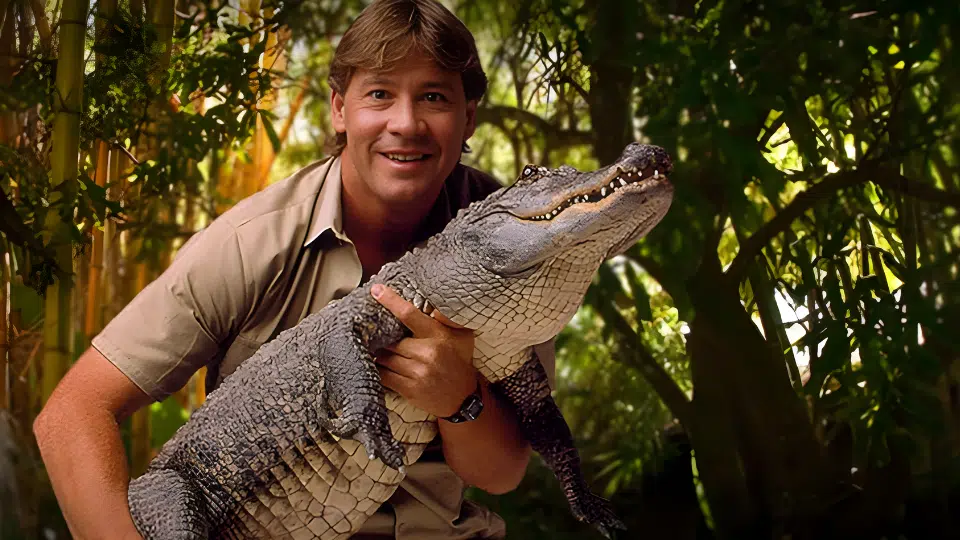
People still search for Steve Irwin’s death nearly two decades later; and I get it. He was the kind of figure who made wildlife feel personal, not like something you watched through glass.
His sudden death in 2006 hit differently because it was so absurd. Not a crocodile. Not a venomous snake. A stingray.
So what kind of stingray killed Steve Irwin? That question has a specific answer — and the details around it are stranger than most people realize.
The species involved, the rare angle of the strike, and the exact reason he didn’t survive all add up to a set of circumstances marine biologists describe as near-impossible.
| Category | Details |
|---|---|
| Full Name | Stephen Robert Irwin |
| Nickname | The Crocodile Hunter |
| Born | February 22, 1962 |
| Birthplace | Essendon, Victoria, Australia |
| Died | September 4, 2006 (age 44) |
| Cause of Death | Stingray barb to the chest, piercing the heart |
| Occupation | Wildlife expert, conservationist, TV personality |
| Famous For | The Crocodile Hunter TV series |
| Spouse | Terri Irwin (m. 1992) |
| Children | Bindi Irwin, Robert Irwin |
Day of Steve Irwin’s Death
September 4, 2006, started as a filming day with calm water and clear skies — the kind of morning that looks uneventful in retrospect and devastating in hindsight.
The Setting: Filming at Batt Reef
Steve and his crew were at Batt Reef off the coast of Port Douglas, Queensland, Australia. They were in the middle of production on Ocean’s Deadliest, a documentary for the Discovery Channel.
During a lull caused by bad weather, Steve decided to snorkel in shallow water to capture footage for his daughter Bindi’s television program, Bindi the Jungle Girl. The water was clear and shallow, conditions that felt routine.
The Encounter: A Calm Moment Turns Deadly
Steve spotted a large stingray resting on the sandy bottom and approached from behind, positioning himself above the animal to film it as it swam away. For a moment, the ray appeared still and unbothered. Then the dynamic shifted entirely.
The Strike: A Split-Second Defense
The stingray, reportedly perceiving Steve’s shadow as a threat, possibly mistaking it for a tiger shark, suddenly pivoted and drove its tail upward. The barb struck Steve directly in the chest, penetrating his thoracic wall and piercing his heart.
He initially thought he had a punctured lung. His cameraman, Justin Lyons, witnessed the strike.
Crew members pulled Steve onto the boat and began CPR immediately, but the wound was catastrophic. He was pronounced dead at nearby Low Island.
So what kind of stingray killed Steve Irwin? That’s where the story gets specific.
What Kind of Stingray Killed Steve Irwin?
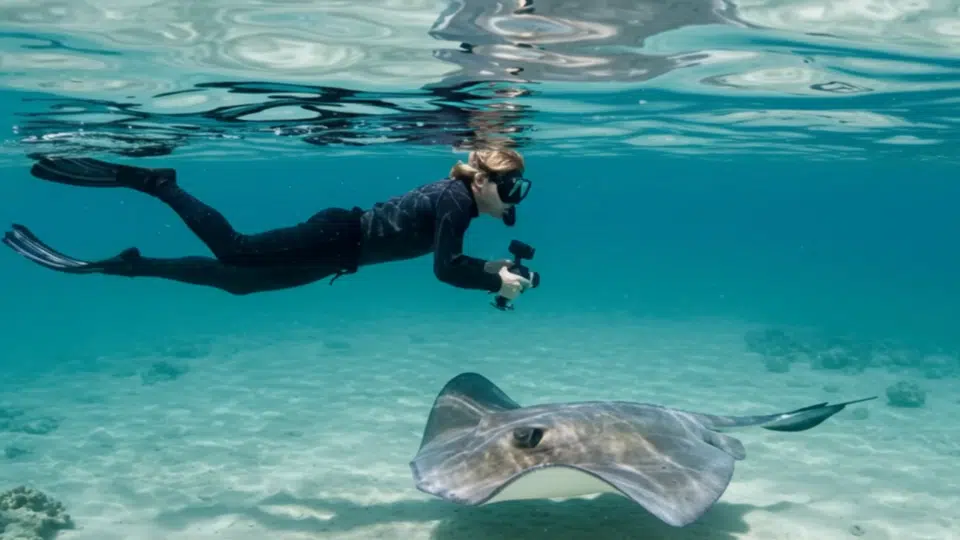
Most sources identify the ray as a short-tail stingray (Dasyatis brevicaudata), also called the smooth stingray. Some news agencies at the time, including reporting cited by HowStuffWorks, described it as an Australian bull ray.
The species debate has never been fully settled, but the short-tailed stingray is the identification most widely accepted by scientists and documented by Australian police reviewing the footage.
The short-tail stingray is the largest stingray species in the world. The one involved in Steve’s death had a span of roughly 2 meters, about 6 feet 7 inches across. These animals are naturally shy.
They spend their time gliding over the ocean floor hunting crustaceans and mollusks, and they avoid humans when given any option to do so.
What makes them dangerous in rare situations is the sheer size and force of their tails, and the bayonet-like rear barb that can reach nearly 8 inches in length.
| Characteristic | Details |
|---|---|
| Size | Up to 14 feet in total length; over 6 feet wide; can exceed 750 lbs |
| Temperament | Docile and shy; only strike when threatened |
| Habitat | Indo-Pacific region, including Australian and New Zealand waters |
| Defense mechanism | Two tail spines — the rear one is a large serrated barb with a venom gland |
| Physical vs. venom danger | The physical trauma from the barb is far more lethal than the venom itself |
| Human fatalities | Only two recorded in Australian waters since 1945, both chest strikes |
Stingrays don’t hunt humans. They defend themselves. The tail whips upward when the ray perceives something above or in front of it as a threat. In Steve’s case, he was directly above the animal. The strike wasn’t aggression. It was reflex.
How Did Steve Irwin Die?
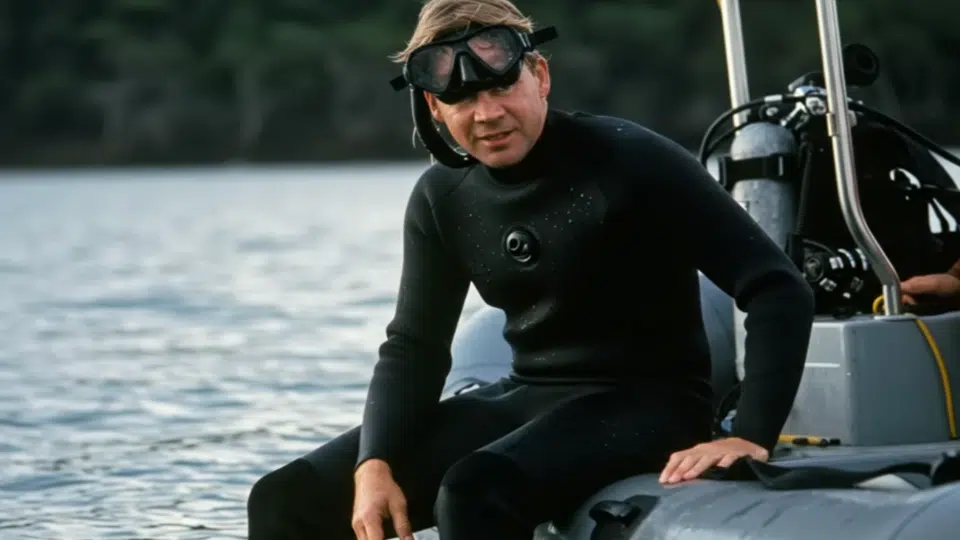
The cause of Steve Irwin’s death wasn’t the venom. It was the location of the strike.
When the barb hit his chest, it punched through his thoracic wall and directly into his heart, causing immediate and massive internal bleeding.
Steve reportedly pulled the barb out himself, a reflex that, according to at least one account of a surviving victim with a similar chest wound, may have worsened the outcome.
The remote location of Batt Reef made rapid medical intervention impossible. By the time the crew reached Low Island, he was gone.
Stingray fatalities are genuinely rare. According to Scienceline, only about one or two occur worldwide in a given year, and most non-fatal stingray injuries happen when someone accidentally steps on a buried ray in shallow water, resulting in a barb to the foot or leg, painful but rarely life-threatening.
A chest strike is different. In Australian waters, only two deaths from stingrays have been documented since 1945. Both involved the chest.
What made Steve’s case so shocking wasn’t just the freak angle. It was who it happened to. This was someone who had waded into crocodile territory by choice, who had handled venomous snakes for television, who treated close-up wildlife encounters as his normal working day.
And he was killed by an animal that most beachgoers walk past without incident.
Steve remained conscious briefly after the strike, telling his crew he thought he only had a punctured lung. He did not survive to learn otherwise.
The Bottom Line
Steve Irwin’s death was caused by a short-tailed stingray’s defensive strike, a barb that hit his heart at an angle and with a precision that marine biologists consider extraordinarily rare.
The ray did what stingrays do when they feel cornered: it defended itself. Steve, who had spent his career explaining exactly that kind of animal behavior to the world, would have said as much himself.
His family continues his work through Australia Zoo. Bindi and Robert appear regularly in conservation media, keeping the same philosophy alive, respect for wildlife, not fear of it. Terri Irwin has said the family holds no bitterness toward stingrays.
That response, honest and grounded in everything Steve stood for, might be the truest tribute to who he was.
Frequently Asked Questions
Was Steve Irwin’s death filmed?
Yes. The incident was captured on video, making it the only recorded fatal stingray attack. The footage has never been released publicly, and Terri Irwin confirmed in 2014 that it was destroyed.
Did Steve Irwin survive the initial strike?
Briefly. He remained conscious for a short time and believed he had only a punctured lung. He did not survive to reach medical care.
Could Steve Irwin have survived if he hadn’t removed the barb?
Possibly. At least one other chest-strike victim survived by leaving the barb in place. Medical experts disagree on whether the removal definitively worsened Irwin’s outcome, given the heart wound’s severity.
Why was the stingray not aggressive by nature?
Short-tailed stingrays avoid humans and flee when approached. The strike was a defensive reflex, likely triggered by Steve’s shadow above the animal mimicking a shark predator pattern.
How rare is death by stingray?
Globally, only 1 or 2 fatal stingray encounters occur each year. In Australian waters, only two deaths have been recorded since 1945. Both involved barbs striking the chest.