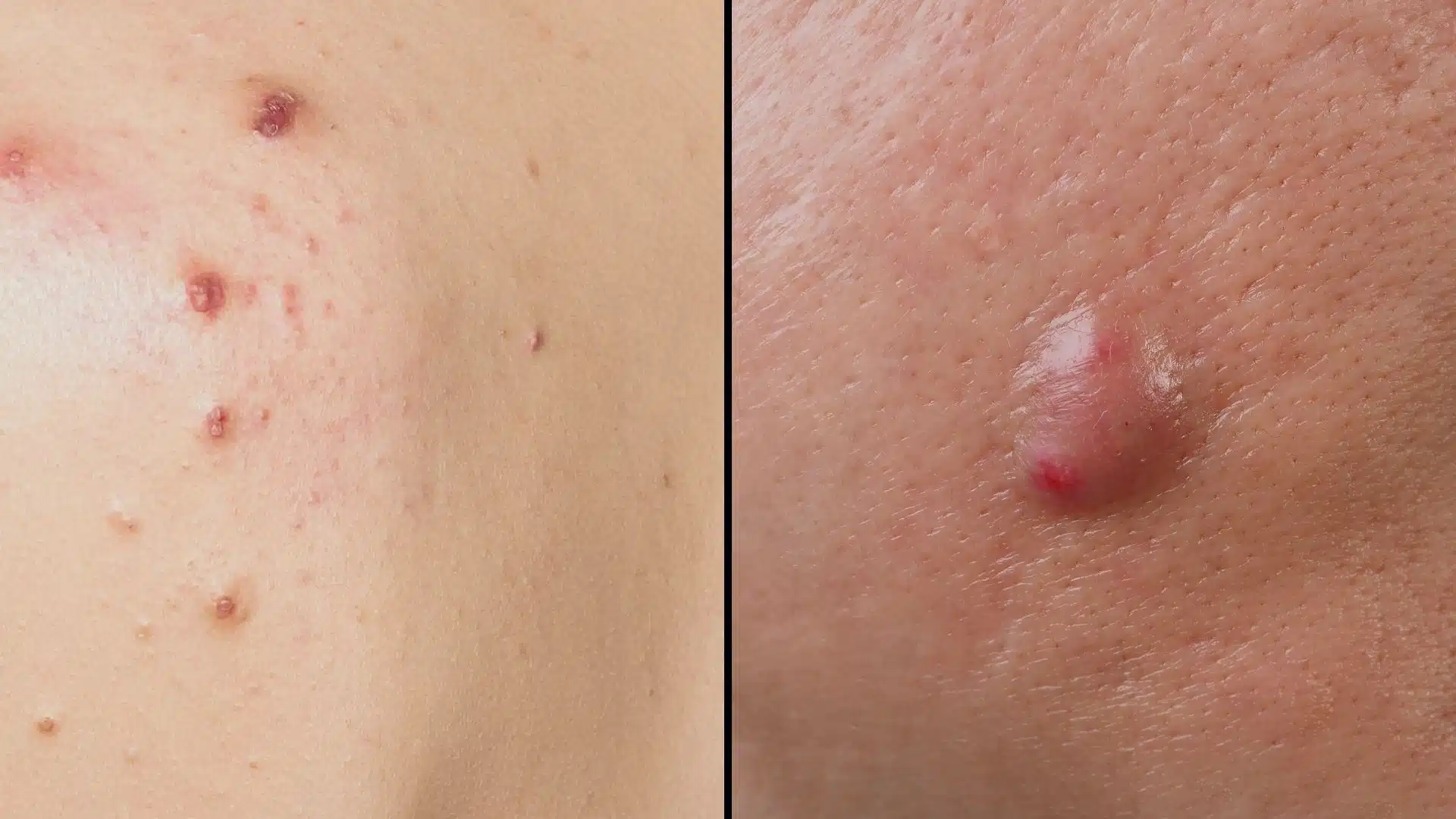
Ever touched your face and felt a bump that made you wonder what it really is?
Not all skin bumps are the same. Some go away in days. Others stick around for weeks or longer.
Knowing the difference between a pimple and a cyst can save you time, worry, and even a trip to the dermatologist.
Although pimples and cysts may look similar at first, each one behaves differently and needs the right care. Mistaking one for the other often causes frustration and slows healing.
In this blog, I’ll show you how to tell them apart, what causes each one, how to treat them safely, and when it’s time to see a doctor.
What Is a Pimple?
A pimple is a small skin bump that forms when a pore gets blocked. Your skin has tiny openings called pores. Oil and dead skin cells can clog these openings.
When this happens, bacteria may grow inside the blocked pore. This leads to swelling and redness on the skin surface. The process happens quickly, often overnight.
Pimples sit close to the surface. Most feel tender when you press them. You might notice a white or yellow center. The surrounding skin often looks red or inflamed.
Common types you’ll see:
- Whiteheads with bumps under the skin.
- Blackheads as tiny black dots.
- Pustules with a yellow pus center.
- Papules as small red bumps.
Where pimples show up: The face (especially the T-zone), chest, upper back, shoulders, and neck are the most common spots.
What Is a Cyst?
A cyst is a deeper skin lump that forms beneath the surface layers. It sits in the lower layers of the skin, not in a pore. Cysts develop when a sac fills with fluid, pus, or other material.
Unlike surface bumps, cysts grow slowly over weeks or months. They feel firm and round under your skin. The lump moves slightly when you press it gently.
Cysts sometimes sit deeper under the surface and may feel tender. They can be painful when touched or pressed. Some cysts have no visible opening on the surface. The skin over them may look normal or slightly raised.
Common types you’ll notice:
- Sebaceous cysts filled with oil.
- Epidermoid cysts with keratin buildup.
- Inflamed cysts that feel warm.
- Large cysts over one centimeter.
Where cysts commonly appear: The Face, neck, back, chest, and behind the ears are typical locations where cysts form under the skin.
Pimple vs Cyst: Key Differences You Should Know

Both may look like bumps, but they differ in several important ways. Here’s a clear breakdown to help you identify which one you have.
| Factor | Pimple | Cyst |
|---|---|---|
| Depth | Forms near the surface in blocked pores | Develops deep under the skin layers |
| Size | Usually small, a few millimeters wide | Larger, often over 5mm across |
| Pain level | Mild tenderness, sore when touched | More painful, throbbing, or aching |
| Appearance | Red with a white or black center | Skin-colored or slightly raised bump |
| Healing time | Clears up in 3 to 14 days | Takes weeks to months to resolve |
| Risks | May leave temporary marks or scars | Can become infected or rupture internally |
| Texture | Soft or slightly firm to the touch | Hard, firm, moves under pressure |
Safe Treatment Options for Pimples and Cysts
Treating skin bumps the right way speeds up healing and prevents scars. Here are safe methods for both pimples and cysts at home and through medical care.
Treating pimples

Most pimples respond well to simple home care and over-the-counter products. Consistent gentle treatment helps them heal faster without causing irritation or permanent marks on the skin.
Home care methods: Wash your face twice daily with a mild cleanser, apply benzoyl peroxide or salicylic acid, and use ice to reduce swelling quickly.
Medical treatments: Dermatologists can prescribe topical retinoids, oral antibiotics for severe cases, or perform extractions to safely drain large, pus-filled bumps without scarring.
What to avoid:
✓ Never squeeze or pick at pimples.
✓ Don’t use harsh scrubs or exfoliants.
✓ Avoid touching your face with dirty hands.
✓ Skip oil-based makeup and heavy creams.
Helpful practices: Keep hair off your face, change your pillowcases weekly, stay hydrated, and use oil-free moisturizers to maintain clear, healthy skin over time.
Treating Cysts

Cysts need more careful handling than pimples. Home remedies provide temporary relief, but medical intervention is often necessary to remove them completely and prevent recurrence.
Home care methods: Apply a warm compress for 15 minutes three times daily, keep the area clean, and take pain relievers if discomfort becomes too intense.
Medical treatments: Doctors can inject corticosteroids to reduce inflammation, drain the cyst with a needle, or perform minor surgery to remove the sac entirely.
What to avoid:
✓ Avoid pressing on cysts because it increases irritation.
✓ Don’t use sharp objects on the lump.
✓ Avoid applying excessive heat to the area.
✓ Skip unverified home remedies online.
Helpful practices: Monitor size changes regularly, protect the area from friction or pressure, maintain good hygiene, and follow up with your doctor as recommended.
When Should You See a Doctor About a Skin Lump?
Not every bump needs a doctor visit, but some signs mean you should get help fast. Watch for lumps that grow quickly or persist after 3 weeks.
See a doctor if:
→ The lump keeps getting bigger over time.
→ It feels hot and swollen to the touch.
→ You notice multiple bumps appearing together.
→ The bump returns after healing completely.
→ It’s been there for more than a month.
→ The skin over it looks discolored or dark.
Early medical attention prevents infections from spreading. It also prevents complications such as abscesses or scarring. Don’t wait if something feels wrong.
Wrapping It Up
To summarize, knowing what type of bump you have makes all the difference in how you handle it.
Quick identification leads to better outcomes and less frustration. The right approach at the right time protects your skin from lasting damage.
Remember that patience plays a key role in healing any skin issue. Some bumps need professional evaluation, while others resolve with basic at-home care.
Never ignore signs that suggest something more serious is happening beneath your skin. Taking action early gives you the best chance for smooth, healthy skin recovery.
Have questions about a bump that’s bothering you? Drop your thoughts in the comments section below!