Elon Musk’s decision to liquidate his real-estate empire wasn’t just about downsizing.
It was a deliberate rejection of material attachment, an attempt to align his personal life with his mission to focus on Mars, energy, and innovation.
Musk’s Real Estate Empire: Mansions to Minimalism
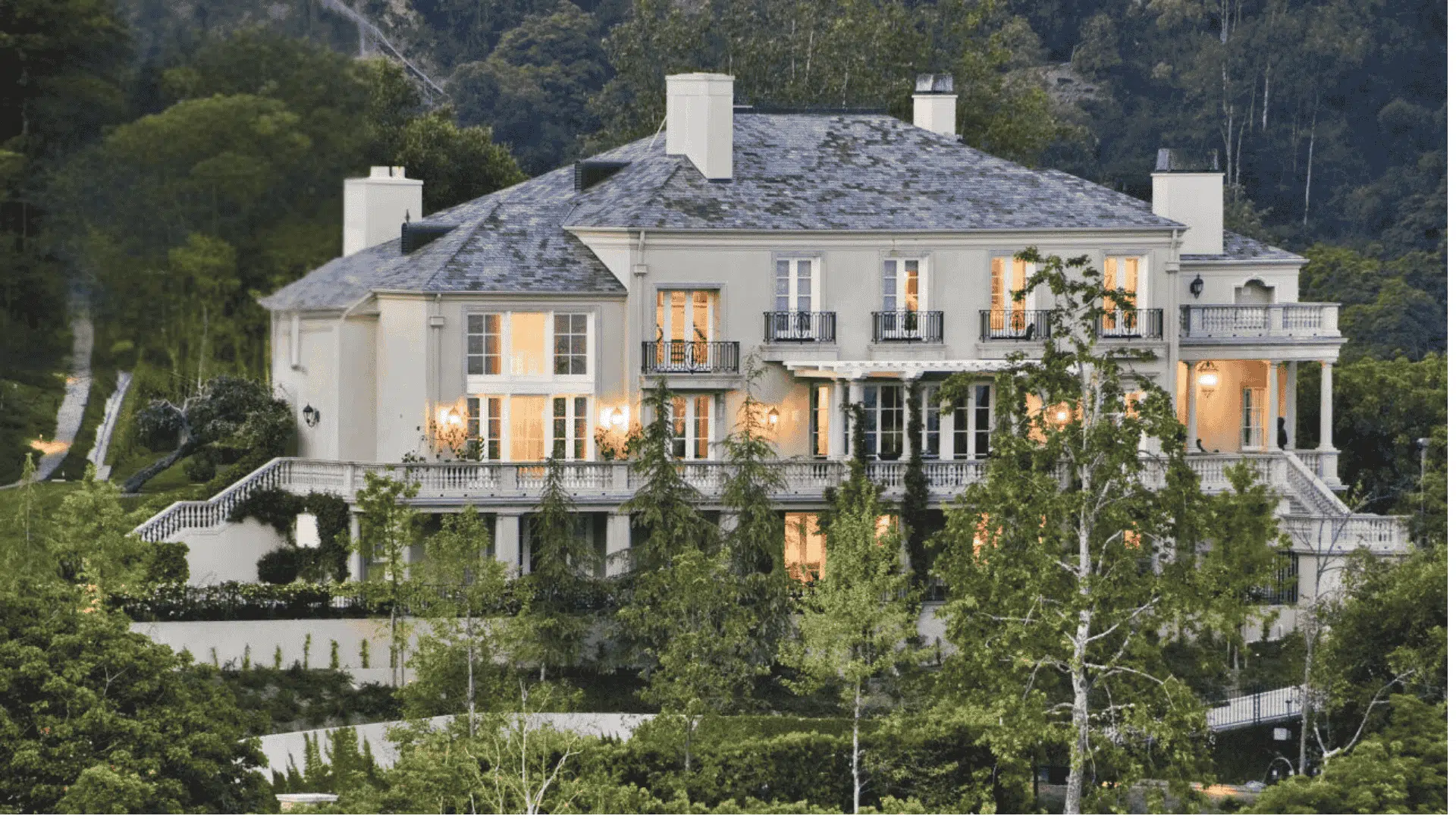
Between 2012 and 2016, the SpaceX founder assembled an impressive collection of California properties. His main holdings were concentrated in Bel Air, one of Los Angeles’s most exclusive neighborhoods.
The portfolio included:
- Gene Wilder’s former estate: A 2,756-square-foot home with historical significance
- A massive Bel Air compound: Multiple adjacent properties totaling over 47,000 square feet
- Brentwood residence: A contemporary home with state-of-the-art features
- Northern California estate: A 100-year-old mansion in Hillsborough spanning 16,000 square feet
These weren’t just houses. They represented decades of architectural history and design. The properties featured private theaters, wine cellars, pools, and advanced technology systems.
TheDecision of Musk to Sell Everything
In May 2020, Elon Musk made a surprising announcement on Twitter: he would sell almost all his physical possessions, including every house he owned.
His reasoning was simple: possessions, he said, weigh you down. They demand time, energy, and attention. For someone focused on colonizing Mars and advancing sustainable energy, those distractions were costly.
The sell-off began almost immediately:
- Multiple properties were listed within weeks.
- The combined asking price exceeded $100 million.
- Some homes sold quickly, others took longer.
- The Gene Wilder estate came with a unique condition: buyers had to preserve it and not demolish it.
By 2021, Musk had sold nearly his entire real-estate portfolio. Reports suggest proceeds helped fund SpaceX and Tesla projects.
The Reversal of the “Own No House” Pledge
In 2024, the buyer of the Gene Wilder property, Barrett Walker-Pearlman, defaulted on a loan Musk had issued for the purchase. Property filings show that Musk’s LLC foreclosed on the home, and by mid-2025, the estate had returned to his ownership.
This development contradicts Musk’s 2020 claim that he would “own no house.” It also shows his minimalist phase was temporary, not permanent; his “no houses” pledge has since been reversed.
Where Does Musk Live Now?
Musk is widely associated with a Boxabl Casita, a 375-400 sq ft prefabricated unit near SpaceX’s Starbase in Boca Chica, Texas.
However, recent reports indicate this tiny home functions more as a guest house or temporary residence. His actual primary living arrangements are more complex and not fully public.
The Tesla Tiny House Concept
The “Tesla tiny house” creates confusion. Tesla hasn’t officially launched a consumer tiny home product. However, Musk’s personal choice has sparked interest in affordable, sustainable housing.
The vision aligns with Tesla’s mission. If you can make electric cars affordable, why not make homes affordable too? Modular construction reduces costs. Solar integration makes homes energy-independent. The appeal is obvious.
Musk’s partnership with Boxabl demonstrates this potential. Boxabl manufactures foldable homes that ship on standard trucks. They unfold on-site. The process is faster and cheaper than traditional construction.
The broader idea: housing shouldn’t cost hundreds of thousands. With smart design and manufacturing efficiency, comfortable homes could cost as much as a nice car.
The Boxabl Casita Real Specs and Features

Musk’s actual tiny home is a Boxabl Casita. This is a real product you can order, though wait times exist.
Design features:
- Open floor plan with 9.5-foot ceilings
- Full kitchen with appliances
- Complete bathroom with shower
- Built-in heating and air conditioning
- Large windows for natural light
- Durable exterior (steel, concrete, EPS foam)
Practical benefits:
- Ships folded (8.5′ x 8.5′ x 20′)
- Installs in about a day
- Meets building codes in most states
- Energy-efficient design
- 50+ year lifespan expected
The Casita costs approximately $50,000 before delivery and setup. This doesn’t include land, foundation work, utility connections, or permits.
The Tesla Tiny House The Fact vs. Fiction
Online claims suggest Tesla will sell tiny homes for $5,000to $8,000. These reports should be viewed skeptically, and to date, no official claims have been made by Tesla regarding this amount.
What’s been verified:
- Tesla created a “Tiny House” for marketing in 2017
- This was a mobile showroom demonstrating solar products
- It toured Australia and later appeared in US events
- Not designed as a residence
What’s speculative:
- Extremely low price points ($5,000 to $8,000)
- Claims of tax-free or deed-free ownership
- Assertions that units are currently available
- Promises of fully off-grid capability at base price
As of 2025, Tesla has not announced a consumer tiny home product. The confusion stems from Musk’s personal housing choice and Tesla’s solar showcase.
If considering a tiny home purchase, verify through official channels. Check Tesla.com or Boxabl.com directly. Be wary of third-party sites making extraordinary claims.
Pricing Reality and Additional Costs
The sticker price of a tiny home only tells part of the story. Here’s what you’ll actually spend to get from purchase to move-in ready.
| Cost Category | Price Range | What It Includes |
|---|---|---|
| Base Unit | $45,000 to $60,000 | Structure, standard features, factory finishes, and appliances |
| Land | $10,000 to $100,000+ | Property purchase (varies by location; rural areas cost less than urban) |
| Site Preparation | $5,000 to $15,000 | Foundation or pad, grading, access road work |
| Utilities | $3,000 to $20,000 | Well and septic (if needed), electric service connection, and internet access |
| Permits and Fees | $2,000 to $10,000 | Building permits, impact fees, and inspection costs |
| Total Realistic Budget | $65,000 to $200,000+ | Complete move-in ready tiny home |
This still costs less than traditional construction. But it’s not the ultra-cheap housing some headlines suggest.
Why the Shift? Understanding Musk’s Motivation

Musk’s move to Texas came with financial benefits. California has high state income tax rates (up to 13.3%). Texas has zero state income tax.
For someone with Musk’s wealth, this creates massive savings. When he exercises stock options worth billions, the tax difference is substantial.
His tiny home serves as proof of Texas residency. This is important for tax purposes. It establishes legal domicile in a state with favorable tax treatment.
Property tax comparison:
- California mansion property taxes: $100,000+ annually
- Texas tiny home property taxes: Under $1,000 annually
Philosophical and Strategic Reasons
Musk has stated his resources should go toward life on Mars, not real estate. This isn’t just rhetoric. His actions match his words.
Living minimally offers advantages:
- Focus: Fewer possessions mean fewer distractions
- Mobility: Easy to move between SpaceX and Tesla facilities
- Example: Demonstrates commitment to efficiency
- Resources: Capital freed for business investments
It also aligns with sustainability goals. Smaller homes use less energy. They require fewer materials to build. The environmental impact is lower.
Broader Housing Trends
Musk’s choice reflects growing interest in alternative housing. The tiny house movement has gained momentum. Reasons include:
- Rising traditional housing costs
- Desire for simpler lifestyles
- Environmental concerns
- Location flexibility
- Financial freedom from large mortgages
His high-profile adoption gives credibility to these alternatives. It challenges assumptions about what successful people should own.
Conclusion
Elon Musk’s housing story is remarkable. From a $100 million real estate portfolio to a 375-square-foot prefab home, the transformation is complete.
His current living situation isn’t just about saving money. It’s a statement about priorities. It’s about allocating resources to the missions that matter most to him. And it’s about proving that material possessions don’t define success.
The “Tesla tiny house” phenomenon shows the strong interest in affordable, sustainable housing. While Tesla hasn’t officially entered this market, companies like Boxabl are making it real.
For now, watch this space. Housing innovation is accelerating. Musk’s example might just inspire the next wave of how we build and live.
Want updates on tiny home technology and availability? Check Boxabl’s official website and follow Tesla’s announcements for potential future developments in this space.